What Is An Expansion Tank?
An expansion tank is a small metal tank that sits near your water heater. It gives hot water a safe place to go when it expands from heating up. The idea behind this tank started back with early steam engines to handle big pressure changes. Plumbers adapted the concept for home water systems in the middle of the twentieth century. Today, most local building codes require them on new water heater installs. Even if you have an older home, adding one is a smart move to protect your pipes.
Why It Matters To You
When your water heater warms up cold water, the water actually takes up more space. This process is called thermal expansion. If your home has a closed water system, that extra water volume can't flow back out into the city main line. A closed system usually happens because your house has a pressure reducing valve or a check valve installed near the street.
Since water can't shrink, the extra pressure pushes hard against your pipes and fixtures. Over time, this high pressure can wear out your washing machine valves, make your toilets run, or even cause your pipes to burst. An expansion tank solves this problem perfectly. It has a flexible rubber bladder inside. Half of the tank holds pressurized air, and the other half holds water. When the heated water expands, it pushes into the tank and squeezes the air cushion. This keeps the pressure inside your Plumbing system safe and steady.
Where You Will Find It
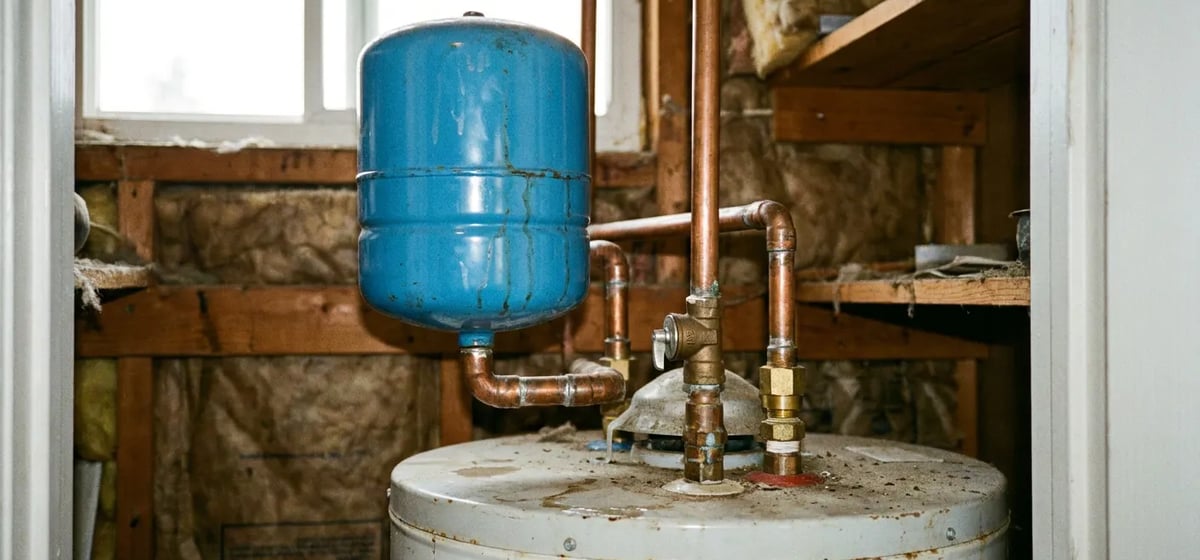
You'll usually see the expansion tank sitting right above or right next to your water heater. It looks a lot like a small propane tank. Most residential tanks hold about two to five gallons of water. They're typically painted blue, grey, or white. The tank connects to the cold water supply pipe that feeds into the water heater. Sometimes it hangs sideways or upside down, but standing straight up is the best position for a long life. If you have a tankless water heater, you might still have an expansion tank nearby to handle sudden pressure spikes.
What To Watch For
Expansion tanks don't last forever. The rubber bladder inside usually wears out after five to eight years. When the bladder fails, the tank fills completely with water and stops protecting your home. You can do a quick check to see if your tank still works.
- Tap the top half of the tank lightly with a metal tool. It should sound hollow because it holds air.
- Tap the bottom half. It should sound dull because it holds water.
- If the whole tank sounds dull, it's likely full of water and needs replacing.
- Look for a small air valve on the top or bottom of the tank. It looks just like a tire valve on a car. If you press the pin inside the valve and water shoots out, the bladder is broken.
Costs And Replacement
Replacing an expansion tank is a standard job for a local plumber. The part itself is fairly cheap, but labor adds to the total bill. A new tank usually costs 40 to 60 dollars at a hardware store. If you hire a professional, expect to pay 150 to 350 dollars for the part and the labor combined. Keep in mind that prices vary based on where you live and the plumber you choose. You can read more about typical labor rates in our guide to Hiring Contractors & What Things Cost.
If you're handy, you can replace the tank yourself. You'll need to turn off the water, drain a little bit of water from the system, and unscrew the old tank. You also have to use a bicycle pump to set the air pressure in the new tank so it matches your home water pressure before you screw it on. However, if the old tank is full of water, it'll be very heavy. Be careful when unscrewing it so it doesn't drop and break a pipe.