What is a flame sensor?
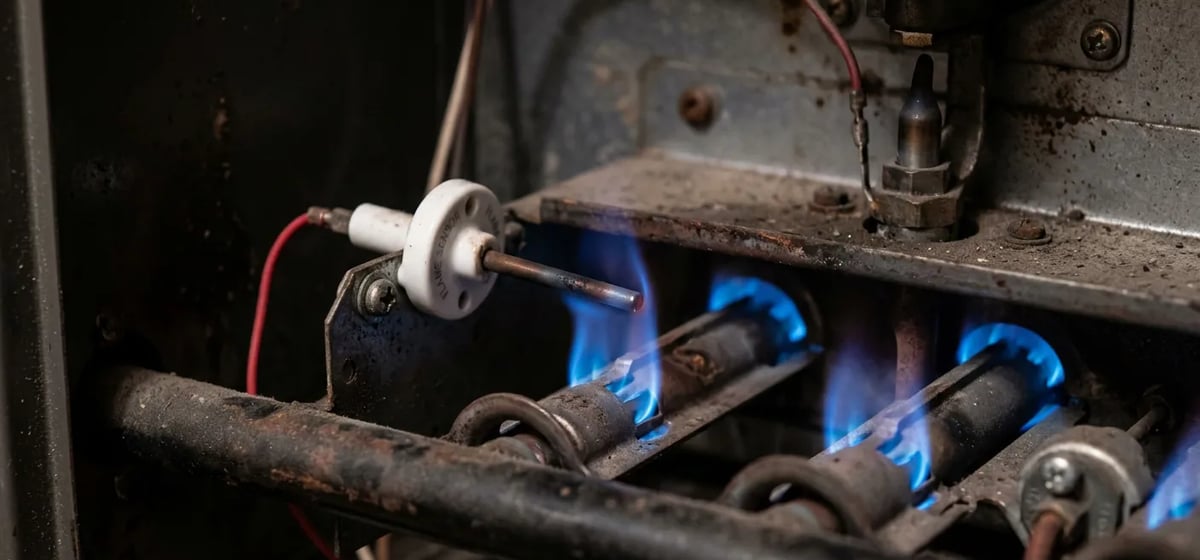
A flame sensor is a very simple but important safety part inside your gas furnace. The word flame traces back to the Latin word flamma. Sensor comes from the Latin word sentire, which means to feel or perceive. This thin metal rod sits right next to the furnace burners. It usually looks like a small piece of thick wire bent at an angle, mounted to a ceramic base. You will find it near the back of the burner assembly.
When your thermostat calls for heat, the furnace opens a gas valve and ignites the gas. The flame sensor sits directly in the path of the fire. It uses a tiny electrical current to feel the heat and confirm the gas is actually burning. If it does not feel a flame within a few seconds, it shuts the gas valve completely. This stops raw gas from pouring into your home.
Why it matters to you
Your safety depends entirely on this small metal rod. Gas furnaces burn natural gas or propane to warm your house. If the igniter fails to spark, the gas valve could stay open. Without a working flame sensor, that unburned gas would fill your basement, attic, or living space. This creates a massive fire hazard. It's also one of the top causes of Home Emergencies related to gas leaks.
The sensor acts as a strict safety backup. It guarantees the gas only flows when a safe and controlled fire is burning inside the unit. Knowing this part works gives you peace of mind during the cold winter months. You don't have to worry about your furnace quietly leaking dangerous fumes while you sleep.
What to watch for
Because flame sensors sit directly in the fire, they take a lot of abuse. Over time, they get covered in carbon soot, dust, and oxidation. A dirty sensor cannot feel the heat properly. When this happens, your furnace will turn on, light the gas, and then shut off a few seconds later. Heating technicians call this short cycling. If your furnace keeps turning on and off quickly without warming your house, a dirty flame sensor is usually the main culprit. You can often prevent this by keeping up with routine HVAC & Climate Control maintenance.
Here are the most common signs of a dirty or failing sensor:
- Your furnace starts up but shuts off after 3 to 5 seconds.
- The house stays cold even though the thermostat is set high.
- You see a yellow or orange glow inside the furnace, but hear a loud click before the system turns off.
- Your smart thermostat shows an error code for ignition failure.
Cleaning and replacement costs
Because the sensor is just a solid metal rod, it rarely breaks. It usually just needs a good cleaning. You can clean it yourself by gently rubbing the metal rod with a piece of light steel wool or a rough kitchen sponge. You only need to remove one small screw to pull the sensor out of the furnace. Wipe it down until the metal shines again, and then screw it back into place.
If you want to replace it entirely, the part itself is very cheap. A new flame sensor costs 10 to 30 dollars at a local hardware store or online. If you hire a professional heating contractor to diagnose the problem and replace the part, expect to pay 100 to 250 dollars for the service call and labor. Keep in mind that ranges vary based on where you live and the brand of your furnace. If you aren't comfortable opening your furnace panels, read up on DIY vs. Hiring a Pro to decide if a professional service call makes the most sense for your situation.