What is a flexible coupling?
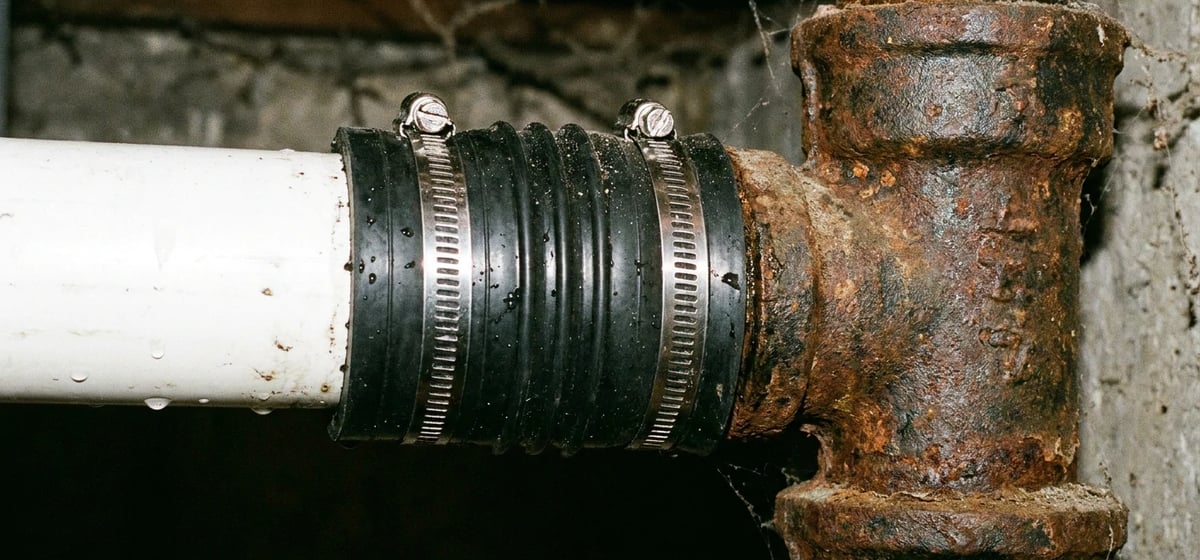
A flexible coupling is a thick rubber sleeve used to connect two plumbing pipes together. You just slide the rubber over the ends of both pipes. Then you tighten the metal bands on each side with a screwdriver or a nut driver. The metal bands are called hose clamps. As you turn the screw, the band gets smaller and squeezes the thick rubber down onto the pipe. This creates a watertight seal that stops leaks and blocks sewer gases from entering your home. People often call them Fernco couplings. The modern rubber plumbing coupling was invented and patented by William L. Fernco in the 1960s. He wanted to make sewer pipe repairs faster and easier. The word coupling itself comes from the Latin word copula, which means a link or bond. Today, these rubber sleeves are a staple in almost every home repair kit.
Why it matters to you
This part is incredibly useful when you need to join two pipes made of completely different materials. Older homes often have cast iron, galvanized steel, or clay pipes. Modern homes mostly use plastic PVC or ABS pipes. You can't glue or solder plastic to cast iron. A flexible coupling solves this problem instantly. The rubber grips both materials tightly to create a leak-proof seal.
If you live in a house built before 1980, you probably have cast iron drains. When a section of that old pipe rusts out, a plumber will cut away the bad piece. They will cut a new piece of plastic PVC pipe to fit the gap. Then they use two flexible couplings to attach the new plastic to the old iron on either end. This allows you to fix a small leak without tearing open every wall in the house. It makes it much easier to update your Plumbing system and saves you a massive amount of time and money.
Where you run into it
You'll see flexible couplings all over your house once you know what to look for. They often sit under your kitchen sink connecting the drain trap to the wall pipe. You might spot larger versions in your basement or crawlspace on the main sewer drain. Plumbers also use them outside to fix broken sewer lines in the yard. Because they are so easy to install, they are a very common project for a homeowner. If you are deciding between DIY vs. Hiring a Pro, replacing a visible coupling under a sink is a great beginner task.
Signs of a failing coupling
Flexible couplings are tough, but they don't last forever. The rubber can dry out and crack after decades of use. The metal bands can also rust if they are exposed to a lot of moisture. You should replace the coupling right away if you notice any of these warning signs:
- A musty smell under your sink or in your basement, which you can learn more about in our guide to Smells & Odors.
- A small puddle of water dripping from the bottom of the rubber sleeve.
- The pipe is moving or sagging, which means the coupling is slipping off the end.
A sudden failure on a main drain line will cause a major mess and can lead to expensive water damage.
Costs and what to watch for
The part itself is very cheap. A standard flexible coupling costs 5 to 30 dollars at a hardware store. If you hire a plumber to install one, you can expect to pay 150 to 300 dollars for the labor and a service call. Keep in mind that price ranges vary depending on where you live and how hard the pipe is to reach.
There is one major rule to remember. You have to buy the right type of coupling for the job. Standard rubber couplings are fine for exposed pipes inside your house. But if you're burying the pipe in the dirt, you usually need a shielded coupling. A shielded coupling has a full metal band wrapped all the way around the rubber.