What It Is
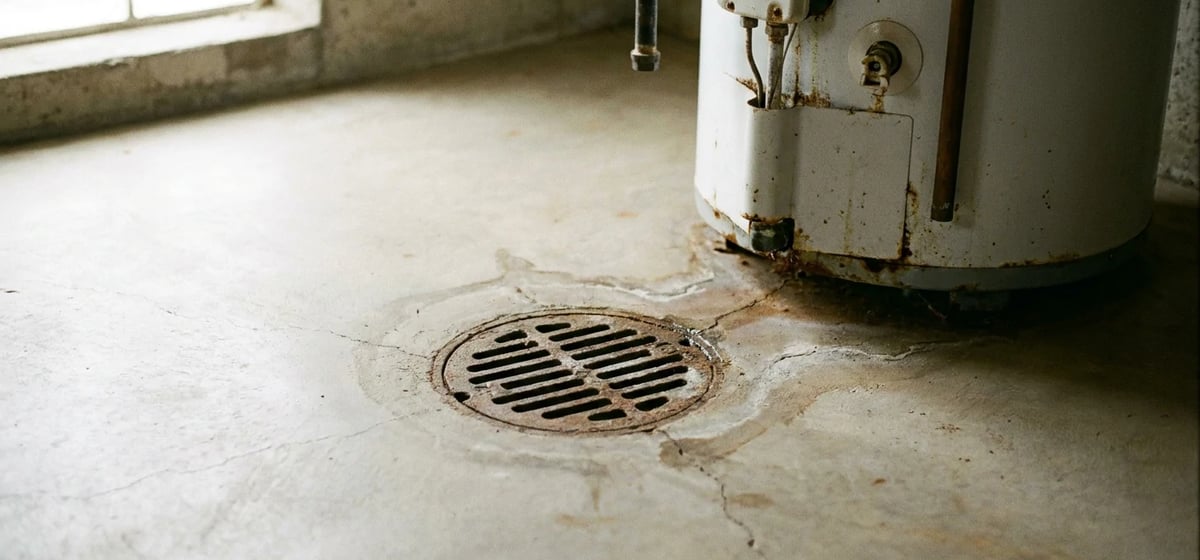
Plumbers have used drains since ancient Roman times to manage excess water. The modern term simply combines its location and its function in standard building language. A floor drain is a heavy metal or heavy plastic grate set directly into the lowest point of your floor. It catches water from unexpected leaks, accidental spills, or heavy floods. Once the water goes through the grate, the drain directs it safely into your main sewer line or out to a storm pipe. You'll almost always find it installed flush with the concrete so water can easily flow right into it without pooling.
Why It Matters to You
A working floor drain protects your house from serious water damage. If a pipe bursts or a heavy rain floods your basement, this drain acts as your main escape route for the water. Without it, a small leak can ruin your drywall, warp your floors, and cause mold to grow fast. It's a highly important part of your overall Plumbing system.
The drain also connects to a U-shaped pipe buried under the floor called a trap. This trap holds a small amount of water at all times. That standing water creates a seal to block gross, harmful sewer gases from coming up into your house. If you ever notice bad Smells & Odors in your basement, a completely dry floor drain trap is usually the main cause.
Where You Run Into It
You'll typically find floor drains in areas that handle a lot of water. Builders place them at the lowest point of a concrete floor so gravity does all the hard work.
- Basements: Usually placed right next to the water heater, furnace, or washing machine to catch sudden leaks.
- Garages: Often located right in the center of the room to catch melting snow or heavy rain dripping from your car.
- Utility rooms: Found near your indoor HVAC equipment to catch any condensation line overflow.
- Laundry rooms: Placed near the washer in case a heavy rubber hose suddenly bursts.
What to Watch For
Floor drains are very easy to ignore until they completely stop working. You need to keep an eye out for slow clogs and dry traps. Dust, pet hair, dropped laundry lint, and loose dirt easily sweep into the grate and build up over time. If the drain clogs, water will back up into your house instead of flowing out.
You also want to watch for clear signs of raw sewage backing up. If you see dark water, sludge, or toilet paper around the floor drain grate, your main sewer line is blocked. Because the floor drain is the lowest point in your house, it's the first place a main line clog will show up. This is an absolute emergency that requires a professional plumber right away.
Costs to Fix or Install
Repairing or adding a floor drain involves breaking up thick concrete, so it can get very expensive. Keep in mind that prices vary based on where you live and the current condition of your underground pipes.
- Snaking a clogged drain: Hiring a professional plumber to clear a standard clog usually costs 150 to 300 dollars.
- Replacing the grate or cover: You can buy a new metal or plastic grate at a local hardware store for 15 to 40 dollars and easily install it yourself with a simple screwdriver.
- Installing a new floor drain: Putting a brand new drain into an existing basement concrete floor is a massive project. It typically costs 1,000 to 3,000 dollars because the crew must cut the concrete floor, dig a trench, and connect new pipes to your existing sewer system.
If you just bought an older house, you should always check your floor drains during Your First Week as a Homeowner to make sure they are totally clear and ready for sudden emergencies.