What Is a Gate Valve?
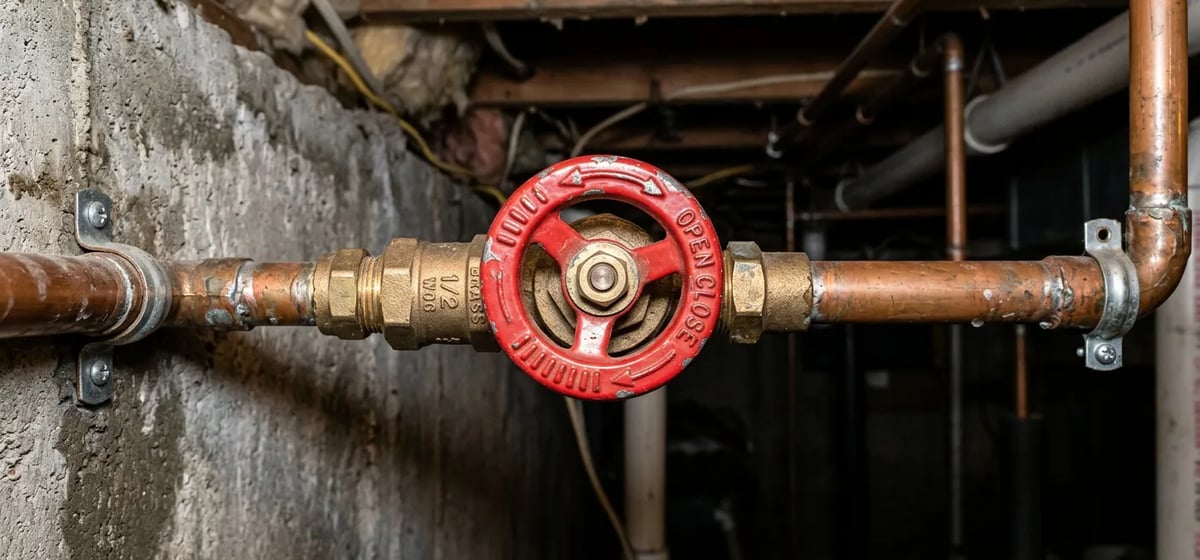
A gate valve is a common plumbing control that stops or starts the flow of water in your home. You'll usually recognize it by its round, wheel shaped handle. When you turn the handle clockwise, a solid metal wedge drops down inside the pipe. This wedge acts exactly like a physical gate to block the water. You have to turn the handle several times to fully close or open the valve. This slow action is actually a good thing. It prevents a sudden rush of water that can bang your pipes around and cause damage.
Plumbers have used this descriptive term since the invention of modern indoor piping. The name perfectly describes the internal mechanism. Because they rely on a dropping wedge, they are designed to be fully open or fully closed. You can't use them to reduce or adjust water pressure.
Where You'll Find Them
You'll most likely spot gate valves in older homes. They were the standard choice for decades before newer valve styles took over the market. You'll often find them on your main water supply line right where the water enters your house.
They also appear near your water heater or on large branch lines that feed different sections of your plumbing system. Sometimes, you'll see gate valves outside for irrigation systems or pool equipment. However, indoor main water lines are their most common home. If you are exploring your house during Your First Week as a Homeowner, look near your water meter, in the basement, or in a utility closet. You might see a dusty round metal wheel attached to a thick pipe. That is very likely your main gate valve.
Why They Matter to You
Knowing the location of your main gate valve is critical for protecting your house. If a pipe bursts under your kitchen sink, you need to find that valve quickly to shut off the water. Turning the wheel all the way to the right stops the flood. Once the water is off, you can safely clean up the mess and call a professional for Plumbing repairs.
Common Problems and Costs
Gate valves are heavy and tough, but they don't last forever. Because the internal parts sit in water all day, they can rust. Hard water also leaves behind thick mineral deposits. This buildup makes the wheel very stiff and hard to turn.
To keep a gate valve working properly, plumbers suggest turning the wheel all the way off and back on once a year. This simple habit breaks up small mineral deposits before they can freeze the mechanism in place. If you ever feel heavy resistance while turning the wheel, don't force it with a wrench. Forcing a stuck valve can snap the internal stem and cause an immediate plumbing emergency. Call a pro instead.
Here are a few common issues you might notice as the valve ages:
- A stuck wheel: The handle refuses to turn because of rust or scale buildup inside the pipe.
- A broken stem: The metal rod connecting the handle to the gate snaps. The wheel will spin freely, but the water won't stop flowing.
- A leaky packing nut: Water slowly drips from the nut just under the handle. You can sometimes fix this minor drip by tightening the nut slightly with a wrench.
If a gate valve gets stuck or fails completely, you'll need to hire a plumber to replace it. Most professionals recommend upgrading to a modern ball valve. A ball valve uses a straight lever handle and only takes a quick quarter turn to shut off the water. They are much less likely to get stuck over time.
Replacing a main water shutoff valve usually costs 150 to 400 dollars. Keep in mind that prices vary based on your local labor rates and how difficult it is to reach the pipe.