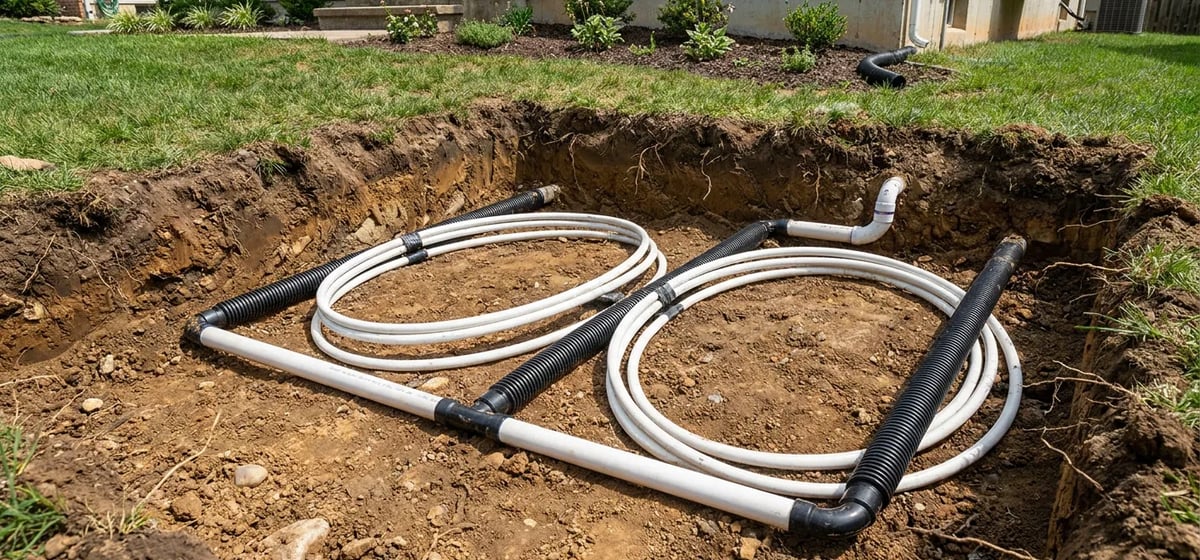
A geothermal loop is a series of pipes buried underground to heat or cool your home. The word geothermal combines the Greek word "geo" for earth and "therme" for heat. Builders started using these underground pipe loops for residential heating in the late 1940s. Today, they are a highly efficient way to keep your house comfortable.
Instead of burning gas or using a lot of electricity to create heat, a geothermal system moves heat from the ground into your house. The ground below the frost line stays at a constant temperature of 50 to 60 degrees all year. Fluid flows through the buried pipes to absorb this natural temperature. The system then brings that warm or cool fluid inside to a heat pump. The heat pump extracts the heat and blows warm air through your vents. In the summer, the process works in reverse. The system pulls heat out of your house and dumps it into the cooler earth.
This setup takes the place of a traditional furnace and air conditioner. You can learn more about standard heating and cooling in our guide to HVAC & Climate Control.
Types of geothermal loops
Installers use a few different layouts depending on your property. The two most common types are horizontal and vertical closed loops.
- Horizontal loops: This is the most common choice if you have a lot of land. Contractors dig wide trenches about 4 to 6 feet deep. They lay the pipes flat in the trenches and cover them up. It is usually the cheapest layout to install.
- Vertical loops: This setup makes sense for smaller yards or rocky soil. A drilling rig bores holes straight down into the ground. These holes can go 150 to 400 feet deep. The pipes drop into the holes and connect at the top. This costs more because drilling is expensive, but it saves a ton of space.
- Open loops: These use groundwater from a well instead of a closed loop of antifreeze. The system pulls water up, takes the heat out, and pumps the water back into a different well.
Installation costs and savings
Putting a geothermal loop in your yard is a major project. A complete system usually costs 15,000 to 30,000 dollars. Prices vary widely based on your soil type, the size of your home, and local labor rates.
While the upfront cost is high, the monthly savings are huge. Geothermal systems do not use much electricity. You can cut your heating and cooling bills by 40 to 70 percent. The system usually pays for itself in 5 to 10 years.
You can also find federal tax credits and local utility rebates to help pay for the project. These incentives can cover a large chunk of the total price. You will want to explore your options before you hire a contractor. You can read more about funding major home projects in our guide to Property Taxes & Home Finances.
Maintenance and repairs
The underground pipes in a geothermal loop are very tough. Most manufacturers guarantee the pipes for 50 years. The fluid sealed inside rarely needs to be replaced.
The indoor heat pump is the only part that needs regular attention. You just need to change the air filter every few months and have a technician check the system once a year. The indoor unit usually lasts 20 to 25 years. This is much longer than a standard outdoor air conditioner because the geothermal unit sits safely inside your house.
If you plan to plant trees, build a fence, or install a pool, you must know exactly where your loop is buried. Keep a map of the loop layout with your important house papers. You should also share this map with anyone doing work on your Landscaping, Drainage & Outdoor areas to avoid a costly accident.