What Is a Heat Pump Water Heater?
A heat pump water heater is an energy efficient appliance that heats the water you use for showers, dishes, and laundry. Instead of creating heat directly, it moves heat from the air around it into the water tank. Think of it like a refrigerator working in reverse. A fridge pulls heat out of the box and dumps it into your kitchen. This water heater pulls heat out of your basement or garage air and dumps it into your water. The concept of moving heat rather than making it dates back to the mid 1800s. Engineers applied this idea to home water heating in the 1930s. Today, it's one of the best ways to upgrade your Plumbing system.
Why It Matters to You
The biggest reason to care about this appliance is the money you save. Standard electric water heaters use a lot of power to warm up cold water. A heat pump model uses a fraction of that electricity. You can save hundreds of dollars a year on your utility bills. Because it pulls heat from the air, it also cools and dehumidifies the space around it. This is a nice bonus if you live in a humid climate and keep the tank in a hot garage.
Where You Find It in Your Home
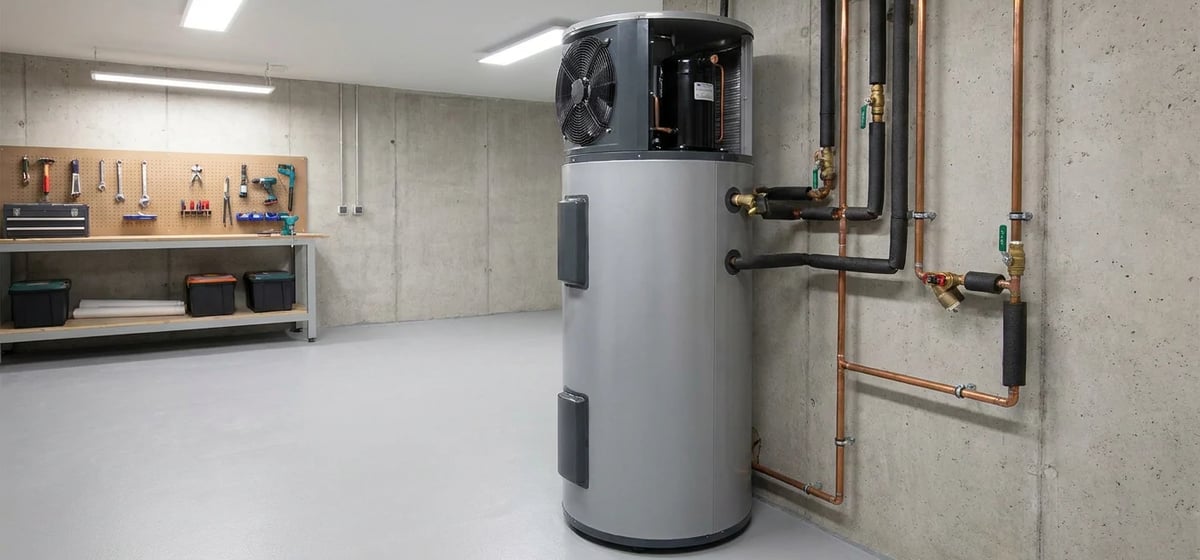
You'll usually find this unit sitting in a basement, a garage, or a large utility closet. It looks a lot like a standard water heater but has a fan and a compressor on top. It needs plenty of air to do its job. If you shove it into a tiny closet, it won't work well. It needs about 1,000 cubic feet of air space around it to pull enough heat. If your closet is small, a contractor might install a louvered door so air can flow freely.
Costs and Installation
Buying and installing a heat pump water heater costs more up front than a standard electric model. You can expect to pay 1,500 to 3,000 dollars for the unit itself. Installation labor usually adds another 500 to 1,500 dollars. Keep in mind that prices vary based on where you live and the size of the tank. Many utility companies and local governments offer heavy rebates for these systems. These rebates can cover a large chunk of your initial cost. You can learn more about general labor prices in our guide on Hiring Contractors & What Things Cost.
What to Watch For
These units need a little more care than old electric heaters. They have an air filter on top that you must clean every few months. If the filter gets clogged with dust, the heater has to work harder and uses more energy. You also need a way to drain the condensation it creates. The system pulls moisture out of the air, so it needs a drain line or a small pump to move that water outside or into a floor drain.
Here are a few maintenance tasks you'll need to handle:
- Wash the air filter in the sink every three months.
- Flush the tank once a year to remove sediment buildup.
- Check the condensation drain line to ensure water flows freely.
Finally, these heaters make a humming noise when the compressor runs. It sounds like a window air conditioner. If you plan to install one near a bedroom, the noise might bother you. Be sure to discuss placement with your installer. For more tips on maintaining your major household systems, check out the Appliances guide.