What is a sight glass?
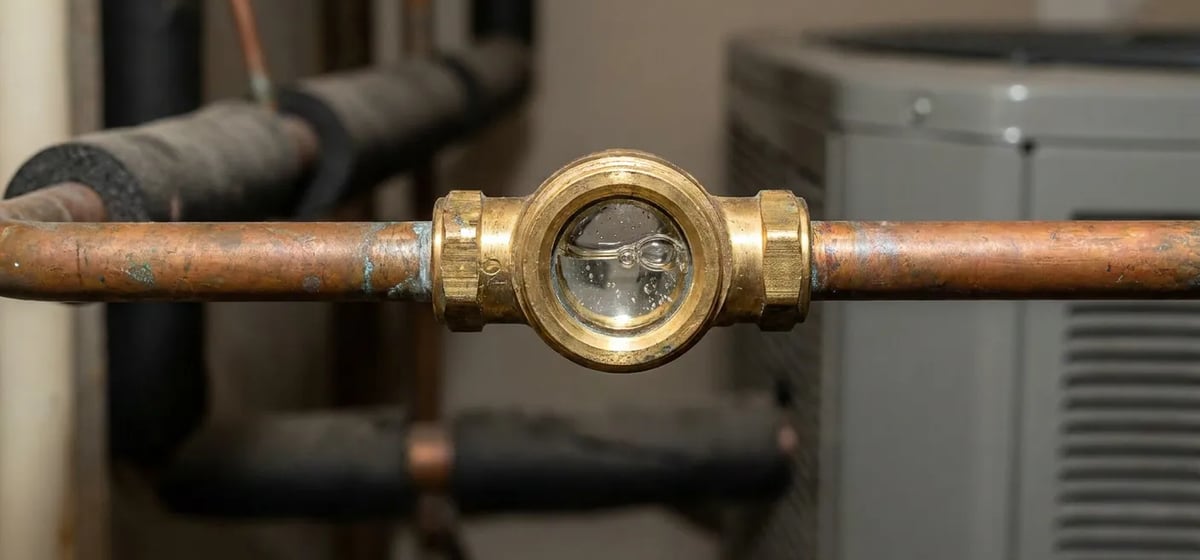
A sight glass is a small, round window built directly into the metal pipes of your air conditioning or heat pump system. It lets you look inside the closed loop and see the liquid refrigerant as it flows through the lines. The term itself combines the Old English word for vision and the Germanic word for the material. Long ago, engineers put the very first sight glasses on heavy industrial boilers. This clever addition allowed factory workers to safely check boiling water levels without opening a dangerous valve. Today, this same basic idea helps you monitor the climate systems in your house. You can learn more about how all these parts work together in our guide to HVAC & Climate Control.
Where to find it
You will usually find the sight glass on the liquid line of your cooling system. This is the smaller, warm copper pipe that runs between the outdoor condenser unit and the indoor evaporator coil. It is typically located very close to the outdoor unit. Sometimes it is tucked just inside the metal access panel. Not every air conditioner has one. Many newer systems use different ways to measure refrigerant. However, if your home has a system that is a few years old, you will likely spot this brass fitting with a glass center on the main line.
Why it matters to your home
Your cooling system relies on a very specific amount of refrigerant to pull heat out of your house. If that fluid level drops, your system has to work much harder to reach the temperature you set on the thermostat. This extra work drives up your monthly electric bill and wears out expensive parts much faster. The sight glass gives you a quick visual check of the system health. You do not need special gauges or tools to look at it. It acts as an early warning system before a minor leak turns into a major breakdown. Catching a problem early can easily save you from replacing a burned out compressor.
How to read the glass
Checking the sight glass is a simple process. You just look through the small round window while your air conditioner is actively running.
- Clear liquid: If the fluid looks solid and clear like water, your system has a good charge and is running well.
- Bubbles or foam: If you see bubbles streaming past, the system is likely low on refrigerant. This usually points to a tiny leak somewhere in the copper pipes.
- Color changing dot: Many modern sight glasses have a small paper dot in the center. This dot changes color to tell you if moisture is inside the system. Green usually means the lines are completely dry and safe. Yellow or pink means water got inside. Water mixes with the refrigerant oil to create an acid that will ruin the compressor.
If you just turned the system on, you might see a few bubbles for a minute or two. That is perfectly normal. However, the flow should turn clear once the system runs for a bit.
When to call a pro and what it costs
You can look at the sight glass yourself, but you should never try to fix a refrigerant problem on your own. Handling refrigerant requires a special license from the government. If you see foam, bubbles, or a yellow dot in the window, it is time to call a local heating and cooling technician. The pro will hook up digital gauges to test the exact pressure and find the hidden leak.
Fixing a sight glass issue depends entirely on the root cause. If the glass fitting itself is leaking and needs replacement, expect to pay $150 to 300 for the part and the labor. If the system is low on fluid, the technician must find the leak, solder it shut, and add new refrigerant. This larger repair typically costs $300 to 800. Keep in mind that price ranges vary based on your location and the exact type of refrigerant your system uses. If you are dealing with a major leak in the middle of summer, you might also face extra fees for a weekend visit. You can read more about handling sudden breakdowns in our guide to Home Emergencies.