What is mastic?
Mastic is a thick, gooey paste that heating workers use to seal the joints in your metal air ducts. It goes on wet with a brush or a putty knife. Once it dries, it forms a tough, rubbery shell. This shell permanently stops your expensive heated or cooled air from leaking out before it reaches your living spaces.
The word comes from the Greek word mastichan. This means to chew. It originally referred to a sticky tree resin used as chewing gum. Builders later adopted the name for any thick, sticky adhesive. You might hear the term used for tile glue or window sealant. However, when you talk about your heating and cooling system, mastic strictly means duct sealant.
Why it matters for your home
Leaky air ducts waste a massive amount of money. If your metal ducts have tiny gaps at the seams, your furnace or air conditioner has to work much harder to keep you comfortable. You end up pumping perfectly good air into your dark attic or damp crawlspace. Mastic solves this problem once and for all.
Unlike standard duct tape, mastic never dries out, peels back, or falls off. Regular cloth duct tape is actually terrible for metal ducts. The heat from your furnace makes the tape glue fail over time. Mastic is different because it stays flexible. It expands and contracts with your metal pipes as the temperature changes. This keeps the air seal completely tight for decades. Sealing your ducts with mastic improves your indoor comfort, reduces dust in your home, and lowers your monthly utility bills. You can learn more about how your heating and cooling system works in our guide to HVAC & Climate Control.
Where you will find it
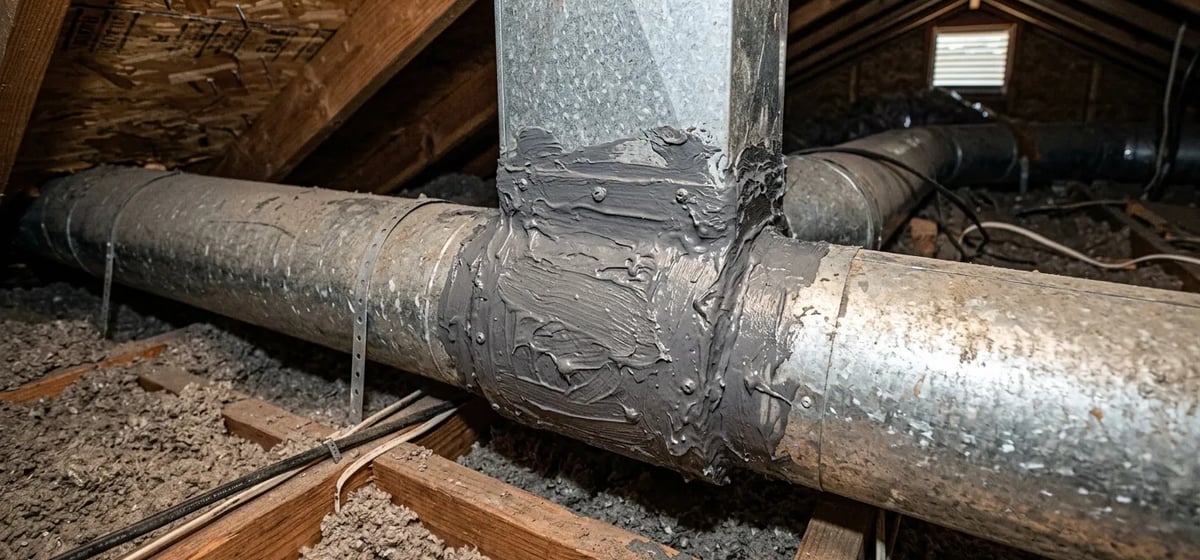
You'll see mastic painted heavily over the seams of your metal ductwork. It usually looks like a thick gray or white paint. Sometimes it has a rough, bumpy texture. This happens because workers often embed fiberglass mesh tape into the wet paste to bridge larger metal gaps.
Look for this gray or white paste in these common places:
- Around the main air handler unit located in your garage, basement, or attic.
- At every single joint where two pieces of round metal pipe connect.
- Where flexible plastic ducts attach to the hard metal collars.
- Around the metal boots that connect the duct runs to your ceiling or floor registers.
If you shine a flashlight on your attic ducts and see peeling silver tape instead of a painted paste, you've got a major leak risk.
Signs your ducts need mastic
Most older homes have leaky ductwork. You might notice that some rooms in your house are always too hot in the summer and too cold in the winter. This often means the air meant for that room is leaking out of a loose joint in the attic. You might also notice extra dust settling on your furniture. When ducts leak, they can suck dirty attic air into the system and blow it right into your house.
Another sign is a surprisingly high energy bill. If your utility costs spike during the hottest or coldest months, your equipment is running longer than it should to make up for the lost air. Fixing these leaks is one of the smartest energy upgrades a homeowner can make.
What it costs and when to use it
Sealing your ducts is a great weekend project. You can easily do it yourself or hire a professional. If you want to tackle it yourself, a one gallon bucket of water-based duct mastic costs about 15 to 30 dollars at your local hardware store. You just need a cheap chip brush or a pair of heavy rubber gloves to smear it on. Wear old clothes because it's very messy and hard to wash out of fabric. Read our guide on DIY vs. Hiring a Pro to decide if you want to crawl around your attic.
If you hire an HVAC company to test and seal all your ductwork, expect to pay between 400 and 1500 dollars. Costs vary based on where you live, the size of your home, and how easy it is to reach your ducts. When an expert does the job, they often use a fan to pressurize your system. This helps them find tiny leaks you might miss. They will then apply mastic to every single seam. This professional service is highly recommended if your ductwork is buried under deep insulation or located in a very tight crawlspace.