What is a helical pile?
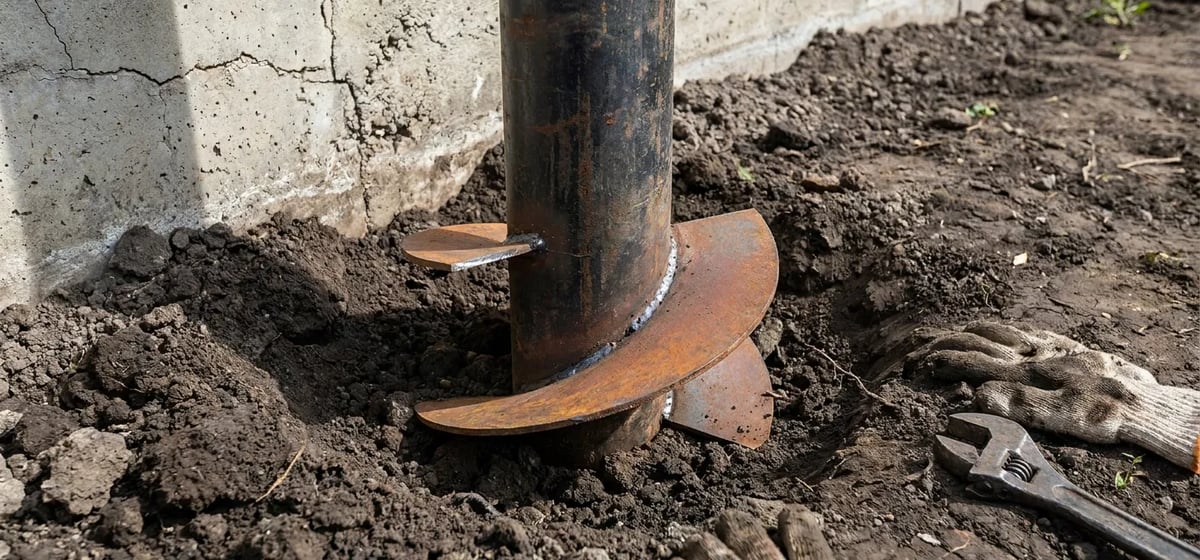
Imagine a giant steel screw. A helical pile is a long steel shaft with spiral plates welded to it. Builders twist these massive screws deep into the earth. They act as a deep foundation to support structures built on soft or shifting soil. The word helical comes from the Greek word helix, meaning a spiral. An Irish engineer named Alexander Mitchell actually invented the first screw pile in 1836. He needed a way to support heavy lighthouses in deep coastal mud. Today, builders use the exact same idea to keep your house from sinking.
Why you might need them
Most homes sit on standard concrete footings. But sometimes the dirt just near the surface is too weak. If you live near water, on a steep hill, or on loose sand, standard concrete might fail. Your house could settle unevenly. This causes cracked walls, stuck doors, and major structural damage. Helical piles solve this problem. Contractors drive them down past the weak dirt until they hit hard, solid ground. They lock into the tough soil deep below.
You might need helical piles in a few specific situations:
- You're building a heavy addition over soft, muddy ground.
- Your current Foundation & Structure is settling and needs to be lifted back into place.
- You want to build a large deck but don't want to wait days for concrete footings to dry.
- You live in a flood zone and need to raise your home above the water level.
How contractors install them
The installation process is surprisingly fast. You don't need a massive crew to dig huge trenches or pour tons of concrete. Instead, a contractor brings in a small machine like a skid steer. This machine grips the top of the steel shaft and turns it. The spiral plates pull the pile down into the dirt, just like a screw going into wood. They keep adding steel extensions until the pile reaches the right depth. Once it hits solid ground, they bolt a steel bracket to the top. This bracket connects directly to your home or deck. It's a very clean process that rarely ruins your Landscaping, Drainage & Outdoor spaces.
What they cost
Adding deep supports is a major project. For a new deck, a single helical pile usually costs 250 to 500 dollars. A standard deck might need four to six piles. If you're lifting and repairing a sinking house, the price goes up. You can expect to pay 1,500 to 3,000 dollars per pile for home repairs. A full foundation repair often requires ten to twenty piles. This means a whole house repair can easily cost 15,000 to 50,000 dollars. Keep in mind that these prices are just estimates and actual ranges vary based on your location and soil type.
What to watch out for
Never guess if you need deep supports. You must hire a structural engineer to test your soil first. They'll tell you exactly how deep the piles must go to reach strong earth. Also, make sure your contractor pulls the right permits before they start spinning steel into your yard. If you're looking for the right expert, check out our guide on Hiring Contractors & What Things Cost. Finally, ask your installer if the steel piles are galvanized. Galvanized steel has a special coating that stops rust. You want this protection since the metal will sit in damp dirt forever.