What is a hip roof?
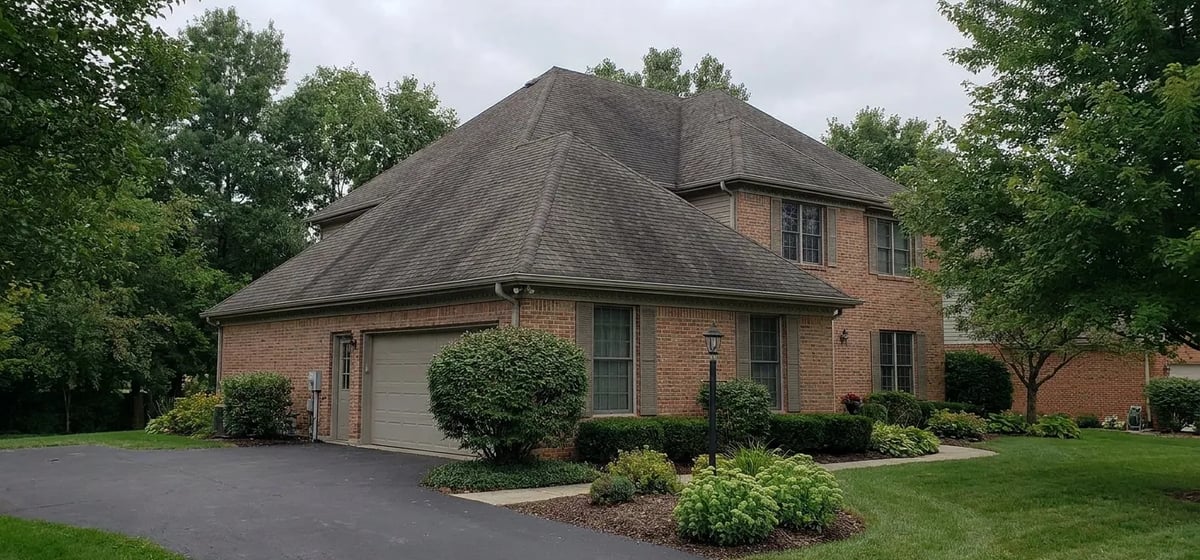
A hip roof slopes downward on all four sides of your house. It doesn't have any flat vertical ends. You'll notice that the sides meet at the top to form a ridge. The word hip comes from the Old English word hype. That word refers to a joint or corner. Builders started applying it to roofs in the 1600s to describe the outer angle where two sloping roof sides join.
This design is completely different from a standard gable roof. A gable roof only slopes on two sides and leaves flat triangles at the ends of the house. Because a hip roof slopes on every single side, it creates a very sturdy shape. It looks like a pyramid if your house is square. If your house is a rectangle, the sides meet to form a long horizontal ridge at the top.
You'll often see this style on ranch homes and modern suburban houses. The roof covers all the exterior walls equally, which provides shade and weather protection all the way around your home.
Why it matters to you
A hip roof is incredibly strong. It stands up to high winds and heavy snow much better than a standard pitched roof. The inward slope on all four sides makes it aerodynamic. Wind easily slides up and over the roof instead of catching under a flat overhang and lifting it off.
This matters a lot if you live in a hurricane zone. Many local building codes in coastal states actually require this specific roof style for new homes. Because it resists wind damage so well, having one can lower your premiums for Home Insurance. The strong shape also holds up heavy winter snow without sagging. The steep slopes help rain drain off quickly on all sides.
Beyond weather protection, the design offers great shade. Since the roof extends over all four sides of your house, it creates a continuous overhang. This overhang blocks the hot summer sun from hitting your windows, helping keep your cooling costs down.
What to watch for
While this roof style is highly durable, it does have a few drawbacks. The design creates much less attic space than a gable roof. The sloping sides cut into the overhead room. You might have a harder time fitting storage boxes up there, and walking around is difficult. This tight space can also make attic ventilation tricky. You need good airflow to prevent moisture buildup.
A hip roof is also more complex to maintain. It has more seams where the different sides meet. You need to inspect these specific areas often for missing shingles:
- Hips: The raised outer edges where two roof slopes join together.
- Valleys: The inward angles where water flows heavily during a storm.
- Ridge: The flat horizontal line at the very top of the roof.
Every seam is a weak point where leaks can start.
What replacement costs
Replacing a hip roof costs more than replacing a simple gable roof. Roofers have to cut more shingles to fit the angles. This takes extra time and labor. If you need a full replacement, expect to pay between 10,000 to 25,000 dollars for standard asphalt shingles on an average home. Prices vary widely based on your location and the exact size of your house.
When you get quotes for Roofing repairs, you'll see extra charges for special ridge cap shingles. These are the specific pieces that cover the angled seams. Because a hip roof has four sloping sides, you also need more gutters to manage the rain. You'll pay to install and clean gutters around the entire perimeter of your house.