What HSPF2 Means
When you buy a heat pump, you want to know how much electricity it takes to keep your house warm. This is where HSPF2 comes in. The letters stand for Heating Seasonal Performance Factor. The number two at the end means this is the second generation of this efficiency rating. Think of it like miles per gallon for your car, but for your home heating system. A higher number means the unit uses less electricity to produce the same amount of heat.
Heat pumps do two jobs. They cool your home in the summer and warm it in the winter. You will see a different rating for summer cooling called SEER2. The HSPF2 rating only applies to the winter months when your system is actively heating your home.
Why This Rating Matters
This number directly impacts your wallet. A heat pump with a higher HSPF2 rating costs less to operate during the winter. If you live in a cold climate, paying for a higher rating makes a big difference in your monthly utility bills. If you live in a warm climate with mild winters, you might not need to pay extra for top tier heating efficiency.
This rating also matters for government tax credits and local utility rebates. Many programs require you to install a unit with a specific minimum HSPF2 rating to get cash back. You can learn more about managing your home temperature systems in our HVAC & Climate Control guide.
The New Testing Rules
You might wonder why there is a number two at the end of the name. In 2023, the Department of Energy changed how they test heat pumps. The old test didn't match how these systems actually run in a real house. The new test is much stricter. It forces the equipment to work harder against higher air pressure inside the ductwork.
Because the new test is harder, the numbers look lower than they used to. An older heat pump might have a rating of 9.0 on the old scale. On the new scale, that exact same machine might only score a 7.6. The machine didn't get worse. The test just got more accurate.
What Numbers to Look For
The federal government sets minimum standards for new equipment. Today, a new split system heat pump must have a rating of at least 7.5 HSPF2. Single package units have slightly different minimums.
If you want a high efficiency system, you should look for ratings of 8.5 to 9.5 or higher. These premium systems use advanced technology to squeeze more heat out of less electricity. However, they cost more upfront. A basic heat pump installation typically costs $5,000 to $8,000. A high efficiency model often costs $8,000 to $14,000 or more. Keep in mind that prices vary greatly based on your location and the size of your home. If you need help finding a professional to give you an estimate, check out our guide on Hiring Contractors & What Things Cost.
Where You Will Find It
You will run into this term in a few specific places when shopping for new equipment.
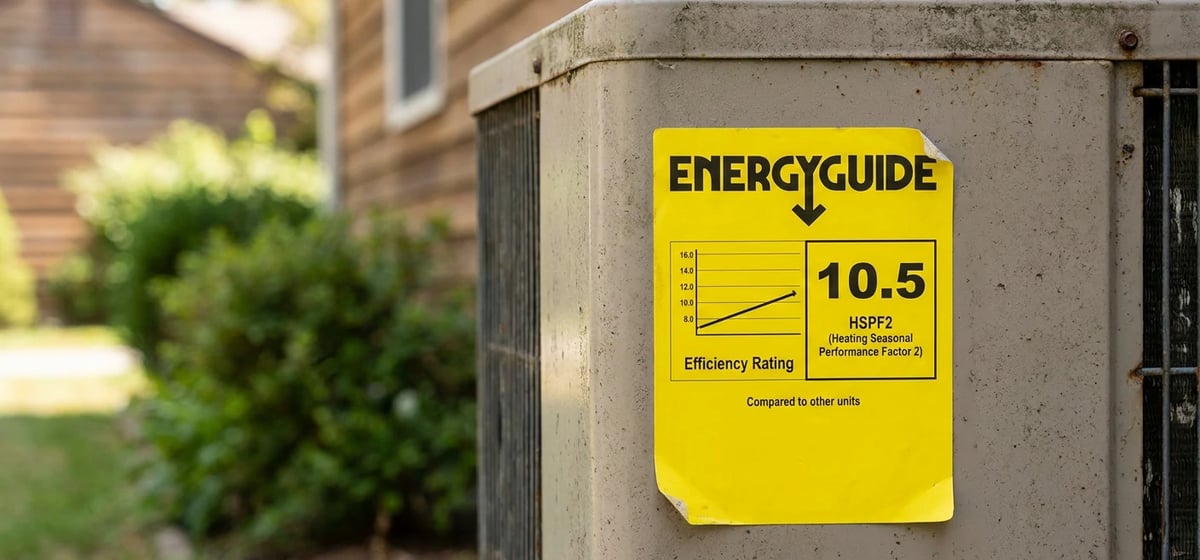
- EnergyGuide Labels: Every new heat pump comes with a bright yellow sticker. This label clearly shows the HSPF2 number and estimates your yearly operating costs.
- Contractor Quotes: When an installer gives you a bid, they should list the exact model numbers and their official efficiency ratings.
- AHRI Certificates: This is a formal document proving the efficiency of your specific system. You usually need this certificate to claim rebates and tax credits.