What is an induction cooktop?
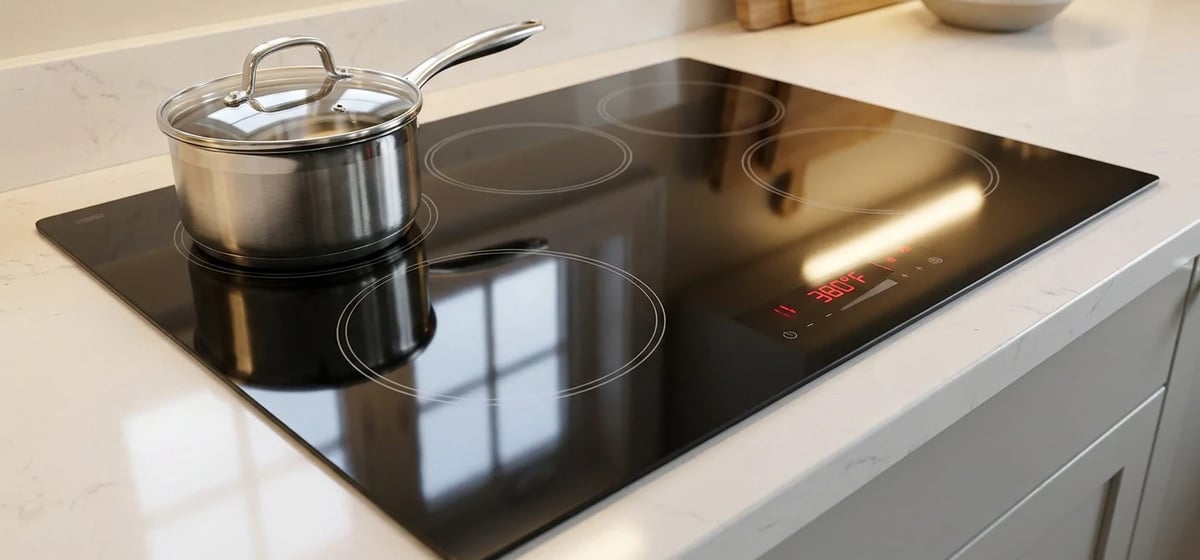
An induction cooktop looks just like a standard electric glass top stove. But under the smooth glass, it works very differently. Instead of a red hot heating element, it uses hidden copper coils that create a magnetic field. When you place a magnetic pan on the burner, this field sends electric currents directly into the metal. The pan itself gets hot, but the glass surface stays mostly cool. This means your food cooks faster and you waste much less heat.
The word induction comes from a Latin word meaning to lead into. Scientists discovered the basic science behind this in the 1830s. Today, it is one of the most popular upgrades for modern kitchens. Many homeowners love how sleek they look and how well they perform.
Why it matters to you
If you are upgrading your kitchen, you will likely look at different Appliances to fit your daily needs. Induction cooktops offer a few big benefits over gas or standard electric models. You will notice the difference the very first time you cook dinner.
- Speed and control: Water boils much faster on an induction stove. It can easily cut your boiling time in half. You also get exact temperature control. When you turn the dial down, the heat drops instantly.
- Safety: Because the glass does not get blazing hot, you are much less likely to burn yourself. The surface only gets warm from the heat of the pan resting on it. As soon as you remove the pan, the burner turns off automatically.
- Easy cleanup: Spilled food does not bake onto the cool glass. You can just wipe up messes with a damp cloth right after you finish cooking.
- Better air quality: Unlike gas stoves, induction units do not release harmful fumes into your home. This helps keep your indoor air clean and safe.
The cookware catch
You cannot use just any pot or pan on an induction stove. The technology requires magnetic metal to work. Cast iron and most stainless steel pans work perfectly. Aluminum, copper, and glass pans will not heat up at all. If you have a favorite set of nonstick aluminum pans, you will likely need to replace them when you buy an induction stove.
Installation and costs
Buying an induction cooktop costs more upfront than a standard electric model. A basic slide in induction range usually costs between 1,000 and 2,500 dollars. High end built in cooktops can run from 2,000 to 4,000 dollars or more. Keep in mind that prices vary based on your location and the brand you choose.
You also need to think about your home wiring. Induction cooktops pull a lot of power to heat things so quickly. They require a dedicated 240 volt circuit with a 40 amp or 50 amp breaker. If you are switching from a gas stove, you might need to add a new electrical line to your kitchen. You will want to read up on Electrical basics and hire a licensed electrician for this job. Adding a new 240 volt circuit typically costs 300 to 800 dollars. The final price depends on how far your kitchen is from your main breaker panel.
Before you make a purchase, check your local utility company for rebates. Many power companies offer cash back when you switch from gas to electric induction. This can help lower your final costs.