What Is a Meter Socket?
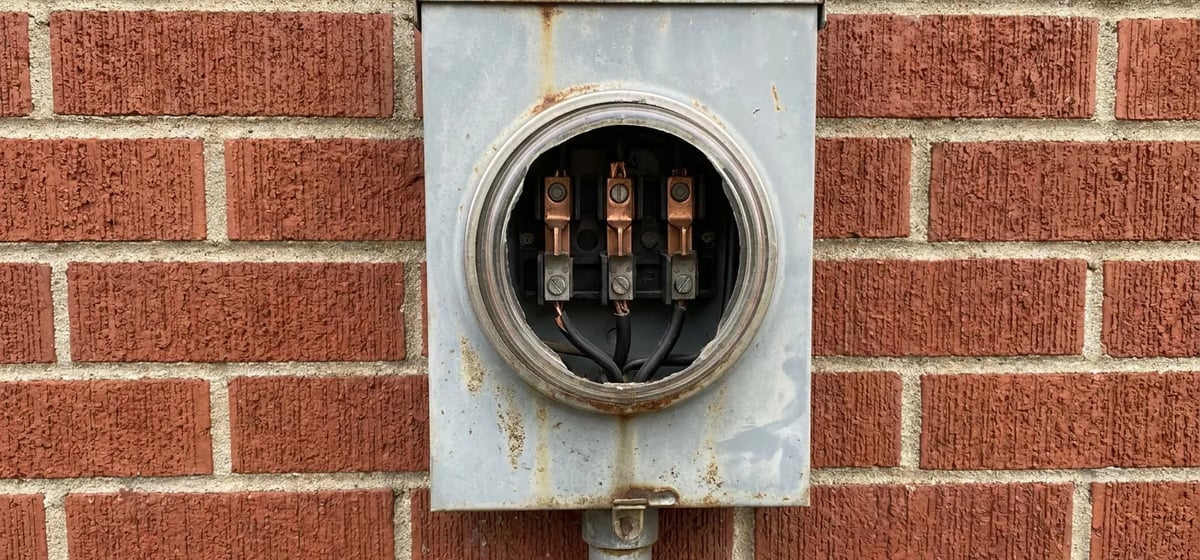
A meter socket is the grey metal box mounted on the outside wall of your house. It connects your home to the local power grid. The electric utility company plugs their glass or digital power meter directly into the metal jaws inside this box. It serves as the main entry point for electricity before the power flows to your breaker panel.
Power lines can run overhead from a utility pole or underground through a buried pipe. Either way, those wires meet at your meter socket. The heavy metal enclosure protects the sensitive connections from rain, snow, and wind. The word socket comes from the Old French word soc, meaning a hollow receptacle. Electricians began using standardized meter sockets in the 1930s. This let utility workers quickly plug in or remove power meters without touching live wires.
Why It Matters to You
This box is the gateway for all the power entering your home. Inside the box, heavy metal clamps called lugs hold the thick wires tight. The power meter itself has metal prongs that slide right into the jaws of the socket. This completes the electrical circuit. If you remove the meter, the power stops flowing to the house entirely.
If you want to add major appliances or upgrade your service, the socket must be able to handle the load. For example, upgrading from a 100 amp to a 200 amp service means you will need a new socket. If you plan to read about Solar Panels, you will likely need an upgraded meter socket to handle the new two way power flow. The metal jaws inside must grip the meter tightly. If they get loose, electricity can arc. Arcing creates extreme heat and is a major fire hazard.
Who Owns It?
Many homeowners assume the utility company owns everything attached to the power lines. That is usually false. The utility company owns the actual glass or plastic meter that tracks your power usage. They also own the wires coming from the street. However, you own the metal meter socket box itself. You also own the pipe that goes up your roof and the wires running from the socket into your main Electrical panel. If the socket gets damaged by a falling branch or rusts out over time, you have to pay to fix it.
What to Watch For
Since this box sits outside in the weather, it takes a beating. You should inspect it visually a few times a year. Do not touch it or try to open it. Just look at the outside of the box. Call an electrician if you notice any of these warning signs:
- Thick rust and corrosion on the metal housing.
- A box that feels loose or is pulling away from the exterior wall.
- Missing covers or broken utility security tags.
- Burn marks, soot, or melted areas near the glass globe.
- Water leaking out of the bottom of the box.
Repair and Replacement Costs
Replacing a meter socket is not a weekend project. You must hire a licensed professional because it involves working with live street power. The electrician will pull a permit with your city. Then they coordinate with the power company to schedule a disconnect. The utility crew arrives to shut off the street power. The electrician removes the old box, installs the new one, and runs new wire into your house. Finally, the city inspector approves the work and the utility crew turns the power back on.
Because so many people are involved, the job takes careful planning. Costs to replace a meter socket usually run from 800 to 2000 dollars. This includes parts, labor, and permits. Prices vary based on your location and how hard the box is to reach. You can learn more about finding good help in our guide to Hiring Contractors & What Things Cost.