What Is A Microinverter
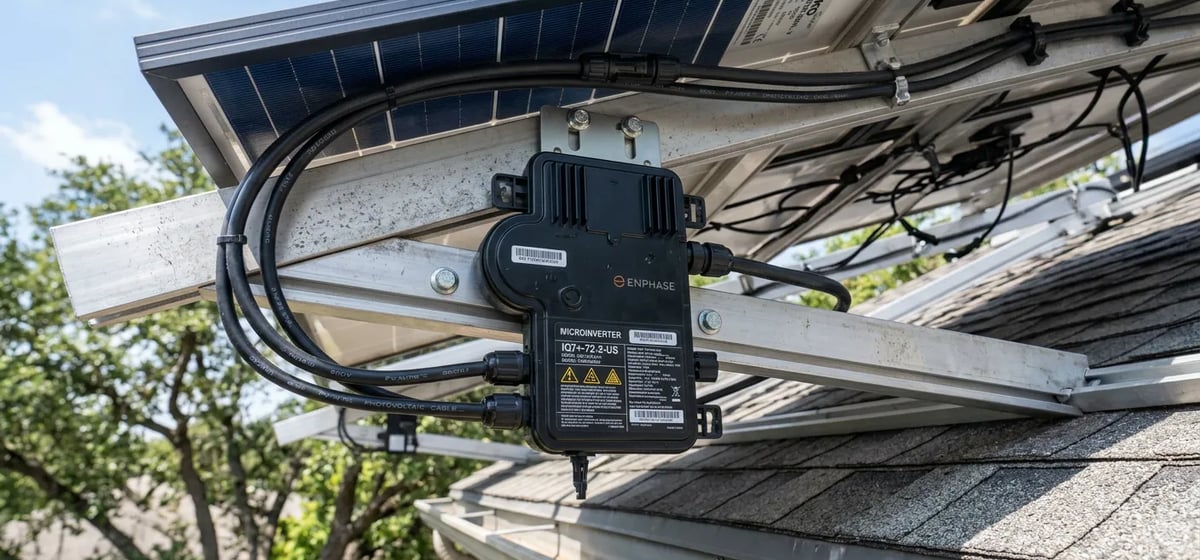
Solar panels collect energy from the sun in the form of direct current. Your home runs on alternating current. You need a device to convert that power so your appliances can use it. A microinverter does exactly this job. It's a small box that sits right behind a single solar panel on your roof. The word micro simply means small. Solar engineers created the first commercial versions in the early 1990s. They wanted a smaller option compared to the large central boxes that used to hang on garage walls. Today, they're a very popular choice for home Solar Panels.
Why It Matters To You
Older solar setups use a single string inverter. In a string system, all your panels link together like old holiday lights. If shade hits one panel, the whole system drops its power output. Microinverters fix this problem. Because every panel gets its own small inverter, they all work independently. If a chimney shadow falls on one panel, the rest of your roof still produces full power. It's a huge deal if you have big trees near your house.
Homeowners choose them for a few big reasons:
- They stop shade on one panel from ruining the output of the whole roof.
- They let you monitor the health of every single panel from your smartphone.
- They make it easy to expand your system one panel at a time later on.
Costs And Installation
Adding microinverters will raise the upfront price of your solar project. A single unit usually costs 150 to 250 dollars. If you buy a system with 20 panels, the microinverters alone will cost 3000 to 5000 dollars. Installation labor will add to that total. Keep in mind that costs always vary based on your location and the brand you choose. Many homeowners feel the extra cost is worth it because you get more power over the life of the system. It's also very easy to add more panels later. If you want to expand your system, your installer just adds another panel and another microinverter.
What To Watch For
These devices live up on your roof. They face extreme heat, heavy rain, and freezing snow. Because they sit under the panels, they do get some protection from direct sun. Still, they can fail over time. When one breaks, a worker has to climb up and remove the solar panel to replace the bad unit. This takes more effort than fixing a box on the side of your house. Always check the warranty before you buy. Most top brands offer a 25 year warranty on their microinverters. You should also make sure your Roofing is in great shape before you install them. Taking panels off to fix a roof leak is a costly hassle.
Safety And Inspections
Microinverters also offer a nice safety bonus. They convert the power to alternating current right on the roof. This means the wires running through your attic carry standard household current. Older systems send high voltage direct current through the house to a central box. Standard current is generally safer and easier for your local Electrical inspectors to approve.