What Is Orangeburg Pipe?
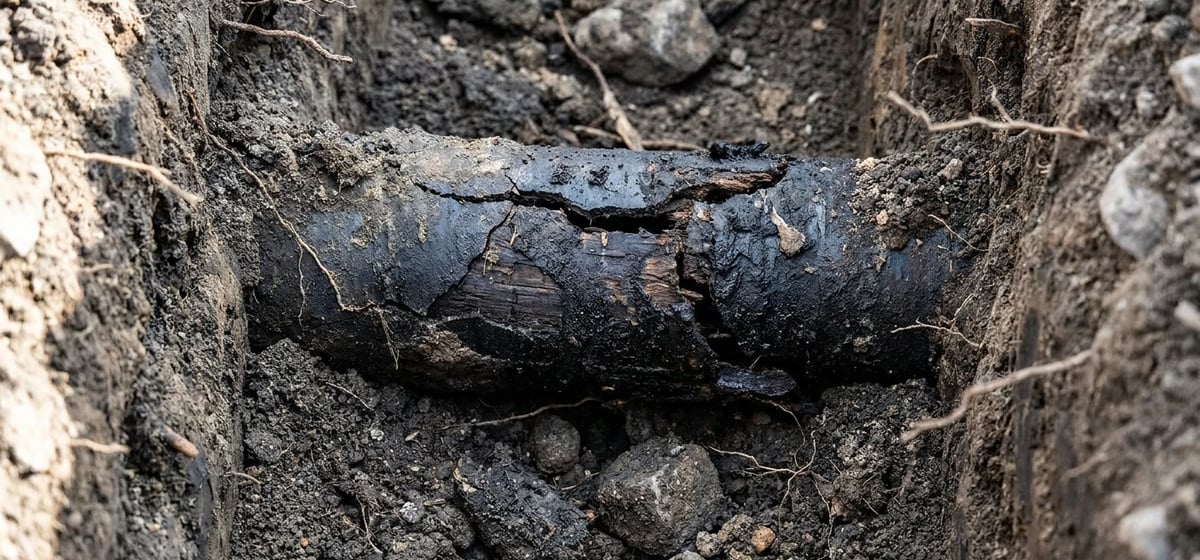
Orangeburg pipe is a type of sewer line made from wood fibers mixed with hot coal tar. It gets its name from Orangeburg, New York. A large manufacturing plant in this town produced most of this material during the mid 1900s.
Builders used it heavily in homes built between 1945 and 1972. Metal was expensive and hard to find after World War II, so plumbers needed another option. Orangeburg offered a cheap, lightweight alternative that was very easy to cut and install.
Because it is basically tar paper, it doesn't last forever. The expected lifespan is usually around 50 years under ideal conditions. This means almost all original Orangeburg pipes in the ground today have reached the end of their useful life.
Why It Causes Problems
Over time, the wood fibers absorb water from the surrounding soil and start to break down. The layers of tar and paper slowly peel apart. This makes the pipe very weak and incredibly prone to failure, especially during heavy rains.
The weight of the soil above the pipe eventually crushes it. Instead of staying round, the pipe flattens out into an oval shape over the years. This restricts the flow of wastewater and traps solid waste inside the line, causing major backups.
Tree roots are another major enemy of this fragile material. Roots easily pierce the soft tar paper in search of water and nutrients. Once roots get inside, they grow quickly and block your plumbing system completely, forcing you to call a pro.
Signs You Might Have It
You won't see this pipe inside your house. Builders only used it underground for the main sewer line connecting your home to the city sewer or septic tank. However, you will definitely notice the ugly symptoms if it starts to fail. Look out for these common warning signs around your property:
- Frequent toilet backups and slow drains across the whole house.
- Strange sewage smells in your yard or basement.
- Lush, green patches of grass where raw sewage is leaking into the soil.
- Small sinkholes or craters forming right above the collapsed pipe.
These symptoms usually mean your sewer line is partially or completely blocked. If you want to learn more about tracking down bad scents, check our guide on smells and odors. You should call a plumber immediately if you spot any of these issues.
What to Do When Buying an Older Home
If you are looking at a house built before 1975, you must ask the seller about the sewer line. Standard home inspections don't cover underground pipes. You could easily buy a house with a failing sewer system and not even know it.
You should always hire a specialized plumber to do a sewer camera inspection before you buy the house. This usually costs 150 to 300 dollars, but it can save you thousands in unexpected repairs down the road.
If the camera shows Orangeburg pipe, you can use that information to negotiate with the seller. You might ask them to replace the line before closing, or you can request a credit to cover the cost of the work yourself.
Replacement Options and Costs
You can't repair a small section of an Orangeburg pipe. If one part is failing, the rest of the line is crumbling too. You will need a complete replacement to fix the issue permanently and protect your home.
A plumber will first run a camera down your main drain to confirm the pipe material and its condition. If the pipe hasn't completely collapsed, they might offer trenchless repair. This involves pulling a new resin liner through the old pipe, which hardens into a new plastic pipe.
If the line is fully crushed, trenchless repair won't work. The crew must dig a trench through your yard to remove the old material and lay down new PVC pipes. This process will disrupt your landscaping and driveway for a few days.
Replacing a sewer line is an expensive project. You can expect to pay anywhere from 3,000 to 15,000 dollars for a full replacement. Keep in mind that ranges vary widely based on the length of the pipe, your location, and how deep they have to dig. You should always get multiple bids before hiring contractors for this job.