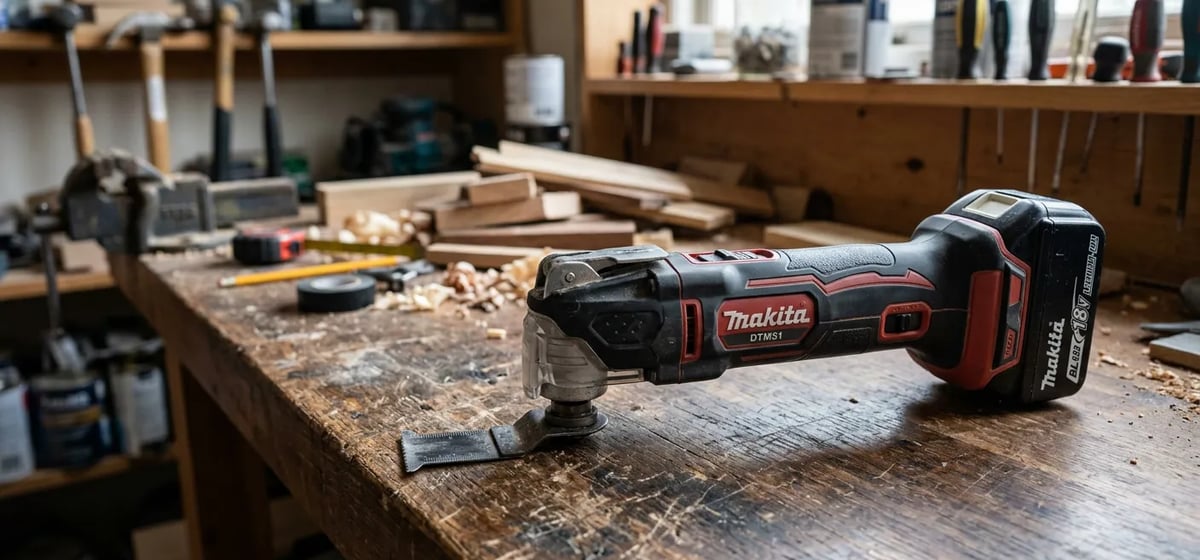
What is an oscillating tool?
An oscillating tool is a versatile handheld power tool. It does not spin in a circle like a drill. Instead, the head vibrates rapidly from side to side. This tiny movement is called oscillation. The blade moves back and forth thousands of times per minute. It moves so fast that it looks like a blur.
You can attach many different accessories to the head. You can snap on a cutting blade, a sanding pad, or a rigid scraper. This makes it the perfect tool for odd jobs around your house. It is famous for making plunge cuts. A plunge cut is when you stab the blade straight into a flat surface. You cannot do this easily with a regular circular saw.
Why it matters for homeowners
When you tackle home repairs, you often run into tight corners. A regular saw might be too big to fit inside a cabinet. A hand saw might take too long. An oscillating tool fits almost anywhere. It is lightweight and easy to control with one hand.
This tool shines when you need to make a very precise cut without damaging the area around it. It is also safer than many other power saws. The vibrating blade easily cuts through hard materials like wood or plastic. However, if it accidentally brushes your skin, it usually just jiggles your skin instead of cutting it deeply. You still need to be careful and wear safety glasses.
Common jobs around the house
You will find yourself reaching for this tool constantly. It is a lifesaver for small remodeling tasks. Here are a few ways you can use it:
- Installing new floors: You often need to trim the bottom of wooden door frames so the new planks slide underneath. The tool slices right through the wood while resting flat on the floor. Check out our guide on Flooring for more installation tips.
- Fixing walls: If you need to patch a hole or add a new electrical outlet, you can plunge the blade straight into the wall. It cuts perfect squares in the sheetrock. Learn more in our Interior: Paint, Drywall & Trim guide.
- Removing old caulk: You can attach a scraper blade to peel away stubborn caulk around bathtubs and sinks.
- Cutting pipes: If a plastic plumbing pipe is stuck against a wall, you can slip the flat blade behind it and cut it flush.
What things cost and buying tips
You can choose between corded and cordless models. Corded models give you endless power. Cordless models run on batteries and are much easier to carry around the house. If you already own cordless power tools, try to buy an oscillating tool from the same brand. You can share the batteries between them.
A basic oscillating tool costs 50 to 150 dollars. Professional models can cost 200 to 300 dollars. Keep in mind that prices vary based on where you live and what brand you buy. The tool itself is affordable, but the blades can be expensive. A single good quality cutting blade usually costs 10 to 20 dollars. Blades wear out quickly if you hit a hidden nail. You can save money by buying generic replacement blades in bulk online.
If you are not sure if you should buy the tool or hire someone, read our guide on DIY vs. Hiring a Pro. For most small cuts, doing it yourself with an oscillating tool is very easy.
How to use it safely
Even though this tool is safer than a circular saw, you still need to respect it. The rapid vibration can cause your hand to tingle or go numb if you use it for hours at a time. Take frequent breaks when you have a big sanding or scraping project. You should always wear safety glasses to protect your eyes from flying dust and wood chips.
When you make a plunge cut, start by resting the back of the tool against the surface. Slowly pivot the moving blade into the material. Do not force it. Let the tool do the hard work. If you push too hard, you will burn the wood and ruin your expensive blade. If the blade starts smoking, you are pressing too hard or the blade is dull.
Make sure the accessory is locked tightly in place before you turn the power on. Most modern tools have a quick release lever. This lever lets you swap blades in seconds without using a wrench. Always unplug the tool or remove the battery before you change the blade. This prevents the tool from accidentally turning on while your fingers are near the sharp teeth.