What is a pipe nipple?
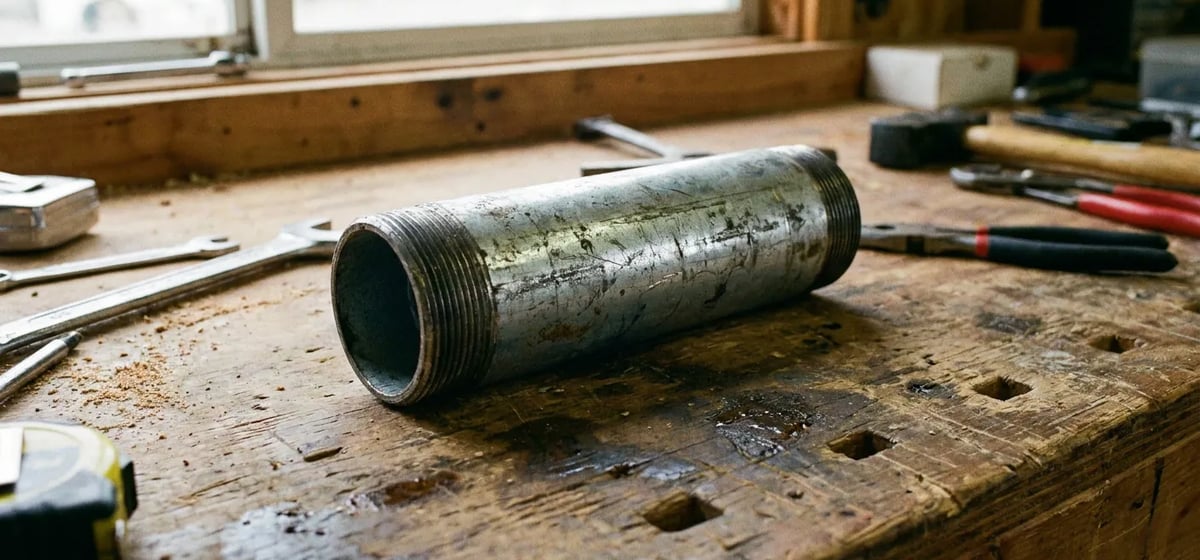
A pipe nipple is a short piece of pipe that has threads on both ends. Plumbers use it to connect two other plumbing fittings or pipes together. The word comes from the Old English word nebb, which means a small projection or beak. Plumbers started using the term in the 1800s to describe these short connector pipes. Today, it's a basic building block for almost any system in your house that carries water or gas.
You can think of a pipe nipple as a bridge. When two female pipe fittings are too close together to use a long piece of standard pipe, a nipple bridges the gap. They come in many lengths. A close nipple is so short that the threads from both ends touch in the middle. Other nipples can be up to 12 inches long. If a pipe is longer than 12 inches, hardware stores just call it a cut pipe instead of a nipple.
Where you'll find them
You'll probably walk past several pipe nipples every day without noticing them. They're very common behind walls and right out in the open. You'll find them in your Plumbing system and your gas lines.
- Showers: The metal pipe that comes out of your wall and connects to your shower head is a specific type of pipe nipple called a shower arm.
- Water heaters: Your water heater uses nipples on top of the tank to connect to your hot and cold water lines.
- Gas lines: Black iron pipe nipples connect gas lines to your furnace and gas Appliances like your stove or dryer.
- Sprinkler systems: PVC or plastic nipples connect underground water lines to the sprinkler heads in your yard.
Materials and costs
Pipe nipples come in the exact same materials as regular pipes. You must match the nipple material to the rest of your pipe system. If you mix certain metals, they'll rust and fail very quickly.
Common materials include galvanized steel, black iron, brass, copper, and PVC plastic. Black iron is only for gas lines. Galvanized steel, brass, and copper are for water lines. PVC is mostly for outdoor irrigation or drain lines.
The part itself is very cheap. A single pipe nipple usually costs 2 to 15 dollars at a hardware store. The exact price depends on the material and length. Brass and copper cost more than plastic or steel. If you hire a professional to replace a leaking nipple, you're mostly paying for their time. Plumber labor rates usually run 100 to 250 dollars per hour, though local ranges vary widely. If you're handy, swapping a shower arm is a simple job, but working on gas lines is a time to look into DIY vs. Hiring a Pro because gas leaks are dangerous.
How to measure a pipe nipple
Buying a replacement pipe nipple can be confusing because plumbing sizes don't match a standard tape measure. If you measure the outside of a half inch pipe nipple, it'll actually measure about three quarters of an inch wide. This is because plumbers measure pipes by the inside diameter, not the outside.
The length is also tricky. The listed length of a pipe nipple is the total length from end to end, including the threads. When you screw the nipple into a fitting, about half an inch of the threads will disappear into the wall or the other pipe. If you need a pipe nipple to stick out of the wall exactly two inches, you actually need to buy a three inch nipple. You've got to account for the threads that get buried inside the female fittings on both sides.
What to watch out for
Pipe nipples don't last forever. Because they have threads cut into them, the metal at the ends is thinner than the rest of the pipe. This makes the threaded ends a weak spot where rust and leaks often start.
Watch for green crust or brown rust around the base of your shower head or on top of your water heater. This means the nipple is failing. If you see water dripping from the threads, you need to replace the part. Don't just tighten it harder. Overtightening can crack the pipe fitting inside your wall, which turns a cheap repair into a major headache.