What Is a Pipe Wrench?
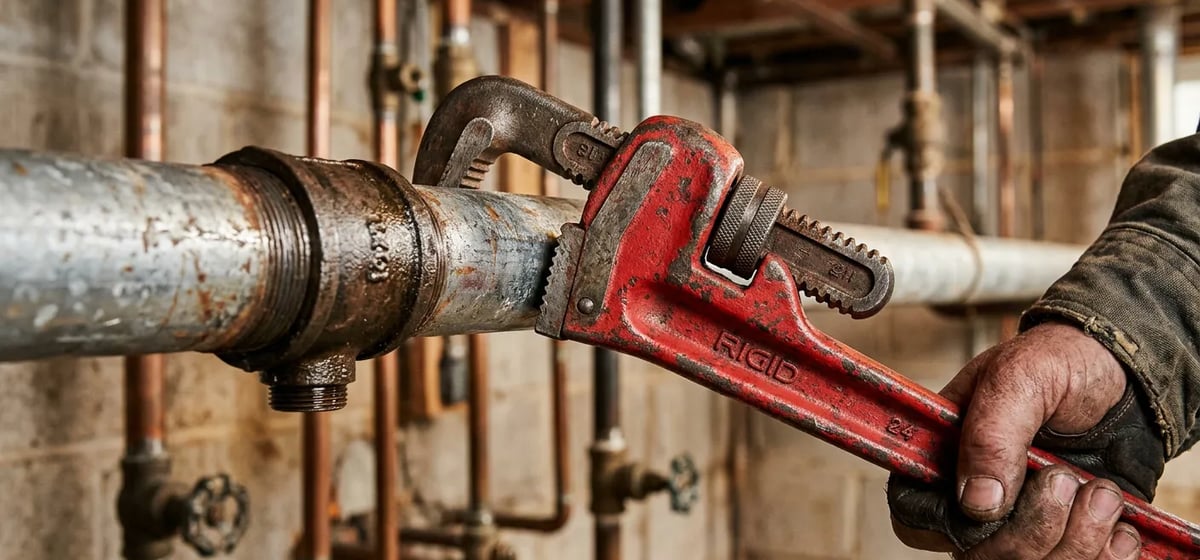
A pipe wrench is a heavy metal hand tool used to grip and turn smooth metal pipes. It features a set of jagged teeth and an adjustable upper jaw. When you pull the handle, the upper jaw moves slightly to bite tighter into the metal. The harder you pull, the tighter the wrench holds the pipe. That makes it perfect for stubborn round metal surfaces that normal tools cannot grip.
The modern version of this tool was patented by Daniel Stillson in 1869. For many years, mechanics called it a Stillson wrench. Over time, the generic descriptive name became much more popular. Today, you'll find one in almost every professional tool bag.
Why It Matters to You
As a homeowner, you might not use a pipe wrench every day. However, it's an essential tool for specific heavy duty jobs. Plumbers rely on them to assemble thick steel gas lines and old galvanized water pipes. If you live in an older home, you might see these metal pipes in your basement or crawlspace.
You'll also see professionals use this tool when working on your HVAC system. Furnaces and boilers often use black steel pipes to carry natural gas. Because gas lines must be perfectly tight to prevent leaks, a pipe wrench gives the leverage needed to secure the fittings safely. If you're deciding whether to tackle a project yourself or hire a professional, knowing what tools the job requires is a big help.
What to Watch For
A pipe wrench is a specialty tool. It's not meant for every household repair. The sharp teeth that make it work will permanently scratch and crush softer materials. You should never use it on standard nuts and bolts because it'll strip the corners right off.
Keep these points in mind if you decide to use one:
- Always leave a small gap between the back of the wrench jaw and the pipe. Only the teeth should touch the metal.
- Pull the handle toward the opening of the jaws to get the proper biting action.
- Keep the teeth clean. If they fill up with dirt or metal shavings, they'll slip.
- Use two wrenches for plumbing jobs. One holds the pipe steady while the other turns the fitting.
Buying a Pipe Wrench
If you plan to do your own plumbing work on steel pipes, you'll need to buy at least one of these tools. Most homeowners do well with a 14 inch or 18 inch wrench. The size refers to the length of the handle. A longer handle gives you more leverage to break loose rusty joints.
You can choose between traditional cast iron and modern aluminum. Cast iron wrenches are incredibly tough and heavy. Aluminum wrenches weigh about half as much but cost a bit more. The lighter weight makes a huge difference if you're working overhead for a long time.
A standard cast iron pipe wrench usually costs between 15 and 30 dollars. An aluminum version typically costs 40 to 80 dollars. Keep in mind that prices and ranges vary based on the brand and size. You can find them at any local hardware store or home improvement center. Even if you only use it once to fix a stubborn outdoor spigot, it easily pays for itself.