What is a Plumb Bob?
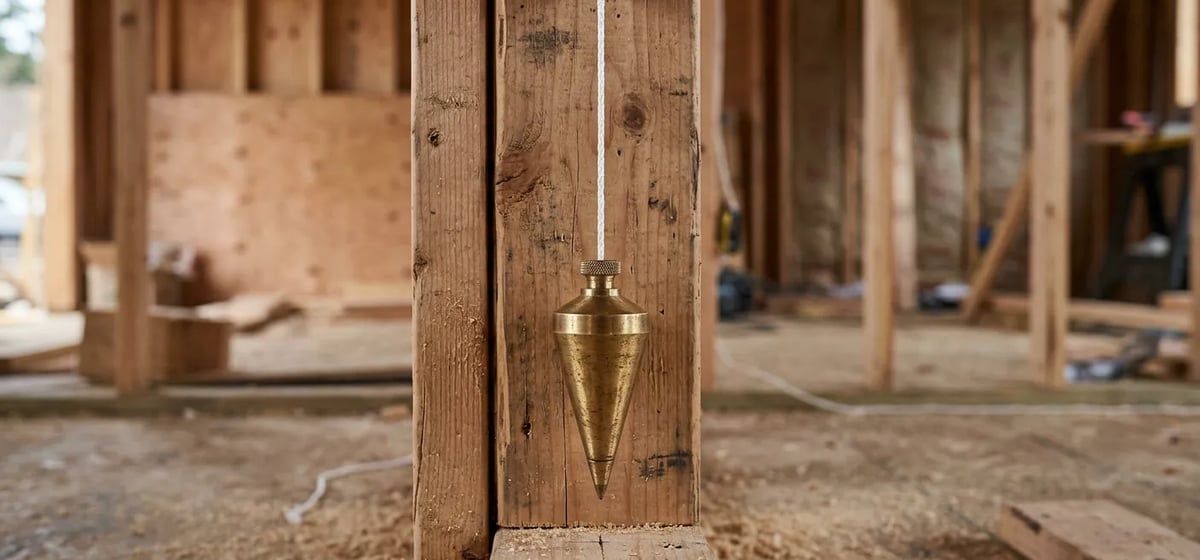
A plumb bob is one of the oldest and simplest tools in the world. It is just a heavy metal weight shaped like a cone attached to a long string. When you hold the string and let the weight hang freely, gravity pulls it straight down. This creates a perfectly vertical line. Builders and carpenters use this line as a reference to make sure walls, posts, and doors are straight up and down.
The name has a fun history. The word plumb comes from the Latin word plumbum. That means lead. Early versions of this tool were made from heavy lead. The word bob comes from the way the weight bounces or bobs at the end of the string before it settles down.
Why Plumb Matters for Your Home
In home building, you will hear the words plumb and level all the time. Level means perfectly flat from side to side. Plumb means perfectly straight up and down. If a wall is not plumb, it leans. A leaning wall puts bad stress on your Foundation & Structure. It can also cause problems with your drywall and roof.
Even a small lean causes big headaches later. If your door frame is not plumb, the door will swing open or closed on its own. If your shower walls are not plumb, the tile will look crooked. Gravity never lies. A plumb bob uses gravity to give you a perfect guide every single time.
Where You Will See It Used
You might see a contractor pull out a plumb bob during a big remodel. You can also use one yourself for weekend projects. Here are a few common places this tool shows up.
- Framing walls: Carpenters drop a line from the top plate of a wall to the floor to make sure the studs are perfectly straight.
- Building decks: When setting heavy wooden posts in concrete, builders use the tool to make sure the posts do not lean. You can learn more about outdoor projects in our Exterior: Siding, Garage & Decks guide.
- Hanging wallpaper: A plumb bob helps you draw a straight starting line on your wall so your wallpaper patterns line up perfectly.
If you want to buy one for your own toolbox, they are very cheap. You can find a basic brass or steel model at the hardware store for 10 to 30 dollars. Prices and ranges vary based on the weight and material. Heavier weights work better outdoors because the wind will not blow them around as much.
How to Use a Plumb Bob
Using this tool is very easy. You do not need batteries or lasers. You just need a steady hand and a pencil.
First, drive a small nail into the top of the wall or post you want to check. Tie the string to the nail. Next, let the heavy metal weight drop toward the ground. Make sure the point of the weight is hanging just a tiny bit above the floor. Do not let it touch the ground. Wait a few seconds for the weight to stop moving. Once it is completely still, the string is perfectly plumb.
You can then measure the distance from the string to your wall at the top and the bottom. If the measurements match, your wall is straight. If they do not match, your wall is leaning. You can also make pencil marks right behind the string to guide your work. Whether you are hanging cabinets or painting a stripe in your Interior: Paint, Drywall & Trim project, this simple string will never steer you wrong.
Modern Alternatives
Today, many contractors use laser levels instead of string. A laser level shoots a bright red or green line onto the wall. Lasers are very fast. They are great for indoor jobs where you need to see a line across a whole room. However, lasers cost a lot of money and need fresh batteries.
A laser tool can easily cost 150 to 400 dollars. A simple string and weight costs almost nothing. Plus, a plumb bob never runs out of power. It will not break if you drop it in the mud. That is why almost every good carpenter still keeps one in their truck, even if they own a fancy laser.