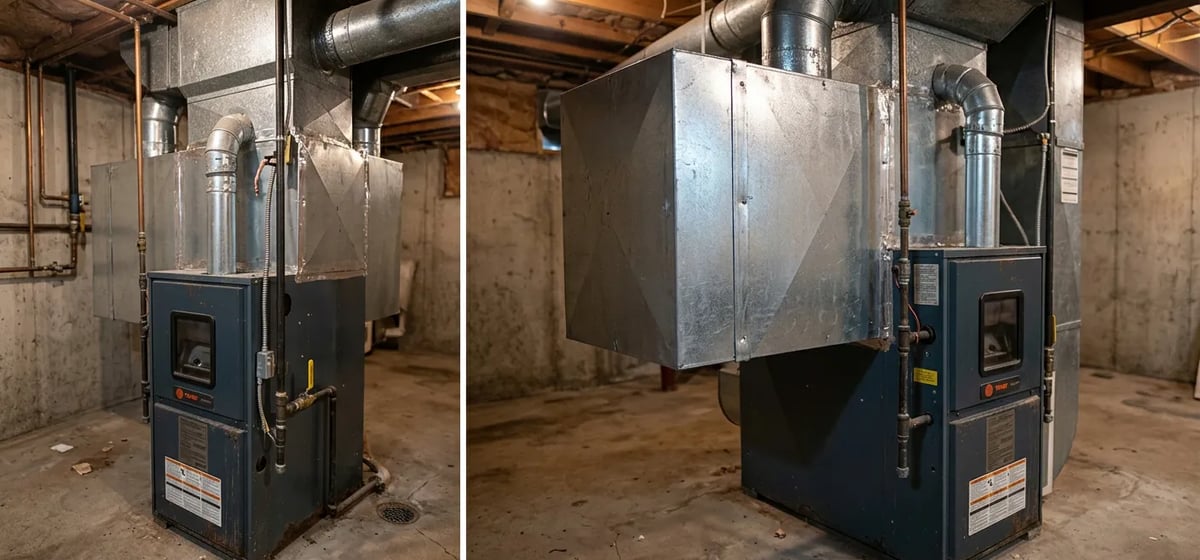
What is a plenum?
The word comes from the Latin word plenum. It means a full space. In engineering, it describes a chamber filled with air at a higher pressure than its surroundings. In your house, a plenum is a large sheet metal box. It sits right next to your furnace or air handler. It connects your main heating and cooling unit to the network of ducts that run through your walls and ceilings.
You actually have two of these boxes in your home. The supply plenum sits right after the heating or cooling coils. It takes the freshly conditioned air and pushes it out into your rooms. The return plenum sits on the other side of the system. It pulls the old, stale indoor air back into the machine to be heated or cooled again. Think of them as the main traffic hubs of your air system. Every breath of air your system moves has to pass through these two boxes.
Why it matters to your home
Your plenum does not just connect pipes. It acts as an air pressure chamber. It lets air build up just enough pressure before it travels down the long duct runs. If this box is too small, your blower motor has to work too hard to push air through a tight space. If the box is too big, the air pressure drops before it even reaches the ducts. Both problems make your home uncomfortable. They also drive up your monthly energy bills.
A properly sized plenum keeps the airflow perfectly balanced. This balance is a big part of managing your HVAC & Climate Control system. When the pressure is right, the air flows smoothly and quietly. Every room gets the exact amount of air it needs to stay warm in the winter and cool in the summer.
Common problems to watch for
Because all the conditioned air in your house passes through these two boxes, issues here affect every single room. The biggest problem you will face is air leakage. Plenums are made of flat pieces of sheet metal screwed together. Over time, the vibrations from your blower fan can rattle those seams loose. If the seams open up, you end up heating or cooling your unfinished attic or basement instead of your living space.
Another common issue is condensation. This happens when cold air inside the box meets warm, humid air in the surrounding room. Over time, this constant moisture can cause the metal to rust. It can also lead to mold growth inside the box. If you notice a musty smell when your fan kicks on, a dirty plenum might be the cause. You can read more about tracking down bad scents in our guide to Smells & Odors.
Maintenance and replacement costs
You should inspect your plenums once a year. Look for these common warning signs:
- Rust spots or bubbling paint on the metal.
- Water stains on the floor around the box.
- Peeling or cracked tape along the seams.
Turn the system on and run your hand along the seams. If you feel air blowing against your fingers, you have a leak.
Do not use standard duct tape to seal a plenum. Regular cloth duct tape will dry out and peel off when exposed to the extreme heat and cold of your HVAC system. Always use UL listed foil tape or duct mastic designed specifically for heating and cooling systems.
Sometimes a leaky box just needs a quick fix. An HVAC technician can seal the seams with special foil tape or a thick paste called duct mastic. Sealing a plenum usually costs 150 to 300 dollars. If the box is severely rusted or was built the wrong size to begin with, you will need a completely new one. A custom sheet metal replacement typically runs 400 to 900 dollars for the parts and labor. Keep in mind that prices vary based on where you live and how hard it is to reach your equipment. If you need tips on finding a good local pro for this job, check out our guide on Hiring Contractors & What Things Cost.