What Property Tax Is
Every year, you owe a fee to your local county or city government. This fee is your property tax. It is based on the assessed value of your house and the land it sits on. Local governments rely on this money to keep your community running smoothly. The funds go toward public schools, police departments, fire stations, libraries, and road repairs. The word tax actually comes from the Latin word taxare, which means to evaluate or assess. Property taxes have existed in the United States since colonial times to fund local community needs. As a homeowner, this is one of your biggest ongoing expenses. You have to pay it as long as you own the home.
How Your Bill Is Calculated
Your local tax assessor determines the value of your property on a regular schedule. They look at several details to figure out what your home is worth.
- The total square footage of your house and the size of your lot.
- The number of bedrooms and bathrooms you have.
- Any major improvements you made like adding a deck or a new garage.
- Recent sales prices of similar houses in your neighborhood.
The assessor multiplies this assessed value by the local tax rate. The tax rate is often called a millage rate. Since local governments set their own rates, your bill will look very different from someone living a few towns over. A typical US homeowner pays anywhere from 1,500 to 3,000 dollars a year in property taxes, though ranges vary widely depending on where you live. Some high tax areas see bills well over 10,000 dollars a year. If you disagree with the assessor, you have the right to appeal their decision and try to get a lower value.
How You Pay Your Taxes
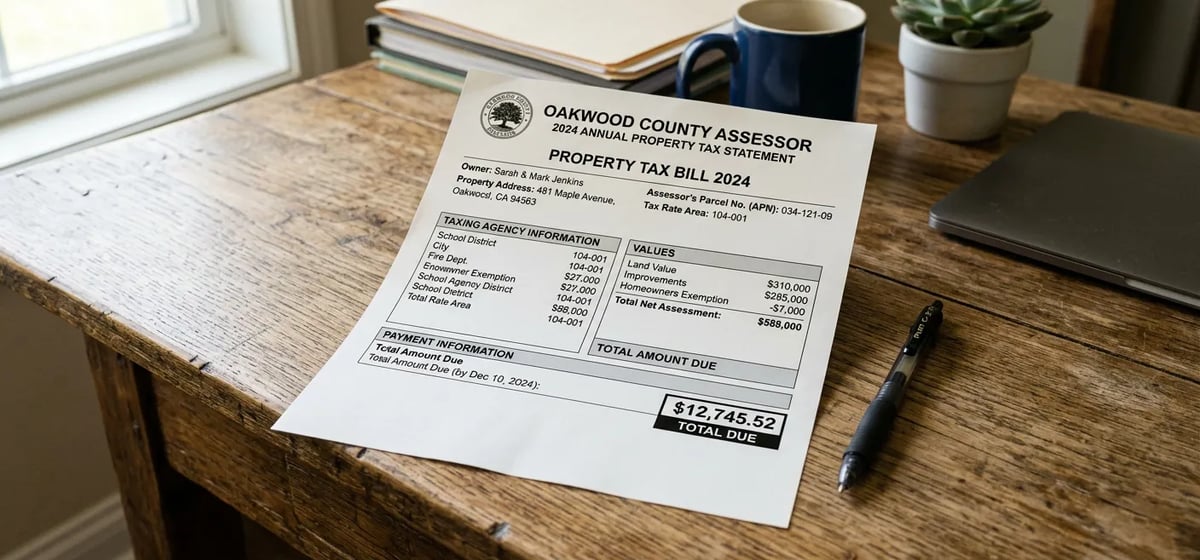
Most homeowners pay their property taxes through an escrow account tied to their home loan. When you make your monthly payment, a portion of that money goes into this account. Your lender then pays the tax bill for you when it is due. You can learn more about how this ties into your monthly payments in our guide to Mortgages. If your taxes go up, your lender will require you to pay more each month to cover the shortage. If you don't have a mortgage, you will pay the county directly. You usually pay this in one or two large lump sums each year. You will get a bill in the mail telling you exactly how much you owe and when the payment is due. It is very important to pay on time. If you fall behind, the county can charge heavy fines or even put a lien on your house.
Ways to Lower Your Bill
You don't always have to pay the full amount the county asks for. Many states offer special tax breaks for homeowners. The most common break is a homestead exemption. This reduces the taxable value of your primary residence, which lowers your final bill. You can read more about this in our guide to the Homestead Exemption. Other discounts might be available if you are a senior citizen, a veteran, or someone with a disability.
Planning Your Budget
Property taxes rarely stay the same from year to year. As your home goes up in value, your tax bill will likely go up too. Local towns also vote on new bonds for schools or parks, which can increase your millage rate. You need to plan for these increases so you aren't caught off guard. Setting aside extra money each month will help you handle any surprise jumps in your bill. For more tips on managing these costs, check out our section on Property Taxes & Home Finances. Keep a close eye on the mail you get from the tax assessor so you always know what to expect.