What a quitclaim deed is
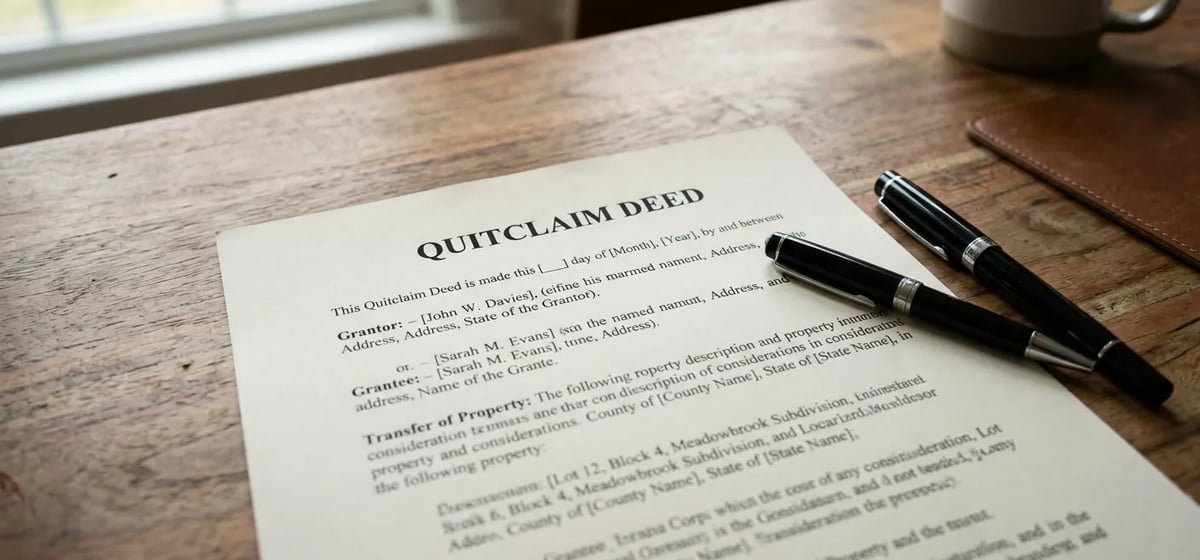
A quitclaim deed is a fast and simple legal document. You use it to transfer your ownership rights in a house or piece of land to someone else. The name comes from old English common law. It means you are literally quitting or giving up any claim you might have to that specific property.
Unlike other types of property deeds, a quitclaim deed offers zero guarantees. It does not promise that you actually own the property free and clear. It also does not promise that the property is free of debts, liens, or other legal issues. It simply says that whatever piece of the house you own right now belongs to the new person.
Because there are no legal protections or background checks, buyers and sellers almost never use them when buying a home on the open market. They are strictly for passing property between people who already have a deep level of trust.
When you might use one
Homeowners mostly use quitclaim deeds for fast family transfers or basic estate planning. These situations do not require a traditional sale or money changing hands. Here are the most common times you will see one used:
- Adding a new spouse to your house title after you get married.
- Removing an ex spouse from the title after a divorce is finalized.
- Giving a house or a piece of land to a child as a gift.
- Moving your personal property into a living trust or a family business.
- Clearing up a simple typo or spelling mistake on an older property deed.
What to watch out for
The biggest risk of using this document is the complete lack of a title search. When you buy a house normally, a title company checks the public records for old debts or claims against the property. A quitclaim deed skips this safety step entirely. If the person giving you the house owes back taxes, child support, or unpaid contractor fees, those legal problems become yours the second you sign the paper.
You also need to think about your current home loan. Most modern mortgages have a strict due on sale clause. This means the bank can demand the full loan balance paid immediately if you change the property ownership without their written permission. Always talk to your lender before you file a quitclaim deed to avoid a surprise bill.
Finally, changing ownership can impact your local tax bills. You might trigger new transfer fees or accidentally lose special tax breaks you currently enjoy. You can read more about managing these hidden costs in our guide to property taxes and home finances.
Costs and how to file
Filing a quitclaim deed is usually cheap and straightforward. You can often find free or low cost legal templates online or at your local library. You just fill out the form with the exact legal description of your property. You can find this description on your original deed or your property tax bill.
Once the form is filled out, you must sign it in front of a notary public. After it is signed and notarized, you must record the deed at your local county clerk or recorder office. If you do not record it with the county, the transfer is not fully legally binding and will not show up in public records.
Here are the typical costs you can expect to pay, though ranges vary by location:
- Notary fees usually cost 5 to 20 dollars per signature.
- County recording fees run from 15 to 50 dollars to file the paperwork.
- Local transfer taxes might add anywhere from 10 to 500 dollars depending on your state and county rules.
- Hiring a real estate attorney to draft the deed for you typically costs 150 to 400 dollars.
If you have a complex family situation, an active mortgage, or you are unsure about the tax rules, paying a local lawyer is usually worth the money. They will make sure the paperwork is perfect and help you avoid expensive mistakes down the road.