What Is A Return Duct?
A return duct is a large pathway that pulls air from your rooms back to your heating and cooling system. Think of your home as a giant breathing machine. The supply ducts blow fresh air into your rooms. The return duct breathes the old air back in. This cycle keeps the air flowing smoothly through your HVAC & Climate Control system.
These ducts are usually made of sheet metal, fiberglass, or a flexible plastic tube wrapped in wire rings. You will rarely see the duct itself because it hides inside your walls, floors, or attic. You will only see the large metal grille that covers the opening. This opening is called the return vent.
Why It Matters To Your Home
Your heating and cooling system needs a perfect balance to work right. It can only push out as much air as it pulls in. If your return duct cannot pull in enough air, your furnace or air conditioner will choke. This makes the system run longer and work much harder than it should.
When the system works too hard, your energy bills go up. Expensive parts wear out faster. You might also notice hot and cold spots around your house. A clear return duct keeps your air pressure equal. It also controls humidity and helps filter out dust before the air goes back through the central blower.
Where You Will Find Them
Older homes might only have one large return duct. You will usually find this main vent in a central hallway, at the bottom of the stairs, or mounted in the ceiling. Newer homes often have multiple return ducts. Builders might place a smaller return vent in every bedroom to improve air flow.
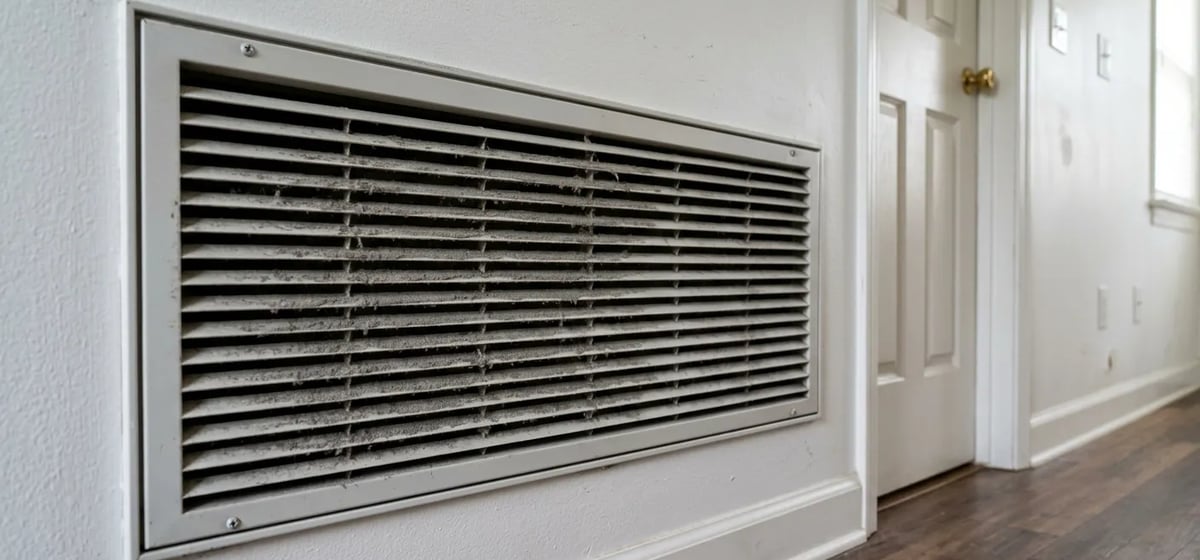
Return vents are much larger than the supply vents that blow air into the room. You will not feel air blowing out of them. If you hold a piece of tissue paper near the grille, the suction will pull the paper against the metal. In many homes, this large grille also holds your main air filter. You must open the metal grate to change the filter every few months.
What To Watch For
Return ducts pull in everything floating in your air. This includes pet hair, dust, and skin cells. Over time, this debris builds up inside the ductwork. You might notice your system smells dusty when it turns on. You can read more about dealing with bad indoor air in our guide to Smells & Odors.
Here are a few signs your return duct needs attention:
- A thick layer of dust on the metal grille.
- A whistling noise coming from the vent.
- Higher heating and cooling bills.
- Rooms that feel stuffy or take a long time to cool down.
If you see a lot of dust, you can vacuum the outside of the grille yourself. If the inside of the duct is very dirty, you might need to hire a professional duct cleaner. Professional duct cleaning usually costs 300 to 500 dollars. Keep in mind that exact prices vary based on where you live and the size of your home. You do not need to clean them every year. Most experts say cleaning them every three to five years is plenty.
Leaks and Sealing
Return ducts can develop leaks over time. Since these ducts are under negative pressure, they suck air inward. If there is a hole or a loose connection in your attic or crawlspace, the duct will pull in dirty air from those unfinished spaces. This means your system is sucking in attic dust, insulation fibers, and hot summer air.
This dirty air goes straight into your furnace and gets blown all over your house. Sealing your return duct is a great way to improve your indoor air quality. HVAC professionals use a special thick paste called mastic to seal the joints. They might also use foil tape. Never use standard cloth duct tape, because it dries out and falls off after a few years. Having a pro inspect and seal your ductwork can cost anywhere from 200 to 600 dollars, though ranges vary depending on how easy it is to reach the ducts.