What It Is
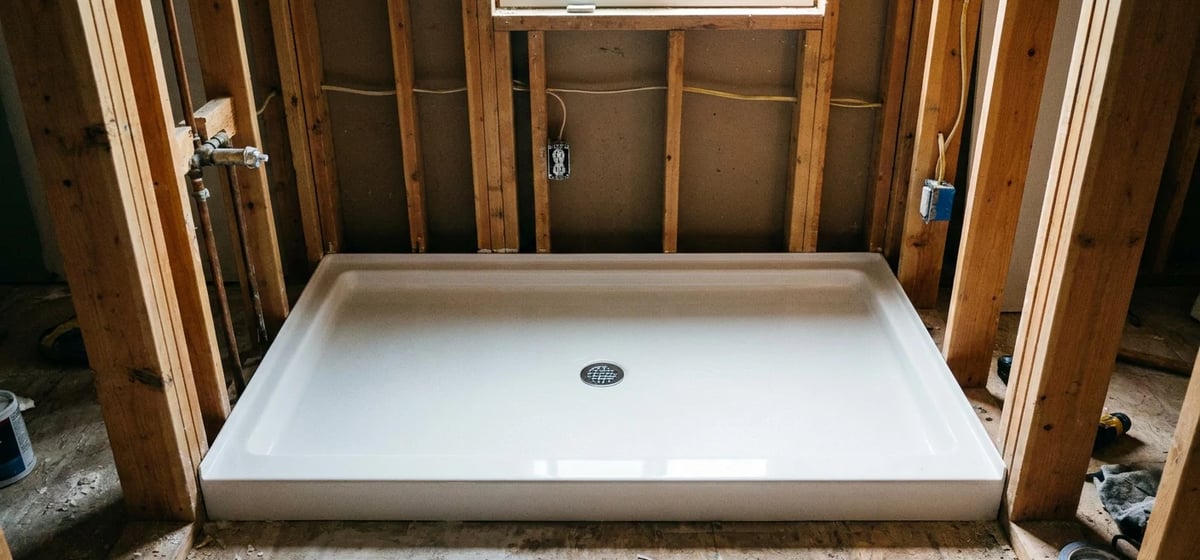
A shower pan is the solid floor of your shower stall. It's the waterproof foundation that catches water and directs it safely down the drain. The word pan comes from the Old English word panne. This means a broad and shallow container. Plumbers started using the term in the early 1900s to describe the shallow basin that holds shower water.
Every shower pan has a slight slope built right into it. This slope forces gravity to pull water toward the drain hole. Without this slope, water would sit in puddles and eventually leak into your home. The pan sits directly on your subfloor and connects to your Plumbing drain lines. It forms a watertight seal with the walls so water cannot escape.
Types of Shower Pans
When you look at your shower floor, you're looking at the top layer of the pan system. You'll generally find two main types in homes today.
- Prefabricated pans: These are single pieces made from fiberglass or acrylic. They're molded in a factory and dropped right into place. They're very common, easy to clean, and usually plain white.
- Custom tile pans: These are built by hand right in your bathroom. A worker pours a concrete base, installs a thick rubber waterproof liner, pours more concrete, and then covers it all with tile and grout.
Why It Matters to You
The shower pan is your main defense against water damage in the bathroom. If the pan fails, water escapes the shower area and goes where it doesn't belong. That water will soak into your wood framing, subfloor, and drywall. Over time, this hidden moisture causes wood rot and invites mold to grow inside your walls.
Water damage from a broken pan can sit unnoticed for months or even years. By the time you see a problem, the fix is usually a major construction project. Taking care of your shower pan helps you avoid huge repair bills later on. It keeps your home safe, dry, and structurally sound.
Signs of Trouble
Shower pans endure a lot of wear and tear. You step on them every day, and they handle thousands of gallons of water each year. You should keep an eye out for a few common warning signs.
- Soft spots: If a fiberglass pan bends or feels squishy when you step on it, the support underneath has failed. The fiberglass will eventually crack.
- Visible cracks: Even small hairline cracks in acrylic or fiberglass will let water seep through to the floor below.
- Missing grout: On a custom tile pan, cracked or missing grout lets water reach the rubber liner. If that liner is old or pierced, you'll get a leak.
- Musty smells: A constant damp smell in your bathroom often means water is trapped under the pan.
Replacement Costs
Replacing a shower pan is almost never a small job. You usually have to remove the bottom row of wall tile or the entire shower surround just to get the old pan out. Because of this, many people hire an expert instead of doing the work themselves. You can read more about deciding between DIY vs. Hiring a Pro for big bathroom jobs.
Costs depend heavily on the materials you choose, the size of your shower, and the condition of the floor underneath. These ranges vary based on where you live and the exact scope of the work.
- Prefabricated pans: The pan itself costs 150 to 400 dollars at a hardware store. With professional labor, plumbing connections, and the needed wall repairs, the total job usually costs 1000 to 2500 dollars.
- Custom tile pans: Building a custom pan from scratch is hard work. A worker has to build the slope by hand with wet concrete. You can expect to pay 2000 to 4000 dollars or more for the pan, the heavy rubber waterproofing liner, the tile, and the labor.
If water has already damaged the subfloor underneath, you'll need to pay extra for a carpenter to fix the rotted wood. You can check What Home Repairs Cost to get a better idea of hourly rates for carpenters and plumbers in your area.