What Is a Sill Plate?
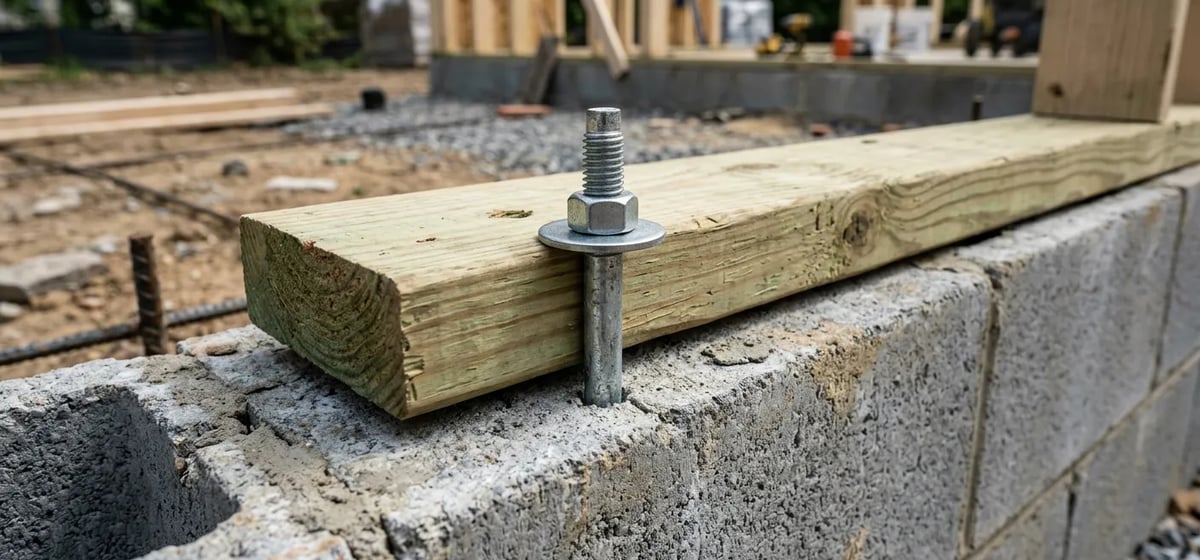
The sill plate is the lowest piece of wood in your home. It sits completely flat on top of your concrete foundation wall. Builders use thick metal anchor bolts to attach this board directly into the concrete. Every other piece of wood in your house frame builds up from this single starting point.
You might wonder where the name comes from. The word sill comes from the Old English word syll, which means a heavy wooden beam or foundation. Carpenters added the word plate to describe how the wood lies flat to spread out the weight of the walls above it.
In modern homes, builders also install a thin foam strip between the concrete and the wood. This is called a sill sealer. Concrete easily absorbs moisture from the ground. The foam strip stops that moisture from soaking up into the wood. It also blocks drafts and bugs from sneaking through tiny gaps between the wood and the rough concrete surface.
Why It Matters to Your Home
Your sill plate does two massive jobs. First, it gives your builders a flat, level surface to attach the floor joists and wall studs. Concrete is rarely perfectly smooth. The wood plate bridges the gap between rough concrete and the rest of your home.
Second, it keeps your house securely attached to the ground. When high winds blow or the earth moves, the anchor bolts hold the sill plate tight to the concrete. The sill plate then holds onto the rest of the house frame. Without it, your house would just rest on top of the concrete. If you want to learn more about how your home stays standing, check out our guide on Foundation & Structure.
What to Watch For
Because the sill plate sits so close to the ground, it faces a lot of threats. Modern builders use pressure treated wood to fight off rot and bugs. Older homes might just have regular wood down there, which makes them much more likely to rot. You should keep an eye out for a few common problems.
- Water damage and rot: If water pools against your home, it can soak the wood. Soft, crumbly wood is a major warning sign. You can test your sill plate by poking it firmly with a screwdriver. If the metal sinks into the wood easily, you have rot.
- Termites and carpenter ants: Bugs love damp wood near the ground. Look for tiny holes, mud tubes running up the concrete, or small piles of sawdust. Read our Pest Control guide to learn how to spot these bugs early before they cause major damage.
- Cracks and splits: Huge amounts of weight press down on this board. Over time, the wood can crack or split near the anchor bolts. Small cracks are normal, but wide splits can weaken your home.
Repair Costs and Hiring Pros
Fixing a damaged sill plate is absolutely not a weekend project for a beginner. A contractor has to set up heavy hydraulic jacks to lift the weight of your house slightly off the foundation. Then they carefully cut out the rotten wood, replace the anchor bolts if needed, and slide a new piece of treated wood into place.
Because this job takes special tools and skills, it is quite expensive. Replacing a small, rotted section of a few feet might cost 500 to 1,500 dollars. If you need to replace a whole wall of sill plates, you might pay 5,000 to 10,000 dollars. Keep in mind that these ranges vary based on where you live and how hard it is to reach the damage. For example, a finished basement makes the job much harder because contractors have to tear out drywall first. Our guide on Hiring Contractors & What Things Cost can help you get fair quotes for big jobs like this.