What is a solar optimizer?
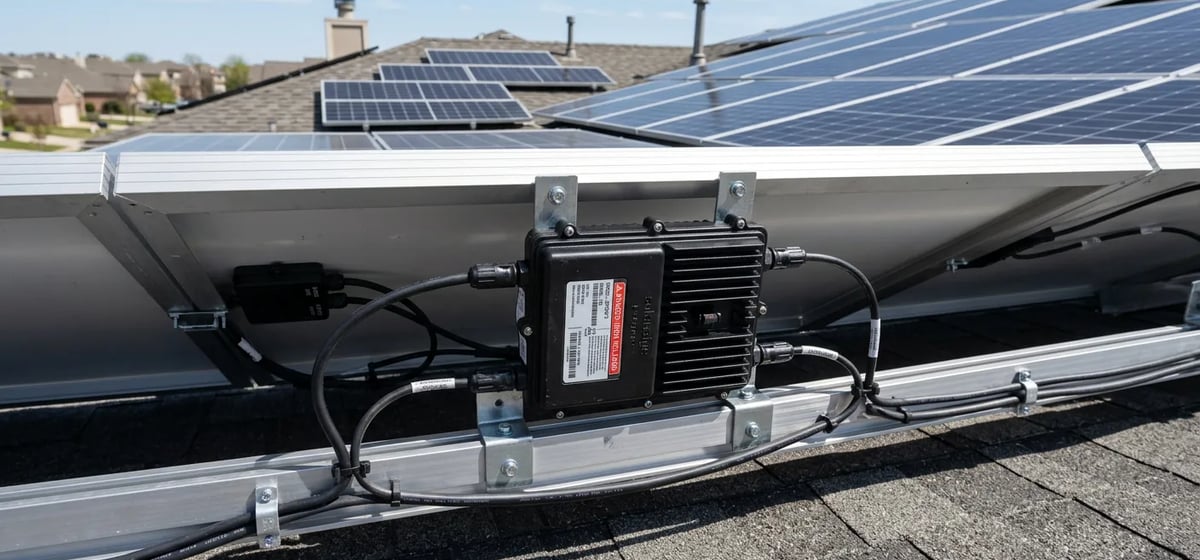
A solar optimizer is a small electronic box that sits right behind a single solar panel on your roof. Its main job is to make sure that specific panel produces as much electricity as possible. It takes the raw direct current power generated by the panel and adjusts the voltage before sending it down to your main central inverter. You'll usually see these included when you get quotes for Solar Panels.
In a standard solar setup without optimizers, your panels are wired together in a continuous chain. Think of a string of old holiday lights. If one bulb goes out or gets dim, the whole string suffers. If a cloud, a passing bird, or a tree branch casts a shadow on just one panel, every other panel in that chain drops its power output to match the shaded one. A solar optimizer stops this from happening. It isolates the shaded panel so the rest of your system can keep running at full speed.
Why it matters for your home
Most roofs aren't perfectly flat or completely free from shade. You might have a brick chimney, a plumbing exhaust vent, or a tall oak tree in your front yard. The sun also moves across the sky, meaning different parts of your roof get shade at different times of the day. Even a buildup of dirt, pollen, or fallen autumn leaves on a single panel can drag down your power production.
Optimizers allow you to install panels on different angles of your roof without losing efficiency. You can put some panels facing south and others facing west to catch the afternoon sun. The optimizers make sure the south-facing panels don't slow down just because the west-facing panels are in the shade during the morning. This flexibility is a huge deal when you're planning an installation and working around your specific Roofing layout.
Optimizers versus microinverters
When you shop for a solar system, contractors will usually pitch you either optimizers or microinverters. Both devices solve the exact same shade problem, but they do it in different ways.
An optimizer simply conditions the power and sends it to one big inverter mounted on your garage wall. A microinverter actually converts the power from direct current to alternating current right there on the roof. Optimizers tend to be slightly cheaper than microinverters. However, if the main wall inverter breaks on an optimizer system, your entire solar array stops working until it's fixed. With microinverters, a single failure only affects one panel.
What they cost
You rarely buy solar optimizers by themselves. Installers almost always bundle them into the total price of a new solar system. However, it helps to know the breakdown if you're comparing quotes from different companies.
- The hardware itself costs about 50 to 100 per panel.
- Adding optimizers to a typical home system will add 1,000 to 2,500 to the total installation price.
- If an optimizer breaks outside of its warranty, a solar technician might charge 150 to 300 in labor to climb up and replace it.
Keep in mind that these ranges vary widely depending on your local market, the size of your roof, and the specific brand your installer uses.
Maintenance and warranties
Solar optimizers are built to survive extreme heat, freezing cold, and heavy rain. Because they sit safely tucked under the panels, they're mostly protected from direct hail or flying debris. You don't need to perform any regular maintenance on them.
Most major brands offer warranties lasting 12 to 25 years. If your monitoring app shows a panel producing zero power on a perfectly sunny day, the optimizer might have failed. You should call your installer to check it out. They'll handle the warranty claim and swap the broken unit. Since these devices tie directly into your home power grid, you shouldn't ever try to replace one yourself. Always leave this dangerous work to a pro who understands your Electrical system.