When you decide to power your home with the sun, the panels get all the attention. But those panels cannot just sit flat on your shingles. They need a strong foundation. This foundation is called solar racking. The term rack comes from the Middle Dutch word rac, meaning a framework. Today, the solar industry uses this word to describe the metal mounting systems that bolt your panels safely in place.
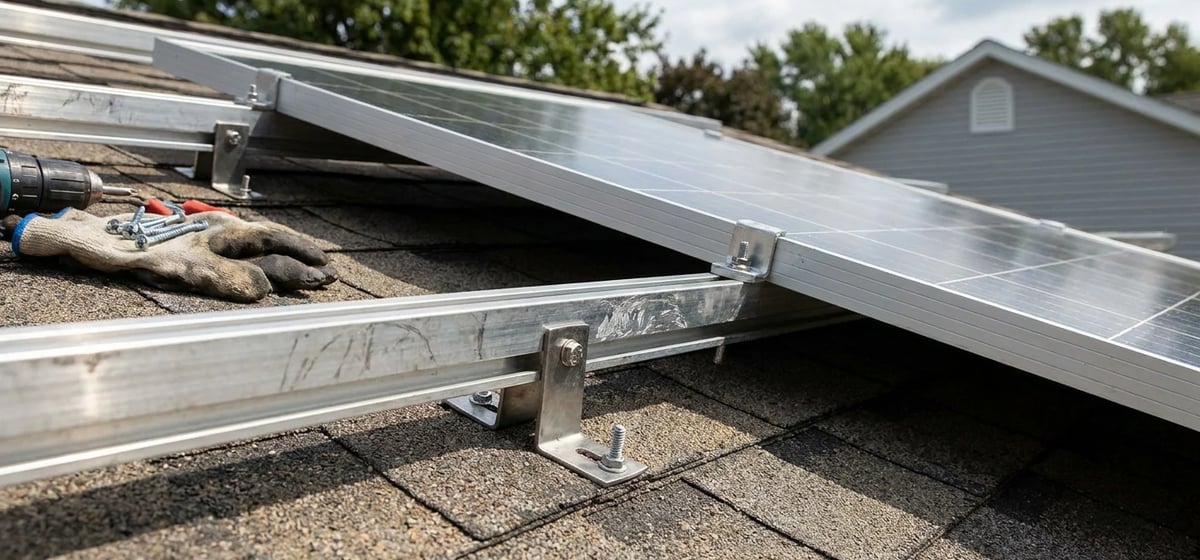
Solar racking is the unsung hero of your energy system. It is a series of metal rails, clamps, and brackets. Installers bolt these rails directly into your roof rafters. This creates a tight, secure grip. The racking does two big jobs. First, it keeps your panels from blowing away in high winds or sliding off during a heavy snowstorm. Second, it tilts your panels at the perfect angle to catch the most sunlight possible.
Why Racking Matters for Your Home
Your roof is your first line of defense against the weather. When installers put up solar racking, they have to drill holes through your shingles and into the wood framing below. This might sound scary. However, professionals use special metal plates called flashing to seal these holes. The flashing slides under your shingles and covers the bolt hole. A heavy bead of silicone sealant goes on top to keep the water out.
If the racking is installed poorly, you will get roof leaks. This is why you must hire an expert. A bad installation can ruin your Roofing materials and lead to expensive water damage inside your attic. A good racking system leaves a small gap between the panels and your roof. This gap allows air to flow under the panels. The airflow keeps the panels cool, which actually helps them make more electricity.
Types of Racking Systems
Not all roofs are the same, so racking systems come in a few different styles. The right choice depends on your property layout and the type of roof you have.
- Flush mounts: This is the most common type for slanted residential roofs. The rails run parallel to your roof surface. The panels sit a few inches above the shingles.
- Tilt legs: If your roof is flat, flush mounts will not work. Installers use tilt legs to lift the back end of the panels up. This gives them the proper angle to face the sun.
- Ballasted mounts: These are also for flat roofs. Instead of drilling holes, the racking uses heavy concrete blocks to hold the panels down. This protects the flat roof membrane from leaks.
- Ground mounts: If you have a large yard, you can put your Solar Panels on the ground. Installers drive metal poles deep into the dirt and build a racking frame on top.
Costs and What to Watch For
Solar racking is usually included in the total price of your solar installation. If you look at an itemized quote, you will see the racking hardware priced out separately. For an average home, racking hardware costs usually run from $500 to $1,500. This breaks down to about $0.10 to $0.30 per watt of solar power. Keep in mind that ranges vary widely based on your roof steepness, the height of your home, and local wind codes.
Before you sign a contract, ask your installer how they plan to attach the racking. Make sure they use high quality flashing. You should also check the age of your roof. If your shingles are more than 15 years old, you should replace them before the racking goes up. Taking down solar racking and panels to replace a roof later will cost you thousands of extra dollars.