What is solder?
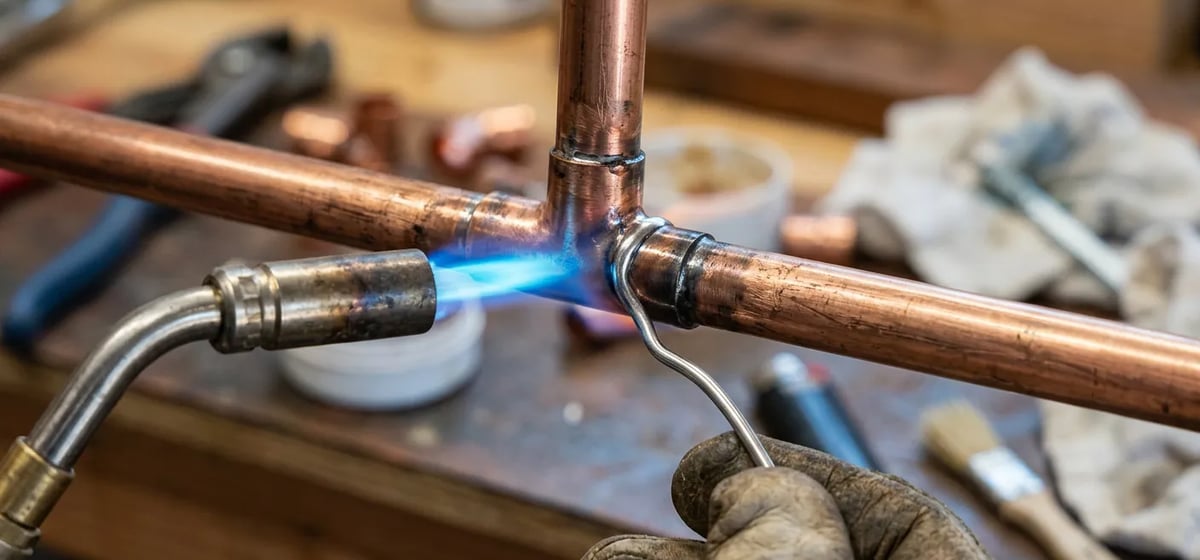
Solder is a soft metal wire that plumbers melt to join copper water pipes together. It's an alloy, which means it is a mix of different metals. When a plumber connects two copper pipes, they can't just glue them or screw them together. They use a hot torch to heat the raw copper. Then they touch the tip of the solder wire to the hot joint. The heat from the pipe melts the metal wire instantly.
Once it melts, the liquid metal gets sucked right into the tiny gap between the two pipes. It cools down and hardens in just a few seconds. This process creates a permanent and waterproof bond that seals the connection. The word comes from the Latin word solidare which means to make solid. Metalworkers have used this basic joining technique for thousands of years.
Why it matters for your home
Your home relies on a completely sealed water system to function. Solder is the secret ingredient that holds your copper Plumbing system together. A properly made joint won't leak under the high pressure of your city water supply. It can easily last for fifty years or more without failing.
If you have an older house, you probably have hundreds of copper pipes joined this way hiding behind your drywall and ceilings. Knowing how these pipes connect helps you understand how your water lines work. It also explains why fixing a simple leak often takes special tools and skills.
Where you will see it
You can easily spot solder in your basement or utility room. Just look for the silver rings around the joints on the copper pipes near your water heater. You'll also see it under your sinks or near your water meter. You might hear the term when you hire a plumber to fix a broken pipe or run a new water line to a fridge.
Plumbers usually charge between $150 to $300 for a basic pipe repair that involves cutting and soldering copper. Keep in mind that labor prices vary based on where you live and how hard it is to reach the broken pipe inside your walls. You might also read about it on a home inspection report if an inspector notices messy joints or signs of a slow drip.
What to watch out for
The most important thing to know is the difference between lead and lead-free solder. Before 1986, home builders used solder that contained lead. Water flowing through these older pipes can pick up tiny amounts of lead over time. This is a major health risk for your family. Today, the law strictly requires plumbers to use lead-free solder for all drinking water lines.
If you live in a house built before 1986, you should test your tap water for lead. You can buy a simple test kit at the hardware store for about $15 to $30. If the test shows lead, you can install special water filters under your sink to keep your drinking water safe.
Another common problem is a bad joint. A plumber must clean the pipe perfectly and use a special paste called flux before applying the heat. If they skip a step, the connection will eventually fail. Here's what to look for:
- Green crusty buildup around a pipe fitting.
- White chalky lines running down the side of a copper pipe.
- A slow, steady drip coming from a connection point.
- Loss of water pressure in a specific bathroom.
If you see that green crust, it means water is slowly weeping out of the joint. You should call a professional to fix it before the pipe bursts and causes one of those massive Home Emergencies.