What Is a Spade Bit?
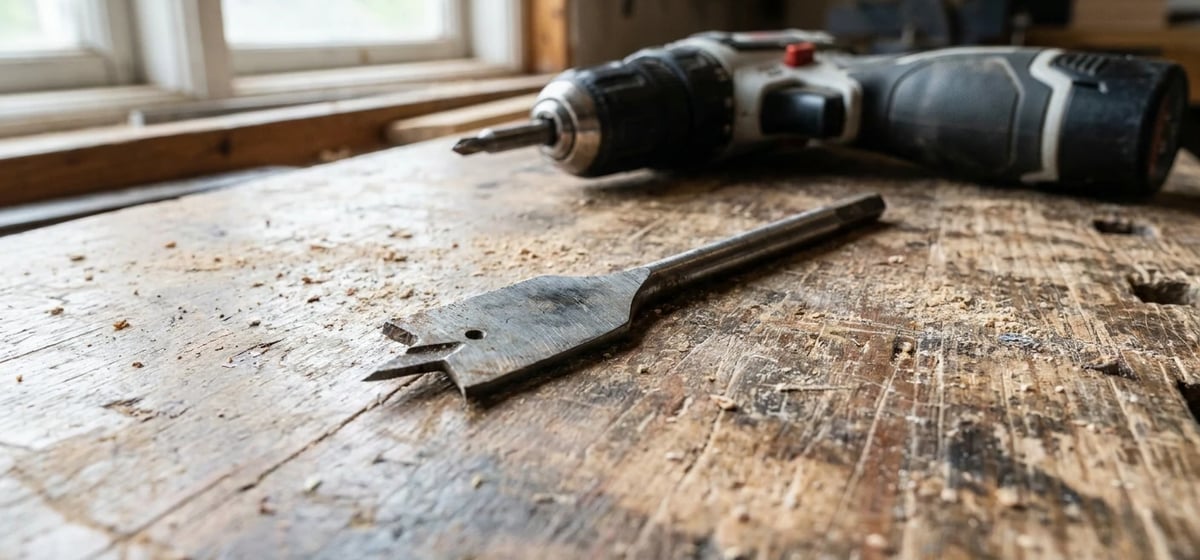
A spade bit is a flat metal drill bit used to quickly bore large holes through wooden studs and joists. The bit has a sharp center point to guide the cut and two flat cutting wings that scoop out the wood. The name comes from the Old English word spadu. This word refers to a digging tool. The bit earned this name because its flat, winged shape looks exactly like a miniature garden shovel.
You attach a spade bit to a standard power drill. When you pull the trigger, the sharp center point bites into the wood to keep the drill steady. Then, the flat wings spin fast to carve out a perfect circle. You'll find these bits in almost every tool bag because they're cheap, tough, and do the job fast.
Why You Need One
If you own a home, you'll eventually need to run a wire or a pipe through a piece of wood. A regular twist drill bit is too small for this task. A hole saw is too slow and clogs up with sawdust. A spade bit is the perfect middle ground. It tears through soft wood like pine in just a few seconds.
Homeowners often buy these bits for weekend projects. You might use one to drill a hole in your desk for computer cables. You could use one to run a new speaker wire through a wall stud. You might need to run a television cable behind your drywall to hide the messy wires. If you're taking on a bigger project, you can read our guide on DIY vs. Hiring a Pro to see if you should drill those holes yourself or call an expert.
Where You Will See It Used
Contractors use spade bits every single day during construction and renovation projects. They're especially common in two main trades.
- Plumbers: When installing new water lines, plumbers use large spade bits to drill holes through floor joists. This lets them run copper or PEX pipes neatly under your floors. You can learn more about how your pipes work in our Plumbing guide.
- Electricians: Electricians use smaller spade bits to drill holes through wall studs. They pull thick plastic cables through these holes to wire your outlets and switches. Check out our Electrical guide for more details on home wiring.
Tips for Safe Drilling
Spade bits are fast, but they can be messy. When the bit pushes through the back side of a board, it often splinters the wood. Carpenters call this blowout. Blowout looks ugly and can weaken the wood if it's severe.
To avoid blowout, you can use a simple trick. Drill into the wood until the sharp center point just barely pokes through the back side. Then, stop drilling. Walk around to the back side of the board. Place the point of your bit into that tiny hole and finish drilling from the new side. This gives you a clean hole on both sides of the wood.
What They Cost
Spade bits are very affordable tools. You can buy them one at a time or in bulk sets at any local hardware store. Costs vary depending on the brand and the quality of the metal. They come in sizes ranging from 1/4 inch up to 1 and 1/2 inches wide.
- Single bits: A single spade bit usually costs 3 to 8 dollars.
- Small sets: A basic set of six common sizes will run you 15 to 25 dollars.
- Master sets: A large case with 10 to 15 different sizes usually costs 30 to 50 dollars.
If you plan to do a lot of drilling, look for bits with a threaded tip. These tips have tiny screw threads on the center point. They pull the bit through the wood automatically. This saves your arms from doing all the hard pushing when you have dozens of holes to drill.