What is a square yard?
A square yard is a common unit of area used in home improvement. Picture a square patch on the ground that is exactly three feet long and three feet wide. If you multiply three by three, you get nine. This means one square yard equals exactly nine square feet. It is a simple math rule, but it is easy to forget when you are standing in a busy home improvement store.
The word yard comes from the Old English word gyrd. This old word meant a straight branch or a measuring stick. In the 1900s, carpet sellers started using the square yard to price large rolls of heavy fabric. It made the numbers smaller and easier to manage on paper. Today, it remains a standard measurement for many bulk home materials.
Why contractors use this measurement
You might wonder why we do not just use square feet for everything. The answer comes down to how factories make and ship materials. Carpet, vinyl flooring, and artificial turf come off factory machines in massive rolls. These rolls are usually 12 feet or 15 feet wide. Because the rolls are so large, measuring them in single square feet creates huge, confusing numbers.
Using square yards keeps the math simple for the people cutting and loading the materials. It also helps salespeople write shorter quotes. When you hire a professional, they will often speak in yards. You can learn more about working with professionals in our guide to Hiring Contractors & What Things Cost.
Where you will see this measurement
As a homeowner, you will run into square yards when you buy specific materials. Stores and contractors do not always use square feet. They use square yards for items that cover large surface areas.
- Carpet and padding: Most carpet stores price their products by the square yard. You will see this on price tags, sample boards, and installation quotes. You can learn more about picking materials in our guide to Flooring.
- Sod and artificial turf: Landscaping companies sell living grass patches and fake turf by the square yard. They harvest sod in large rolls that fit this measurement perfectly.
- Driveway fabrics and weed barriers: When you buy heavy duty landscape fabric to put under gravel or mulch, the package will list the coverage in square yards. Read our Landscaping, Drainage & Outdoor guide for more yard tips.
How to calculate your needs
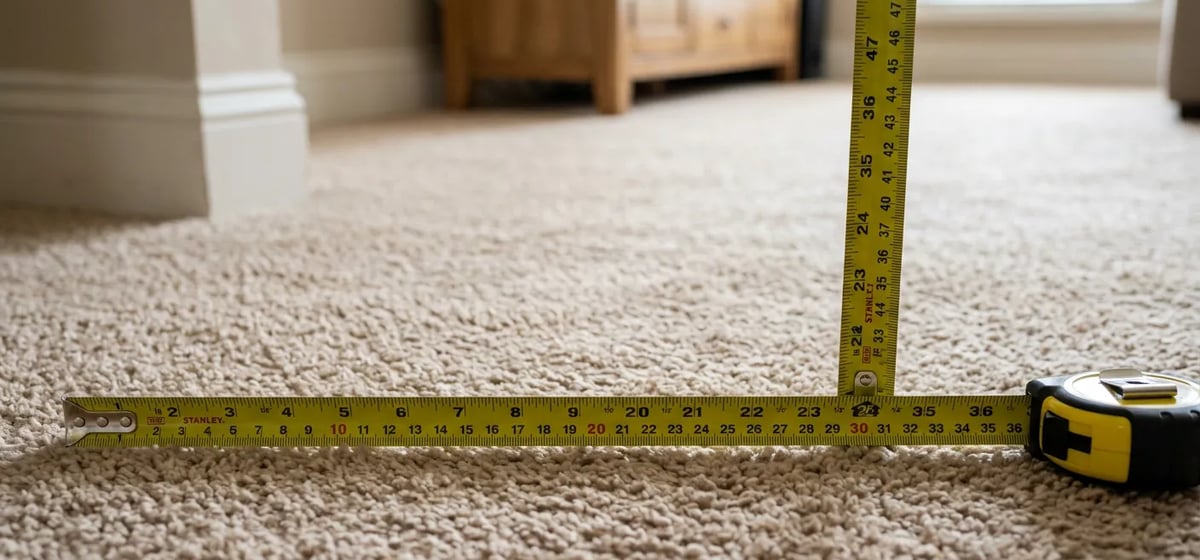
Figuring out how many square yards you need is simple. You just need a tape measure, a piece of paper, and a calculator.
First, measure the length and width of your room or yard in feet. Multiply those two numbers together. This gives you your total square feet. Next, divide that total by nine. The result is your total square yards.
For example, imagine a bedroom that is 12 feet wide and 15 feet long. Multiply 12 by 15 to get 180 square feet. Divide 180 by nine to get 20. You need 20 square yards of carpet to cover the floor.
| Room Size in Feet | Total Square Feet | Total Square Yards |
|---|---|---|
| 10 by 10 | 100 | 11.1 |
| 12 by 15 | 180 | 20.0 |
| 20 by 20 | 400 | 44.4 |
Typical costs and common mistakes
Prices depend heavily on where you live and the quality of the material. Keep in mind that local ranges vary. Basic carpet usually costs $15 to $45 per square yard. High end wool carpet can cost $90 to $150 per square yard. If you are buying sod for your lawn, expect to pay $3 to $8 per square yard.
The biggest mistake homeowners make is confusing square feet with square yards. If a carpet looks incredibly cheap, check the tag closely. A price of $3 per square foot sounds great until you realize it equals $27 per square yard. Big box stores sometimes display the square foot price in large print to make the carpet look cheaper than it really is. Always read the fine print.
When you hire someone to install these materials, ask them to break down their quote. Make sure their material list matches your own math. Do not be afraid to ask the salesperson to explain their measurements before you hand over your credit card.