What is a subpanel?
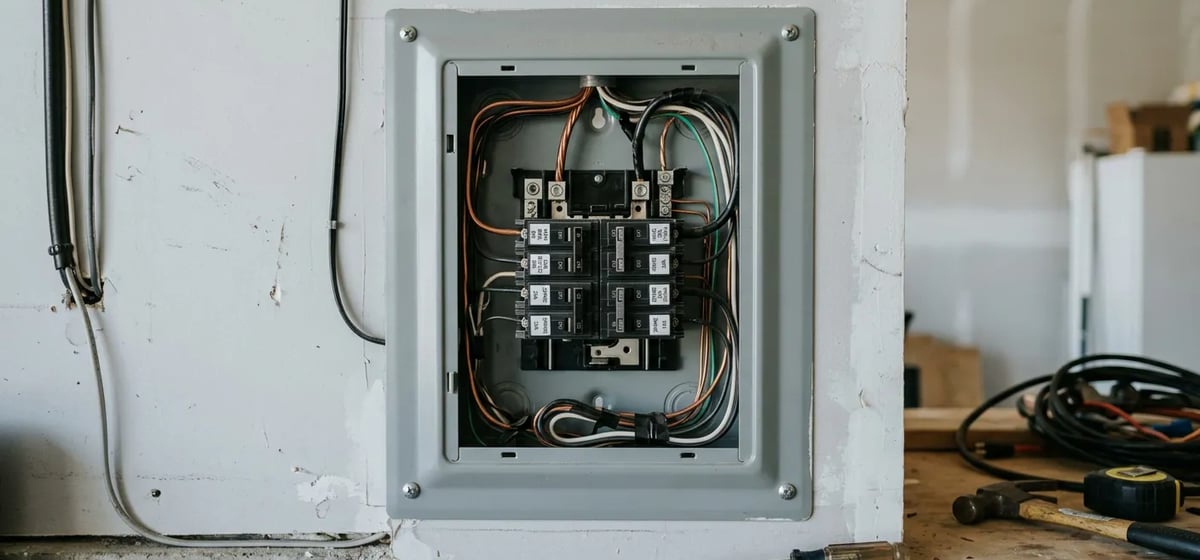
A subpanel is a smaller electrical box that gets its power directly from your main breaker panel. The prefix sub comes from Latin, meaning under or below. Electricians combined it with panel in the mid 20th century to describe a secondary distribution board. It looks exactly like your main electrical box, just a bit smaller. It holds its own set of circuit breakers to control power for a specific area of your house.
The biggest difference between a main panel and a subpanel is the main shutoff switch. Your main panel has one large breaker at the top that cuts power to the entire house. A subpanel doesn't have this switch. Instead, a single large breaker located in your main panel controls the power flowing to the subpanel. If you turn that breaker off, the entire subpanel goes dead. You can learn more about how power flows through your home in our Electrical guide.
Why you might need one
Homeowners usually install a subpanel for two main reasons. The first reason is convenience and wire management. If you build a large home addition or a detached garage, you'll need several new electrical circuits. Running one thick cable from your main panel to a new subpanel in the garage is much easier than running ten separate wires all the way across your property. The subpanel acts as a local hub for all the new lights and outlets in that area.
The second reason is running out of space. Your main breaker box only has a set number of slots. Once those slots are full, you can't add any new circuits. An electrician can install a small subpanel right next to the main box to give you more room. This happens often when you upgrade your HVAC & Climate Control equipment and need extra circuits for a new heat pump. It also happens when people add large loads like an electric vehicle charger or a hot tub.
How much it costs
Adding a subpanel is absolutely a job for a licensed professional. You are dealing with high voltage that can cause fires or serious injuries. The total price depends heavily on how far the new subpanel is from your main breaker box.
If the electrician puts the subpanel right next to your main panel, you might pay $400 to $800. The labor is quick, and they only need a few feet of wire. If they have to run wire out to a detached garage or a backyard shed, the cost jumps to $1,000 to $2,500 or more. Thick copper wire is very expensive. If the electrician has to dig a trench to bury the wire underground, the labor costs will climb even higher. Keep in mind that costs vary based on your location and the exact size of the panel. You can read more about typical labor rates in our Hiring Contractors & What Things Cost guide.
What to watch for
If you buy a house that already has a subpanel, you should check a few important details to make sure it is safe and useful.
- Clear labels: Look for a clear label on your main panel that tells you exactly which breaker turns off the subpanel. Then open the subpanel door and make sure every individual breaker inside is labeled.
- Clear space: Make sure there is a clear path to the subpanel. You need at least three feet of empty space in front of the box so you can reach it safely in an emergency. Never stack boxes or store items right in front of it.
- Dry conditions: Check the metal box for rust or water damage. If the subpanel is in a basement or garage, moisture can sometimes get inside and ruin the breakers.
- Proper wiring: A home inspector will always check a subpanel to make sure the ground wires and neutral wires are separated. This is a strict safety rule for subpanels. If they're mixed together, you'll need an electrician to fix it.