What is a submersible well pump?
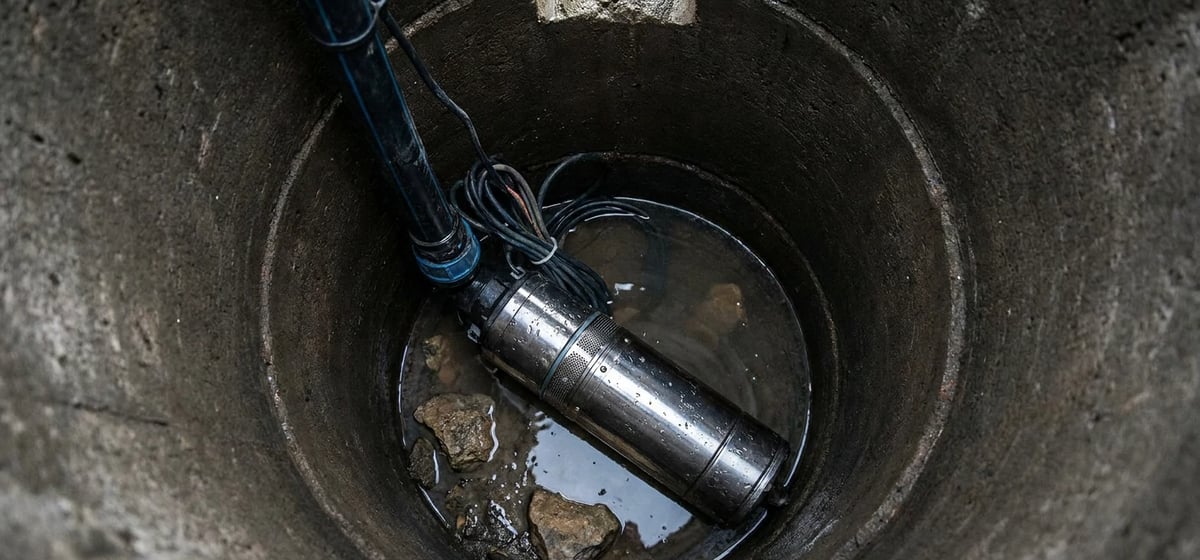
If your home gets water from a private well, a submersible well pump is the heart of your plumbing system. This heavy metal cylinder rests deep underwater inside your well casing. Its main job is to push drinking water up to your house. You will likely never see it because it sits 100 to 400 feet below the ground. The first electric submersible pump for water systems was invented in 1928 by an engineer named Armais Arutunoff. He originally designed the sealed motor technology to pump oil out of deep wells before adapting it for residential water use. Today, it is the most common type of pump for deep residential wells.
How it works to supply your home
When you turn on a faucet or flush a toilet, your home water pressure drops. A switch senses this drop and sends electricity down the well to the pump. The sealed motor kicks on and spins a series of stacked fan blades called impellers. These blades force water up the main supply pipe and into your house. The water fills a large pressure tank in your basement or utility room until the pressure reaches a set limit. Then, the switch turns the pump off.
Because the pump stays completely underwater, it never loses its prime. It also pushes water up instead of pulling it. This takes less energy and prevents air bubbles from blocking the flow. You can read more about how water moves through your house in our Plumbing guide.
Signs your pump is struggling
These pumps are built to last a long time in harsh conditions. Most run flawlessly for 10 to 15 years. However, they do eventually wear out from hard water, sediment, or electrical surges. You want to catch a failing pump early so you are not left without running water on a busy morning. Keep an eye out for these common warning signs:
- Sputtering faucets or air spitting out of your taps.
- Muddy or cloudy water coming into your sinks.
- A sudden spike in your monthly electricity bill.
- Low water pressure across the whole house.
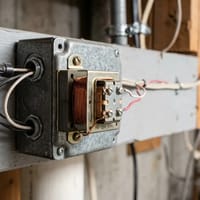
- Clicking noises coming from the pressure switch near your indoor water tank.
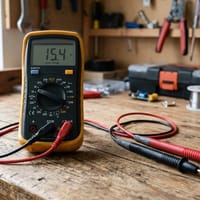
If you notice a sudden jump in your power bill, the pump might be running constantly. A leaky underground pipe or a bad check valve can cause this. You might want to review your Electrical basics to understand how a constantly running motor draws heavy power.
Replacement costs and hiring a pro
Replacing a deep well pump is never a weekend project for a homeowner. It involves dealing with high voltage and pulling hundreds of feet of heavy pipe full of water out of the ground. You need to hire a licensed well contractor or a specialized plumber.
Costs depend heavily on how deep your well is and the size of the motor you need. A typical replacement costs between $1,200 and $2,800. This includes the new unit, new wiring, and the labor to pull the old system out. Keep in mind that prices vary widely based on your location and the depth of the casing. If your home has a massive tank or needs a stronger motor to push water uphill, your bill could reach $3,500. You can get a better sense of typical contractor pricing in our guide on What Home Repairs Cost.