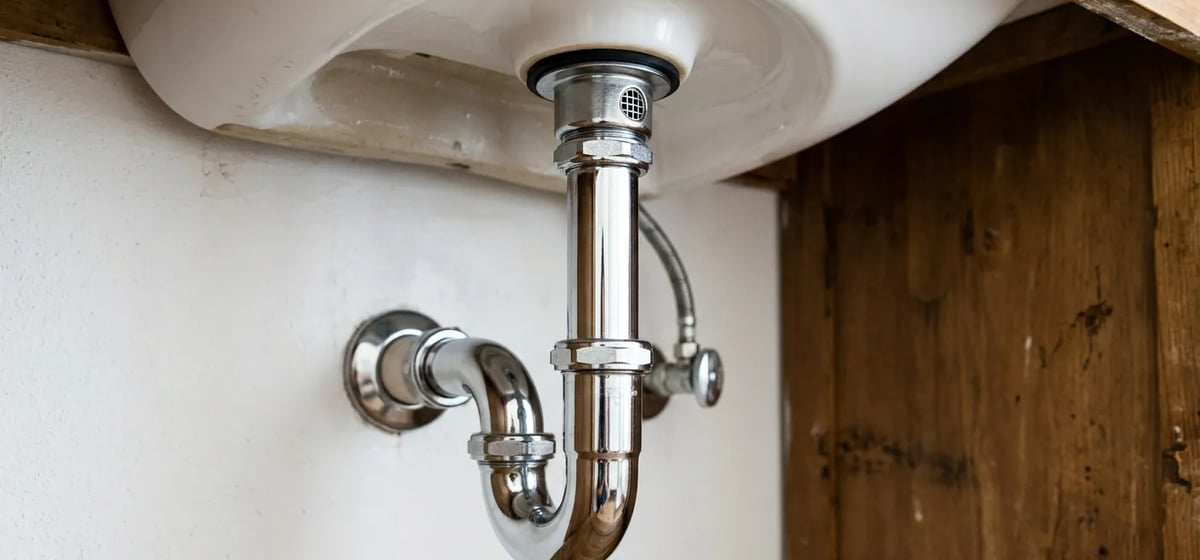
What Is a Tailpiece?
If you look under your kitchen or bathroom sink, you will see a series of pipes. The tailpiece is the straight, vertical pipe right below the sink drain. It connects the drain basket in the sink to the curved pipe below it. That curved pipe is called the P-trap. The tailpiece is the first stop for water leaving your sink. It literally looks like a tail hanging down from the drain assembly. Plumbers have used this exact term since the late 1800s. You will find them on every sink in your home. Some are short, while others drop down several inches to meet the trap. In a kitchen sink, a special version called a flanged tailpiece connects directly to the strainer basket. Another version has a small side branch to connect a dishwasher drain hose.
Why It Matters to You
You might never think about this pipe until it leaks. The connection at the top of the tailpiece is a common spot for drips. If the nut comes loose or the washer wears out, water will drip into your cabinet. This can ruin the wood base and cause mold to grow. The tailpiece also catches a lot of junk. Hair, soap scum, and food bits can build up inside it. This slows down your drain. If your sink backs up, the clog is often right inside this straight pipe or in the trap just below it. Keeping this section clear helps your whole Plumbing system flow better. A clean pipe means water drains fast and leaves no bad smells behind.
Common Materials and Costs
You will mostly see two types of materials under your sink. Plastic is the most common choice today. It is cheap, easy to cut, and will not rust over time. Brass is the older, heavier option. It comes in a shiny chrome finish or just raw brass. Brass lasts longer but costs more. If you need to replace one, the part itself is very cheap. A plastic tailpiece costs 3 to 10 dollars at the hardware store. A brass version runs 10 to 25 dollars. If you hire a plumber to swap it out and fix a leak, expect to pay 150 to 300 dollars for parts and labor. Keep in mind that prices vary based on where you live and how hard the plumber has to work to remove the old pipes.
What to Watch For
It is a good idea to check under your sinks once a month. Look for water spots or damp wood. Run the water and touch the tailpiece. If your fingers come away wet, you have a leak.
Here are a few signs your tailpiece needs attention:
- Water pooling under the sink cabinet.
- A foul smell coming from the drain area.
- Rust or green corrosion on a metal pipe.
- Cracks in a white or black plastic pipe.
Sometimes the slip nut holding the pipe gets loose. You can often fix a small drip by tightening this nut by hand. If it still leaks, you might need a new rubber washer inside the joint.
DIY or Hire a Plumber?
Replacing a tailpiece is a great beginner project. It requires very few tools. You just need a bucket to catch drips and maybe a pair of slip joint pliers. You can easily cut a plastic pipe to the right length with a simple hacksaw. You just measure the old pipe and cut the new one to match. However, if the pipes are old metal and completely stuck together, you might want some help. Old plumbing can break if you pull too hard. If you feel unsure, check out our guide on DIY vs. Hiring a Pro to decide if you should call a plumber. A pro will fix it fast and make sure nothing leaks when they leave.