What is a tear off?
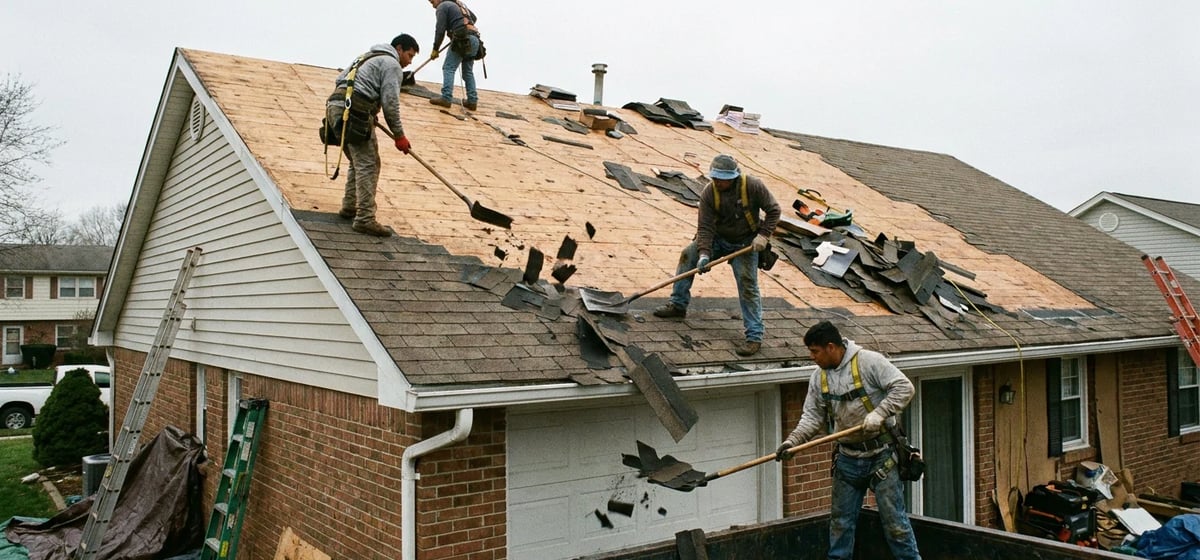
A tear off is a roofing project where a crew removes all your old shingles before installing new ones. They strip the roof down to the bare wooden deck. This means removing the shingles, the old tar paper underlayment, the metal drip edge, and the flashing around your chimney. This is the exact opposite of a roof overlay. During an overlay, roofers just nail new shingles directly on top of the old ones. A tear off is the most common way to replace a roof today. It's also the method highly recommended by most roofing professionals.
When you get quotes for a new roof, the contractor will specify if the price includes a full tear off. This process requires a massive amount of manual labor. Workers use special roofing shovels to pry up the old shingles and nails. All of this heavy debris goes straight into a large dumpster.
Why a tear off matters for your home
The biggest benefit of a tear off is visibility. Once the old shingles are gone, your roofer can inspect the wooden decking underneath. If there is rot, mold, or water damage, they can replace the bad wood before moving forward. If you just do an overlay, you might trap hidden moisture. Nailing new shingles over rotten wood is a recipe for a leaky roof.
A brand new roof installed on a clean deck will also last much longer. New shingles lay perfectly flat when there is no old material underneath them. This helps them seal together properly to resist high winds. A tear off also protects the structural integrity of your house. Asphalt shingles are very heavy. Adding a second or third layer puts a huge amount of weight on your roof framing. Most local building codes make it illegal to have more than two layers of roofing. Stripping the roof bare ensures your home never carries too much weight. To learn more about how your roof system works together, check out our guide to Roofing.
What to expect during the project
A roof tear off is an incredibly messy and loud process. The crew will walk heavily on your roof and toss debris over the edge. You'll hear constant scraping, thumping, and yelling. Here are a few things you should do to prepare for the big day:
- Take fragile items off your walls. The vibrations from the scraping and hammering can knock pictures or mirrors to the floor.
- Move your cars out of the driveway. The roofing company will need that space for a large dumpster and their work trucks.
- Protect your attic items. Dust and small wood splinters will fall through the gaps in your roof decking. Cover any stored items in your attic with plastic tarps.
- Watch your pets. The sudden loud noises and strangers outside can easily scare cats and dogs.
You should also talk to your contractor about protecting your bushes and flower beds. Good crews will drape heavy plastic sheets over your landscaping to catch falling debris.
How much does a tear off cost?
Because it takes more time and labor, a tear off is more expensive than a simple overlay. You also have to pay dump fees to throw away tons of old asphalt shingles. Shingles are heavy, and dump fees are charged by weight. The tear off portion of a roof replacement usually adds 1,000 to 3,000 dollars to the total bill.
For a standard home, a complete roof replacement with a tear off generally costs between 8,000 and 15,000 dollars. Keep in mind that exact prices range widely based on where you live, the pitch of your roof, and the materials you choose. If workers find rotten wood, you'll also pay extra for the new plywood. If you are planning a major project like this, reading up on Hiring Contractors & What Things Cost can help you compare your bids safely.