What is a skylight?
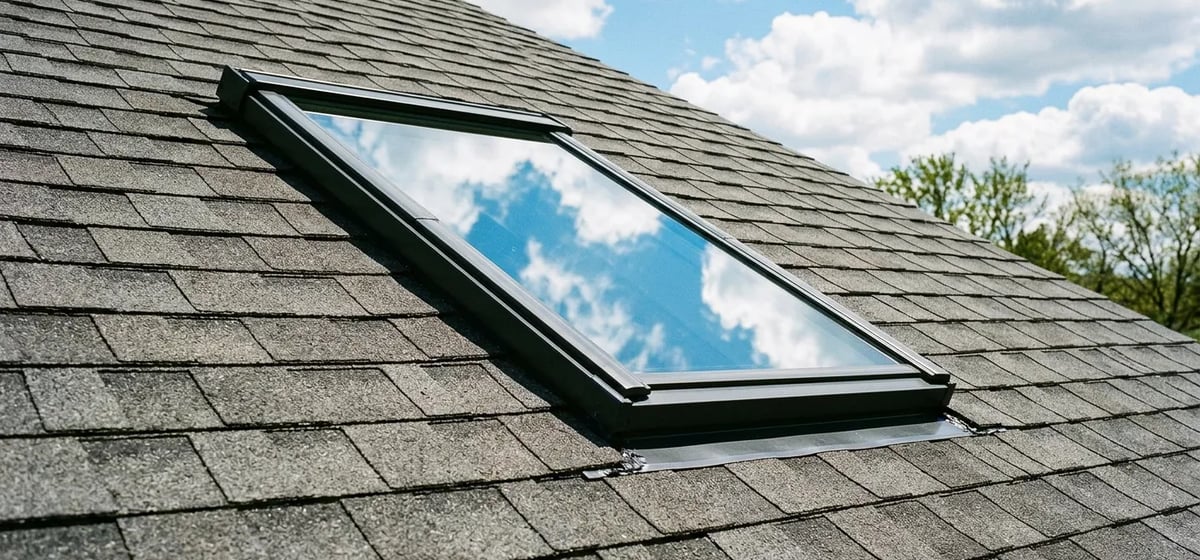
A skylight is simply a window built directly into your roof. It lets natural sunlight pour into your home from above. The word combines sky and light to describe exactly what it does. Builders have used this term since the 1600s when glass became cheap enough for average homes.
You will usually see them in rooms that lack exterior walls for regular windows. They are very popular in dark hallways, interior bathrooms, and large living rooms with vaulted ceilings. Some open up to let fresh air in, while others are completely sealed shut.
Why they matter to your home
The main reason to add one is to brighten up a dark space. Natural light makes a room feel bigger and more welcoming. It can also help you save money on your electric bill because you do not need to turn on lamps during the day.
If you choose a vented model, it can also help cool your house. Hot air rises to the ceiling. When you open a roof window, that trapped heat escapes outside. This takes a lot of pressure off your system when you are trying to manage your HVAC & Climate Control costs in the summer.
What to watch out for
The biggest problem you will run into is water. Every time you cut a hole in your roof, you create a chance for rain to get inside. The metal or plastic flashing around the glass must stay perfectly sealed. If the caulking dries out and cracks, water will drip onto your ceiling and cause expensive rot.
You also need to watch out for condensation. In the winter, warm indoor air hits the cold glass and turns into water droplets. This moisture can drip down and damage your drywall. Finally, keep an eye on your energy bills. Older glass can let too much summer heat in or winter heat out. If your unit is older than 15 years, it might be time to look at newer Windows & Doors technology that blocks heat transfer.
Common types and what they cost
If you want to install or replace one, you have three main choices. Prices depend heavily on your roof type and where you live, but here are some typical US ballpark costs. Keep in mind that local labor rates cause these ranges to vary.
- Fixed skylights: These do not open. They only provide light. Replacing an old fixed unit usually costs 500 to 1500 dollars. Putting a brand new one into an existing roof costs 1500 to 3000 dollars because the builder has to cut through the ceiling and roof deck.
- Vented skylights: These open manually with a crank or automatically with a motor. They cost more because of the moving parts. Expect to pay 1000 to 2500 dollars for a replacement, or 2000 to 4000 dollars for a new installation.
- Tubular skylights: These use a small dome on the roof to catch light. A shiny metal tube bounces that light down into a small ceiling fixture. They are perfect for small closets or laundry rooms. They are also the cheapest option, usually costing 500 to 1000 dollars fully installed.
Whenever you plan to replace the shingles on your house, you should replace the roof windows at the same time. The Roofing crew already has the area torn apart, so the labor is much cheaper. Trying to replace a leaky unit a year after a new roof goes on will cost you double the labor and might void your shingle warranty.