What is a whole house humidifier?
A whole house humidifier is a device that attaches directly to your heating and cooling system. It adds moisture to the air blowing through your vents. You can use it to fix dry indoor air during the winter months. The word humidifier traces back to the Latin word humidus, meaning moist. HVAC manufacturers added the phrase whole house to separate these built in units from portable room humidifiers. Instead of dragging a small plastic tank from room to room, you get comfortable air in every single corner of your home.
Why it matters to you
Winter air holds less moisture than summer air. When your furnace heats that cold air, it gets even drier. This dry air pulls moisture out of everything in your house. Your skin gets itchy. Your nose gets dry and irritated. Wood floors and expensive wood furniture can shrink and crack. Static electricity builds up and shocks you when you touch a doorknob. A whole house humidifier stops all of this. It keeps your indoor humidity right where it belongs. You will actually feel warmer at lower temperatures when the air has proper moisture. This means you might even save a little money on your monthly heating bill.
How it works
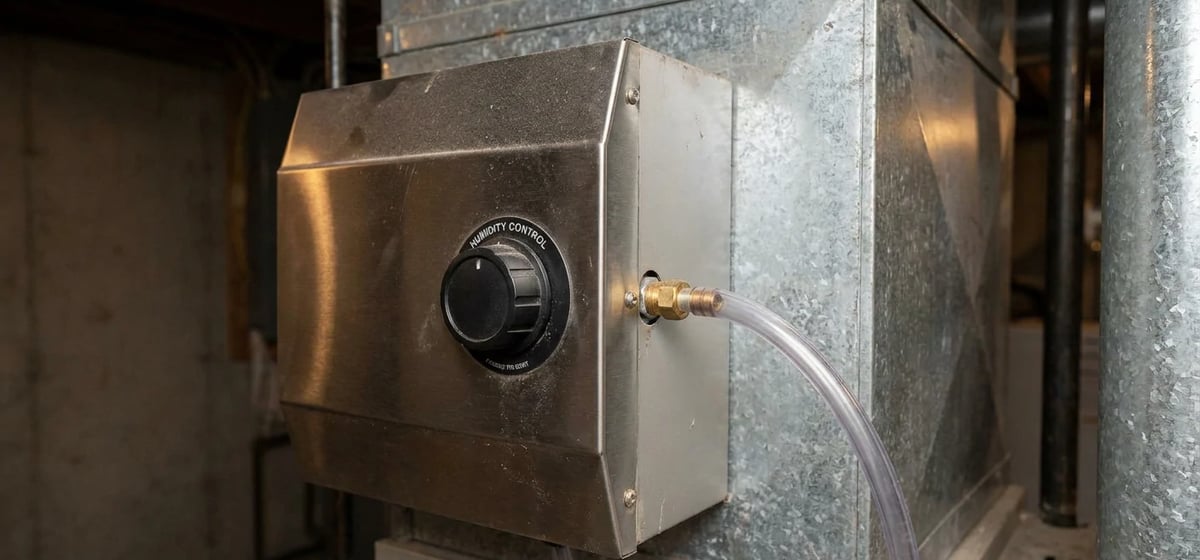
These units mount directly to the metal ductwork near your furnace. You can read more about your ductwork and furnace in our HVAC & Climate Control guide. A small water pipe connects the humidifier straight to your home water supply. You don't ever have to fill a heavy tank. When your thermostat senses the air is too dry, it tells the humidifier to turn on.
Water trickles down a special pad inside the unit. The furnace blower pushes warm air through this wet pad. The air absorbs the water and carries it through your vents to every room. A small drain tube carries away any leftover water so it doesn't spill on the floor. You can learn more about how water moves through your home in our Plumbing section.
What to watch for
You need to maintain your whole house humidifier so it keeps working right. The most important job is changing the water panel. This is also called a humidifier pad. Hard water leaves a thick mineral crust on the pad over time. You should slide a new pad in once a year before winter starts. You also need to watch your humidity levels closely.
- Keep your humidity between 30 and 45 percent during the winter.
- If you set the dial too high, condensation will form on your windows.
- This extra water can drip down and rot your window sills.
Costs and installation
Adding one of these to your home is a smart upgrade. If you hire a professional, the total cost usually runs from 400 to 900 dollars. Prices depend on the type of unit and how hard it is to reach your ductwork. Keep in mind that local labor rates mean these ranges vary. A basic bypass humidifier costs less. A steam humidifier costs more but works faster and better in large homes. The water pads are cheap. You can buy a replacement pad at the hardware store for 10 to 20 dollars. To see how this compares to other projects, check out our guide on What Home Repairs Cost.