What is a Wire Stripper?
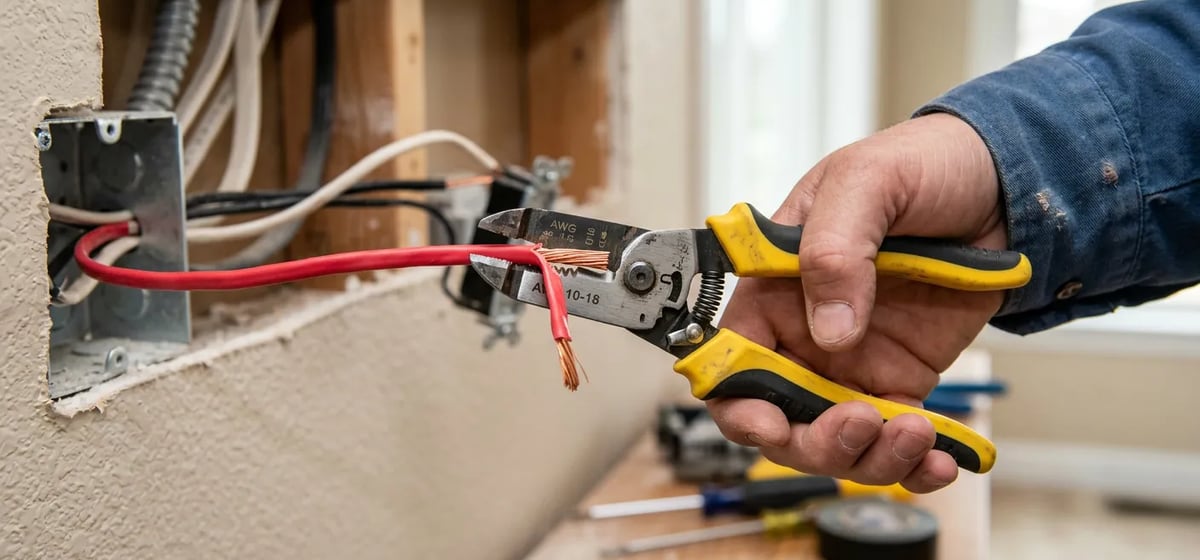
A wire stripper is a hand tool that looks a lot like a pair of pliers. It has a series of small, labeled holes cut into the jaws. Electricians and homeowners use it to slice and pull the plastic coating off electrical wires. The tool removes the plastic jacket without scratching or breaking the solid copper metal inside. You'll need this tool whenever you install a new light switch, replace a wall outlet, or hang a ceiling fan.
The word strip comes from Old English, meaning to take away or uncover. Tool makers combined it with wire to describe the exact action the tool performs on your home electrical cables.
Why You Need One in Your Toolbox
You'll likely buy your first wire stripper during Your First Year as a Homeowner. Replacing old, ugly light fixtures is a very common weekend project. To do this safely, you must connect the house wiring to the new fixture. Wires need a clean, bare metal end to make a safe and secure connection.
If you try to use a pocket knife or household scissors to cut the plastic, you'll probably nick the metal wire. A scratched wire is weak and can easily snap off when you bend it. A damaged wire can also cause a spark or create a hidden fire hazard inside your walls. A wire stripper removes all the guesswork. You just match the wire size to the correct hole on the tool, squeeze the handles, and pull the plastic right off.
How to Choose the Right Pair
You can find wire strippers at any local hardware store or home center. Basic manual models cost 10 to 20 dollars. These have simple holes for common household wire sizes. More advanced automatic strippers cost 25 to 50 dollars. Keep in mind that prices and ranges vary by brand and store. For most basic home projects, a standard manual stripper works perfectly.
Look for a tool that handles 10 to 18 gauge wires. This covers almost all standard Electrical projects in a residential house.
- Thicker 10 gauge wires run to large appliances like electric dryers.
- Standard 12 gauge wires run to your kitchen and bathroom outlets.
- Standard 14 gauge wires run to your basic lighting circuits and bedroom outlets.
- Thinner 18 gauge wires run to low voltage items like doorbells and smart thermostats.
Many wire strippers also have a built in cutting blade near the hinge. You can use this part to snip wires to the perfect length before you strip the ends.
What to Watch Out For
Safety is the most important part of any home wiring project. Always turn off the power at your main breaker box before you touch any wires. You should also use a cheap non contact voltage tester pen to make absolutely sure the power is really off.
When you use your wire stripper, take a second to verify you are using the correct hole. The holes have numbers printed right next to them. If you put a 12 gauge wire in a smaller 14 gauge hole, the sharp jaws will bite into the copper metal. This ruins the end of the wire, and you'll have to cut it off and start over. If you put a 14 gauge wire in a larger 12 gauge hole, the tool won't cut deep enough. You'll just stretch the plastic instead of removing it cleanly.
Maintenance and Care
Wire strippers are tough tools, but they do require a little bit of care to stay sharp. The cutting jaws do all the hard work. Over time, cutting dirty or painted wires can dull the sharp edges inside the stripping holes. Keep your tool clean and dry to prevent rust. A rusty hinge will make the tool hard to squeeze and spring open. If the hinge gets stiff, spray a tiny drop of lubricating oil into the joint and open and close the handles a few times.
You should also avoid using your wire strippers to cut anything other than soft copper or aluminum electrical wire. Never use the cutting blade to snip steel nails, screws, or thick metal coat hangers. Hard metals will instantly dent the cutting blades. Once the blades have a dent, they won't cut electrical wire cleanly anymore. Treat your wire stripper like a specialty tool, and a single pair will easily last you for decades of home ownership.