What is a zoning variance?
Zoning rules divide land into specific areas, like residential or commercial zones. A zoning variance is special permission from your local government. It lets you break a specific building rule on your property without getting into legal trouble. The word variance comes from the Latin word variare, meaning to change or differ. City planners created variances back in the 1920s. They realized that strict rules don't work for every single property layout. Sometimes a weirdly shaped lot, a steep hill, or an underground utility line makes it impossible to follow the normal rules. The variance acts as a safety valve for homeowners facing these unique physical problems.
Why you might need one
You usually run into this term when you want to build or expand something outside the normal limits of your neighborhood. Every city has setback rules. These rules dictate exactly how far a structure must sit from your property line, the street, or other buildings. If you want to build a backyard shed but a giant oak tree forces you to place it closer to the property line than allowed, you need a variance. Other common reasons include building a privacy fence higher than the city limit, adding a second story that blocks a view, or building a garage extension that crosses a designated building line. If you're planning big changes to your Exterior: Siding, Garage & Decks, always check your local zoning laws first. Ignoring these rules can lead to expensive fines.
How much does it cost?
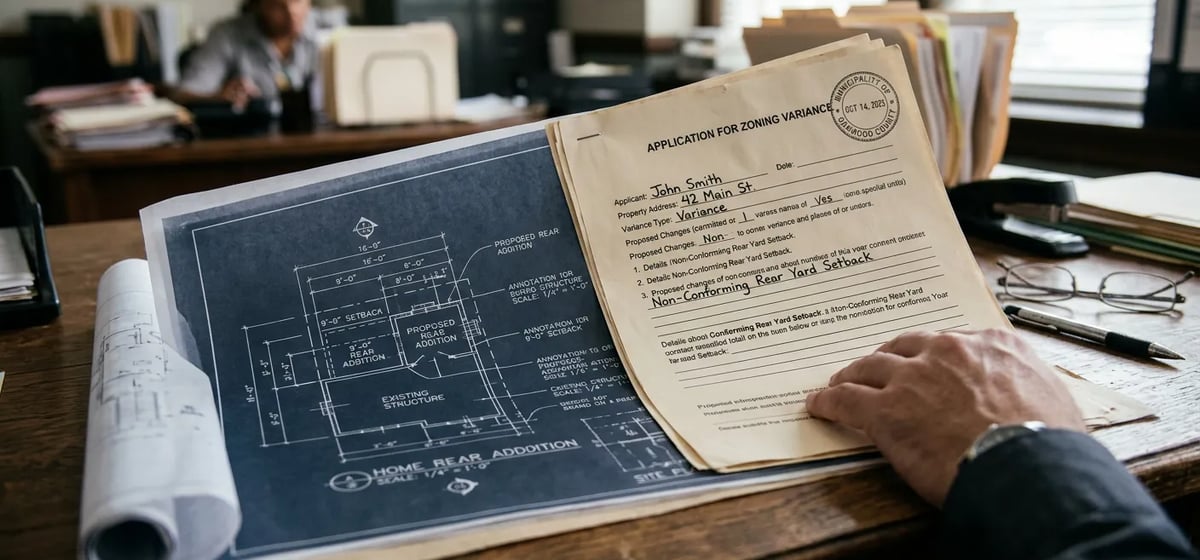
Applying for a variance isn't free, and the costs add up quickly. You have to pay a nonrefundable filing fee to your local zoning board just to have them look at your case. The application fee usually runs from 150 to 400 dollars, though ranges vary widely depending on your city and the size of your project. On top of the city fee, you almost always need a professional land survey. The board needs to see exactly where your property lines are located. A new survey typically costs 400 to 800 dollars. If your project is complex, you might also pay an architect or a contractor to draw up formal plans for the hearing. Before you spend money on these fees, it's smart to read through the New Homeowner Guide to understand what common projects require special permits.
The application process
Getting a variance takes time, patience, and effort. You can't just fill out a form online and get an instant approval. You have to prove to the city that following the strict rule causes an unnecessary hardship. This means showing that the rule makes it impossible to use your property in a normal way due to the physical land. Wanting a bigger garage just to store your boat is a personal preference, not a hardship.
Here is what the standard process usually looks like:
- You submit a detailed application, building plans, and the fee to your local planning department.
- The city places a sign in your yard and mails notices to your neighbors to tell them about your plans.
- You attend a public hearing at a local zoning board meeting, usually held in the evening at town hall.
- You present your case and explain why your lot layout requires this exception.
- Neighbors have the chance to speak up to support or oppose your project.
- The board discusses the details and votes to approve or deny your request.
Getting along with the people next door goes a long way during this process. If your neighbors show up to complain at the meeting, the board will probably deny your request. You can learn more about handling property disputes and community rules in our guide on Neighbors & HOAs.