Electrical Panel Upgrade Cost: What to Expect to Pay
Planning to install an EV charger or heat pump? Discover the true electrical panel upgrade cost, hidden fees, and why this is a strict do-not-DIY project.
Full guide Electrical Learn how your home electrical system works and what parts are safe for you to handle.Adding an electric vehicle charger, switching to a heat pump, or upgrading to an induction range all have one thing in common: they require serious power. If your home was built before 1990, your current electrical system might not be up to the task. Homeowners quickly realize they need more capacity when they deal with constantly tripping breakers or flickering lights. If you are in this boat, you are likely searching for the average electrical panel upgrade cost to figure out your renovation budget.
Upgrading from an outdated 60-amp or 100-amp service to a modern 200-amp standard is a major project. It is also one of the most critical safety investments you can make for your property. We are going to break down the true costs, the hidden factors that drive up the final bill, and the strict safety boundaries you need to respect.
Why Do You Need a 200-Amp Panel?
Decades ago, a 100-amp electrical panel was more than enough to run a household. Today, our power demands have skyrocketed. A standard Level 2 EV charger alone can pull up to 60 amps. When you add a central air conditioner, an electric dryer, and a modern kitchen, a 100-amp system simply cannot keep up.
Upgrading to a 200-amp panel gives you the physical space to add more circuits and the overall capacity to run multiple heavy-draw appliances simultaneously without overloading the main breaker. A typical 200-amp panel often provides 40-42 circuit breaker slots, compared to the 20-24 slots found in older 100-amp panels. It also modernizes your safety hardware, replacing aging breakers that may fail to trip during an overload.
Beyond just current needs, a 200-amp panel future-proofs your home. As smart home technology becomes more prevalent, and as more homeowners consider adding a second EV charger or even preparing for solar panel installations, having ample electrical capacity is crucial. It avoids costly re-upgrades down the line and ensures your home can adapt to evolving energy demands without strain. Think of it as building a robust highway for all your home's electrical traffic.
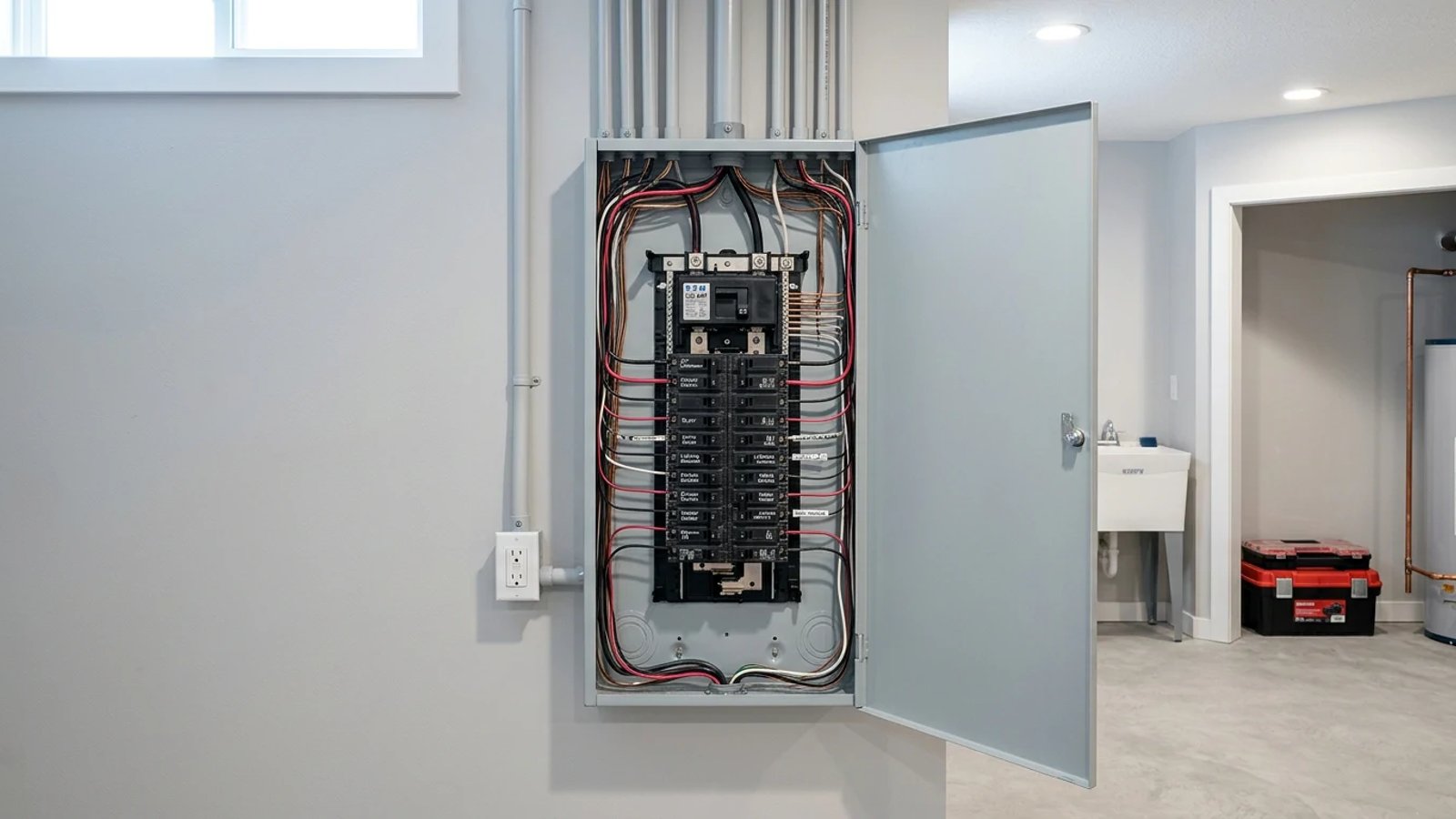
- Locate your main breaker. Open your electrical panel door and look for the large breaker at the very top or bottom.
- Read the number on the switch. It will typically say 60, 100, 150, or 200. This is your total amperage capacity.
- Count your open slots. If every slot is full, or if you see "tandem" breakers squeezed into single slots, your panel is maxed out physically, even if not electrically.
Breaking Down the Electrical Panel Upgrade Cost
The total price tag for a panel upgrade usually falls between $1,500 and $3,000, but complex jobs can easily push past $4,000. The final number depends heavily on your region, the cost of materials, and the scope of the labor required.
The choice of panel brand and breaker type can also subtly influence the material cost. While most panels meet strict safety standards, some brands offer features like integrated surge protection or smart home compatibility, which can add to the initial investment. Additionally, the number of circuits your home requires will dictate how many individual breakers are needed, directly impacting the material portion of your bill. It's not just about the box; it's about all the components inside it.
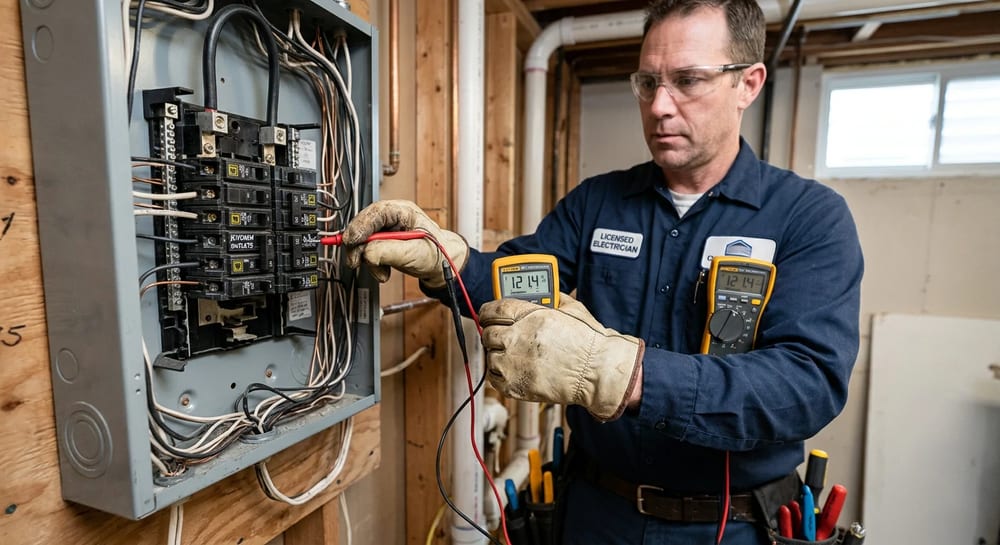
Labor is the largest chunk of the bill. Licensed electricians typically charge between $80 and $150 per hour, and a standard panel swap takes a two-person crew about four to eight hours. Materials include the metal enclosure itself, the main breaker, and the individual circuit breakers. Modern electrical codes require Arc Fault Circuit Interrupter (AFCI) and Ground Fault Circuit Interrupter (GFCI) breakers for most living spaces. These specialized breakers cost between $40 and $60 each, compared to $5 for standard older breakers, which quickly inflates the material cost.
What Hidden Factors Drive Up the Service Upgrade Cost?
A straight panel swap—where the electrician simply pulls out the old box and puts a new one in the exact same spot—is the best-case scenario. However, in my experience, when we upgraded a 1970s split-level last year, the drywall repairs and grounding updates alone added $600 to the final bill. Several hidden factors can drastically alter your budget.
First, consider the service drop. If you are moving from 100 amps to 200 amps, the main wires coming from the utility pole to your house must be thick enough to carry that extra load. If they are too thin, the utility company must run new lines. If your power lines are underground, trenching for new conduit can add thousands to the project.
Second, modern codes require robust grounding. Older homes often grounded the electrical system solely to the cold water pipes. Today, electricians must drive two 8-foot copper grounding rods into the earth outside your home and run a heavy-gauge copper wire back to the panel. Finally, if your old panel was recessed into a finished wall, expect to hire a drywall contractor to patch and paint the surrounding area once the electrician finishes.
Sometimes, the challenge isn't just the panel, but the wiring leading to it or even within the house. If your home has knob-and-tube wiring or outdated aluminum branch circuits, these might need to be addressed during the upgrade for safety and code compliance. While not always part of a *panel* upgrade, an electrician might flag these issues, leading to additional, unexpected costs. Similarly, if existing conduits are too small or damaged, replacing them adds labor and material expenses.
Safety First: The Strict Limits of DIY Electrical Work
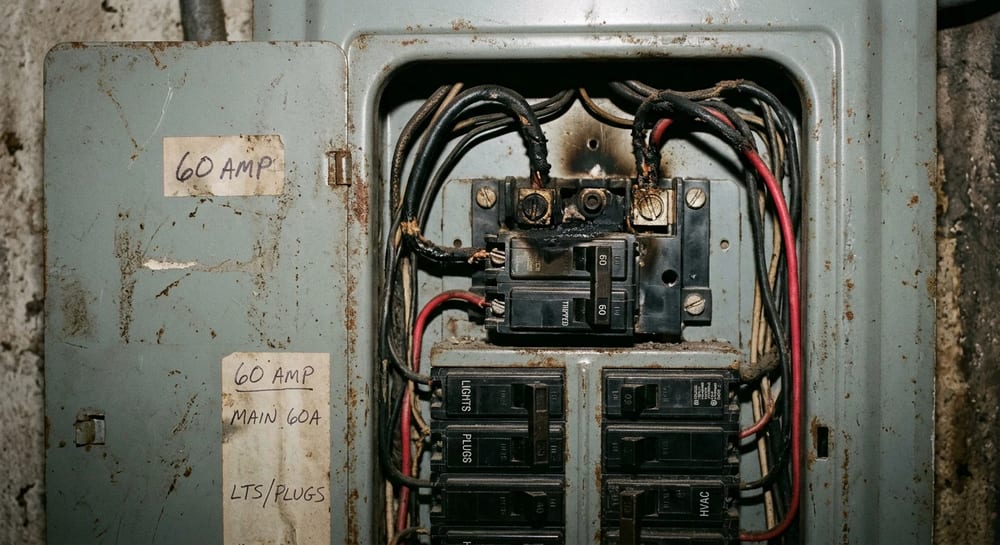
We are massive advocates for homeowners learning to maintain their own properties, but the electrical panel is a hard boundary. Opening the outer metal door to reset a tripped breaker is perfectly safe. Removing the dead-front cover to expose the main bus bars is incredibly dangerous.
The main lugs at the top of your panel remain fully energized even if you turn off the main breaker. Touching these lugs can deliver a fatal shock instantly. Because of this, anything inside the panel requires a licensed professional.
While you can safely swap a light fixture or replace a standard wall outlet yourself, you must recognize when a problem exceeds basic DIY skills. If you live in a home built between 1965 and 1973, you might have solid aluminum wiring. Aluminum expands and contracts differently than copper, leading to loose connections and severe fire risks.
Why Are Local Permits and Inspections Mandatory?
Skipping the permit process to save a few hundred dollars is a massive mistake. Electrical panel upgrades universally require pulling a permit with your local building department. The National Electrical Code (NEC) updates every three years, and local inspectors ensure your new installation meets the current rigorous safety standards.
Skipping the permit might save you a few bucks today, but it can void your homeowners insurance and derail a future home sale.
The inspection process isn't just about compliance; it's an invaluable layer of protection for you and your family. A qualified inspector acts as a third-party expert, verifying that the electrician's work adheres to the highest safety standards and local building codes. This ensures proper wire sizing, secure connections, and correct grounding, significantly reducing the risk of electrical fires, shocks, or equipment damage. It's peace of mind wrapped in a bureaucratic bow.
Additionally, when you eventually sell the house, unpermitted electrical work will immediately flag on a buyer's inspection report, forcing you to pay for retroactive permits and potential rework.
Planning Your Upgrade
Upgrading your electrical service is not a glamorous renovation, but it provides the essential backbone for modern living. Get at least three detailed quotes from licensed, bonded, and insured electricians. Make sure each quote clearly separates the cost of materials, labor, and permits, and ask specifically if the price includes repairing any drywall cut during the installation. Getting this heavy-duty work done right gives you a safe, reliable foundation for every future home upgrade.
- Check your current panel capacity by reading the number on the main breaker (usually 60, 100, or 200).
- Budget for expensive modern safety hardware, as current codes require AFCI and GFCI breakers which cost significantly more than standard breakers.
- Always get at least three itemized quotes from licensed electricians to compare labor and material costs.
- Never open the inner dead-front cover of your electrical panel; the main lugs remain energized and deadly even when the main breaker is off.