Space Heater Safety: Costs, Risks, and Why Breakers Trip
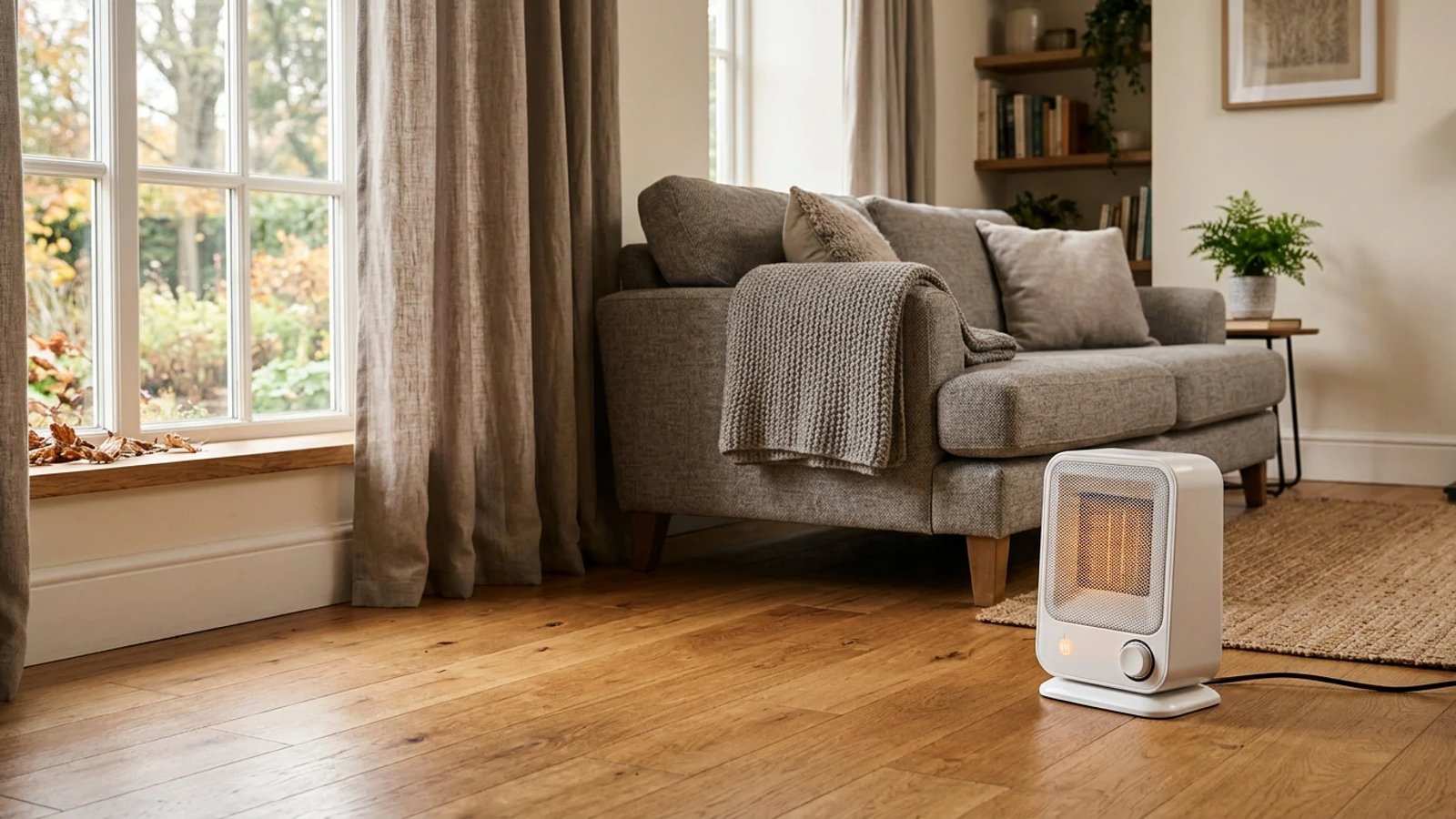
Space heaters are a leading cause of winter house fires and tripped breakers. Learn the golden rules of safe operation, why they overload circuits, and how much they actually cost to run.
Full guide Electrical Learn how your home electrical system works and what parts are safe for you to handle.As temperatures drop in early fall, millions of us drag portable heaters out of closets and basements to warm up drafty bedrooms or chilly home offices. They offer instant comfort and target the exact room you are occupying. But that convenience comes with significant strings attached. These small appliances draw a massive amount of electrical current, putting severe stress on your home's wiring. Understanding proper space heater safety is crucial.
According to the National Fire Protection Association (NFPA), heating equipment is a leading cause of home fire deaths, with space heaters accounting for the vast majority of those incidents. Add in the frustration of constantly tripped circuit breakers and the shock of a spiked December electric bill, and it becomes clear that these devices require serious respect.
This guide breaks down the hard facts of space heater safety, explains the electrical math behind why they trip your breakers, and reveals the true daily cost of running them. Whether you own a classic oil-filled radiator or a modern ceramic fan, understanding how these machines interact with your home is the key to staying warm safely.
What Are the Golden Rules of Space Heater Safety?
Space heater safety is not about vague guidelines; it relies on strict physics and electrical limitations. The majority of space heater fires occur because combustible materials are placed too close to the heating element, or because the electrical supply is compromised by improper cords.
First and foremost is the 3-foot rule. You must maintain a minimum clearance of three feet (36 inches) on all sides of the heater. This applies to bedding, curtains, clothing, rugs, upholstered furniture, and stacks of paper. Heat radiating from a ceramic or infrared heater can dry out nearby fabrics over several hours, lowering their ignition temperature until they spontaneously catch fire. Treat that three-foot radius as an absolute no-go zone.
Second is the power supply rule: never use an extension cord or a power strip. A standard space heater pulls 1500 watts of continuous power. Most household extension cords are made of 16-gauge wire, which is designed for low-draw items like lamps or televisions (which pull 50 to 150 watts). Forcing 1500 watts through a thin extension cord creates massive electrical resistance. The wire heats up, the plastic insulation melts, the hot and neutral wires touch, and you get an arc flash or a smoldering fire. Always plug the unit directly into a wall receptacle.
Is It Safe to Leave a Space Heater On Overnight?
The short answer is a definitive no. Both the NFPA and the U.S. Consumer Product Safety Commission strongly advise against sleeping with a space heater running, or leaving one operating in an unoccupied room. If a pet knocks the unit over, or a blanket falls off the bed and onto the heating element, you will not be awake to intervene before a fire starts.
Modern heaters do have safety features, but they are not foolproof. A tip-over switch is a mechanical sensor on the bottom of the unit that cuts power if the heater is knocked off balance. An overheat sensor shuts the unit down if internal temperatures reach dangerous levels (usually caused by a blocked air intake). While these features save lives, they can fail due to age, dust buildup, or manufacturing defects.
Last winter, I tested an older model my neighbor gave me for my garage workshop. I noticed it lacked a basic tip-over switch on the base, meaning if my dog knocked it over, the exposed coils would just keep blasting 1500 watts of heat directly into the floorboard. Straight into the recycling bin it went. Never trust your sleeping hours to a $30 appliance.
A space heater is meant to warm a person, not an empty room. Turn it off when you walk away.
If your bedroom is uncomfortably cold at night, focus on improving your primary heating system, sealing drafty windows, adding heavier blankets, or using a low-wattage heated mattress pad, which uses a fraction of the electricity and is specifically designed for overnight use in bed.
Why Is My Space Heater Tripping the Breaker?
If you run a space heater frequently, you have probably experienced the sudden click and plunge into darkness that signals a tripped circuit breaker. To understand why this happens, you have to look at the electrical math of your home's wiring.
A standard residential electrical circuit in the United States provides 15 amps of current at 120 volts. If you multiply amps by volts, you get watts. Therefore, a 15-amp circuit can safely handle a maximum of 1800 watts at any given time. However, continuous loads (anything running for more than three hours) should only utilize 80% of the circuit's capacity, which is 1440 watts.
Most space heaters on their "High" setting draw exactly 1500 watts. This means a single space heater maxes out the entire electrical circuit all by itself.
The problem is that a single circuit breaker usually controls multiple outlets and lights across one or two rooms. If you plug your 1500-watt heater into the bedroom wall, you only have 300 watts of capacity left on that entire circuit. If you turn on a desktop computer (200 watts) and a television (100 watts), you hit 1800 watts. The moment someone turns on a vacuum cleaner or a hair dryer on that same circuit, the total draw spikes past the limit. The breaker trips exactly as it is designed to do, preventing the wires inside your walls from overheating and catching fire.
How to Stop Circuit Overloads
If your heater keeps killing the power, you need to redistribute the electrical load. You cannot change how much power the heater uses, so you must change where it gets that power.
- Turn the heater to a lower setting. Most heaters have a "Low" setting that pulls 750 watts instead of 1500, instantly cutting the electrical strain in half.
- Identify the circuit map. When the breaker trips, walk around the house and note every outlet and light that lost power. This tells you exactly what is sharing that circuit.
- Relocate the heater. Move the heater to an outlet on a completely different circuit that does not have heavy appliances running on it.
- Unplug competing devices. If you must use that specific room, turn off desktop PCs, gaming consoles, and heavy lighting while the heater is running.
Another common issue in modern homes is the AFCI (Arc Fault Circuit Interrupter) breaker. These breakers are highly sensitive to electrical arcs. Some space heaters, particularly older ones with brushed fan motors, create tiny internal sparks during normal operation. An AFCI breaker may misinterpret this normal motor sparking as a dangerous wiring arc and trip the circuit. If this happens repeatedly on a dedicated circuit, the heater's motor is likely failing and the unit should be replaced.
How Much Does It Cost to Run a Space Heater?
Many homeowners use space heaters under the assumption that they are saving money by not running the central furnace. While zone heating can be cost-effective if you drastically lower the thermostat for the rest of the house, running a space heater all day is surprisingly expensive. Electric resistance heating is one of the most expensive ways to generate warmth.
To calculate the cost, you need to know your local electricity rate, which is billed in kilowatt-hours (kWh). The national average is roughly $0.16 per kWh, though it can be much higher in certain regions.
A 1500-watt heater consumes 1.5 kilowatts of electricity per hour. To find your cost, multiply the kilowatts by your local rate.
1.5 kW × $0.16 = $0.24 per hour.
Twenty-four cents an hour might not sound like much, but it adds up quickly when the heater runs constantly during cold spells.
If you run two space heaters continuously in different rooms, you could easily add $300 to your monthly utility bill. To keep costs down, rely on the heater's built-in thermostat rather than running it on a continuous high setting. Once the room reaches a comfortable temperature, the thermostat will cycle the unit on and off, significantly reducing the total hours it draws power.
Choosing the Right Type of Heater
If you are in the market for a new heater, matching the technology to your specific needs will improve both safety and energy efficiency. Not all heaters warm a room the same way.
Radiant and Infrared Heaters: These units emit infrared radiation that directly heats objects and people in front of them, rather than heating the air. They are perfect for drafty rooms or garages where heated air would quickly escape. Because the quartz or ceramic elements get extremely hot, the 3-foot clearance rule is highly critical with these models.
Ceramic Fan Heaters: These pass electricity through ceramic plates, which heat up quickly. A fan then blows air across the plates and into the room. They are excellent for fast, targeted heat in a small office. Because they rely on airflow, keeping the intake grill free of dust and pet hair is vital to prevent the overheat sensor from tripping.
Oil-Filled Radiators: These look like old-fashioned cast-iron radiators. Electricity heats a special diathermic oil sealed inside the metal fins. The oil retains heat for a long time, radiating it gently into the room. Because they have no exposed glowing elements and the surface temperature stays relatively low, they are widely considered the safest option for prolonged use. They take 20 to 30 minutes to warm up, but they provide consistent, silent heat without drying out the air.
Staying warm shouldn't mean compromising your home's electrical system or risking a fire. By mapping your circuits, keeping combustible materials far away, and plugging directly into the wall, you can safely utilize space heaters to take the chill out of those cold fall and winter days. Treat them with the respect a 1500-watt appliance demands, and they will serve you well all season.
- Verify your heater has an independent testing lab certification like UL, ETL, or CSA.
- Never leave a space heater running unattended or while you are sleeping.
- If your breaker trips, move the heater to a dedicated circuit that isn't running other heavy appliances.
- Upgrade old heaters to modern units equipped with tip-over switches and overheat protection sensors.