Whole House Surge Protector: Costs and Why You Need One
Wondering if those standard power strips are enough to protect your expensive appliances? Learn how a whole house surge protector works, what it costs, and why installation requires a licensed pro.
Full guide Electrical Learn how your home electrical system works and what parts are safe for you to handle.A bad summer storm rolls through, the lights flicker, and suddenly your new $2,000 smart refrigerator will not turn on. In my experience, we rely heavily on standard power strips to defend our electronics, but they are not built to handle massive electrical spikes on their own. Adding a whole house surge protector is the most reliable way to shield every appliance, motor, and device wired into your home.
Modern homes are packed with sensitive circuit boards. From your washing machine to your HVAC thermostat, almost everything contains fragile microprocessors. A single voltage spike can fry these boards instantly, leaving you with hefty repair bills. Understanding how panel-level protection works, what it costs, and why it requires a professional touch will help you secure your investment.
What Is a Whole House Surge Protector?
A whole house surge protector is a hardwired device installed directly at your main electrical breaker box. Its primary job is to monitor incoming voltage. When it detects a dangerous spike, it safely shunts that excess electrical current into the ground before it can travel through your home's wiring and reach your outlets.
Most people think of lightning strikes when they hear about power surges. While a nearby lightning strike is devastating, 80% of power surges are actually generated inside your own home. Every time a major appliance with a heavy motor—like your air conditioning compressor, heat pump, or hair dryer—cycles on and off, it creates small electrical transients. Over time, these daily mini-surges degrade the insulation on motor windings and destroy sensitive circuit boards.
When I upgraded my own electrical panel last year, the local inspector noted that the 2020 edition of the National Electrical Code (NEC) now requires surge protection for all new dwelling unit services. It makes total sense when you realize a modern kitchen range has more computing power than early space flights.
Type 1 vs. Type 2 Protectors: Where Do They Go?
If you start shopping for whole house protection, you will quickly run into different "Type" classifications. It helps to know exactly where these devices sit on your electrical system.
Type 1 Surge Protectors: These are installed between the utility pole and your main breaker box, often right at the electric meter. They are designed to handle massive external surges before they even reach your main panel. Only your utility company or a specially licensed electrician can install a Type 1 device.
Type 2 Surge Protectors: This is the standard "whole house" unit most homeowners buy. It installs directly onto a dedicated double-pole breaker inside your main electrical panel. These units typically protect against surges up to 40,000 amps. It catches residual external surges that make it past the meter, as well as the internal surges generated by your own appliances.
For residential homes, a Type 2 protector is the standard recommendation. It offers the best balance of affordability, accessibility, and robust protection for your interior branch circuits.
Power Strips vs. Panel-Level Protection
You might wonder if you still need those $15 power strips behind your television if you install a unit at the panel. The short answer is yes.
A standard point-of-use power strip is designed to absorb small fluctuations. They are typically rated between 400 and 1,000 joules and act as your last line of defense. A panel-level protector, on the other hand, acts as the heavy bouncer at the front door. It handles massive spikes, often rated to stop 40,000 to 80,000 amps of surge current.
A panel-level protector stops massive spikes at the gate, while your power strips mop up the minor fluctuations indoors.
They are not competing technologies; they are a team. If a massive surge hits your home, the whole house unit will knock it down from 5,000 volts to a much smaller, manageable spike. Your point-of-use power strip then catches that smaller remnant before it reaches your expensive OLED television.
Whole House Surge Protector Cost Breakdown
Budgeting for this upgrade is straightforward. You have two main expenses: the physical unit itself and the professional labor required to install it.
Reliable brands like Eaton, Square D, and Siemens sell residential surge protectors for $100 to $300 at most big-box hardware stores. The exact price depends on the surge current capacity rating (measured in kA) and whether the unit features a weatherproof NEMA 4X enclosure for outdoor panels.
Because installation requires a licensed electrician, expect to pay for one to two hours of labor. Most electricians charge between $75 and $150 per hour. In total, a professionally installed whole house surge protector cost usually lands between $250 and $600. Considering a single replacement control board for a modern washing machine routinely costs $400, the math heavily favors proactive protection.
Installation: Why This Is Not a DIY Project
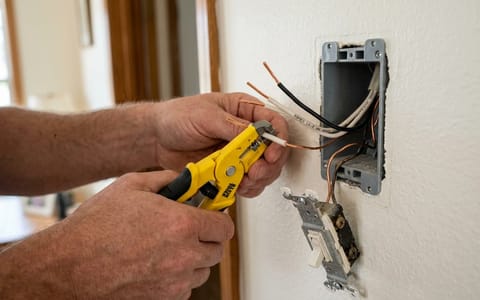
I have tackled plenty of household wiring tasks over the years. I use my trusty 12-volt non-contact voltage tester to safely verify dead circuits before swapping out light switches or upgrading wall outlets. Those are highly manageable, safe weekend projects when you follow basic precautions.
Installing a surge protector at the main panel is completely different. It requires removing the dead front cover of your breaker box, exposing the internal bus bars.
A licensed electrician knows how to safely navigate the panel. They will install the dedicated two-pole breaker required for the surge unit and keep the wire leads as short and straight as possible. The length of the wire matters significantly; long, coiled wires increase electrical resistance and slow down the device's reaction time during a surge. Additionally, in many municipalities, opening the panel to add a new breaker requires pulling a specific electrical permit.
How to Check if Your Surge Protector is Working?
Once installed, these devices are mostly maintenance-free. However, they use components called metal oxide varistors (MOVs) that sacrifice themselves over time to protect your home. After a severe thunderstorm or a known grid outage, you should verify the unit is still functioning.
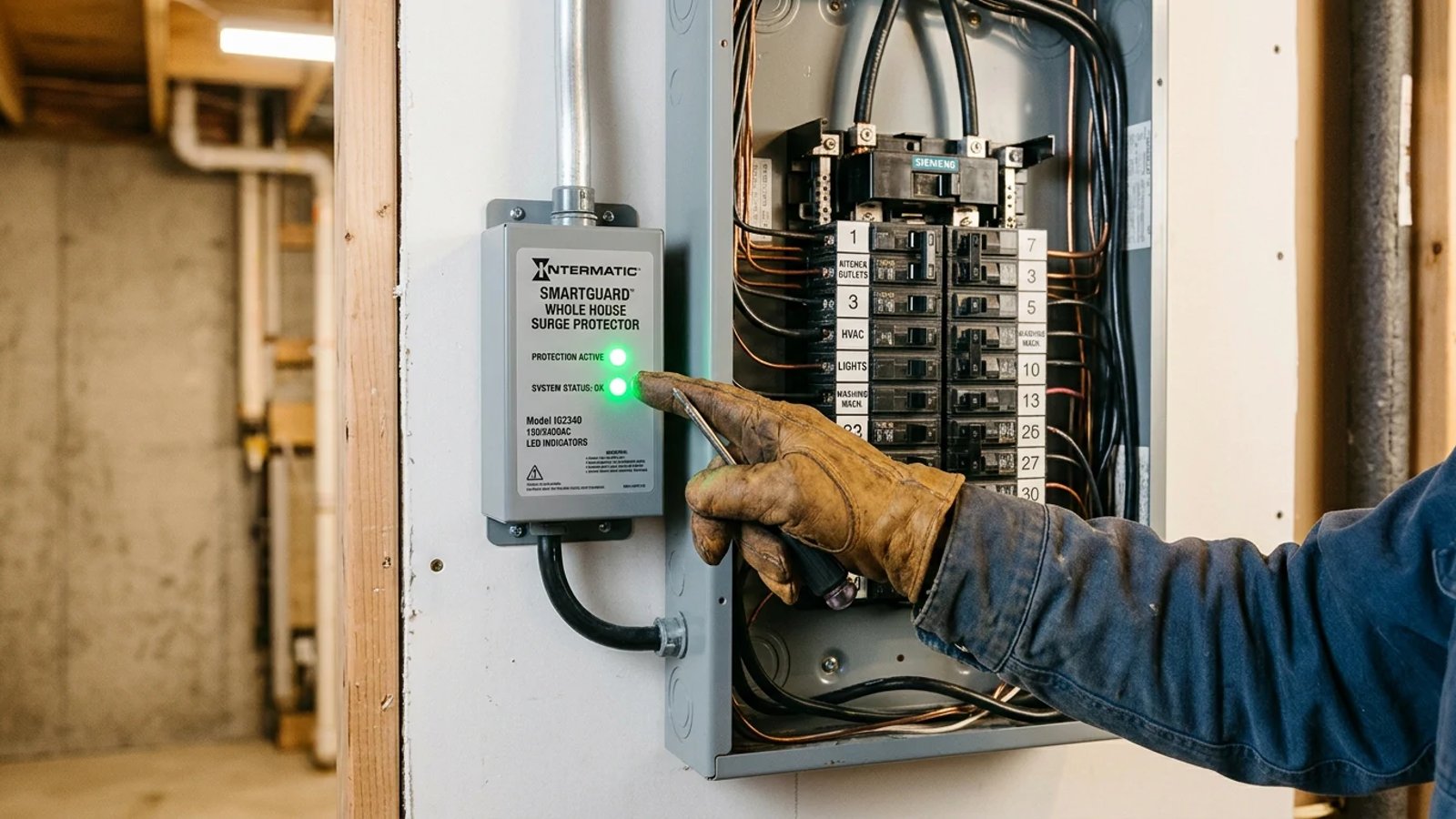
- Locate the unit. Find the small gray or black box attached to the side, top, or bottom of your main electrical panel.
- Check the indicator lights. Most units have one or two green LED lights on the front face that should be brightly illuminated.
- Look for warning signs. If the green lights are off, or if a red warning light is illuminated, the internal MOVs have degraded.
- Listen for alarms. Some premium models feature an audible alarm that beeps when the unit has taken a fatal hit and can no longer offer protection.
- Schedule a replacement. A dark indicator light means the unit did its job and saved your appliances, but it must now be replaced by an electrician.
Upgrading your electrical panel with a dedicated surge protector is a smart, one-time investment. It shields your expensive appliances from unpredictable grid spikes and the daily wear-and-tear of internal voltage drops. Keep an eye on those green indicator lights after major storms, and you can rest easy knowing your home’s electrical system is secure.
- Layer your protection by using a whole-house unit at the panel and standard power strips at the wall for sensitive electronics.
- Look for a Type 2 surge protector with a surge current capacity of at least 40,000 amps.
- Never attempt to install a panel-level surge protector yourself; always hire a licensed electrician.
- Check the green LED indicator lights on your surge protector after any severe thunderstorm or grid outage.