Garbage Disposal Allen Wrench Won't Turn? Try This Fix
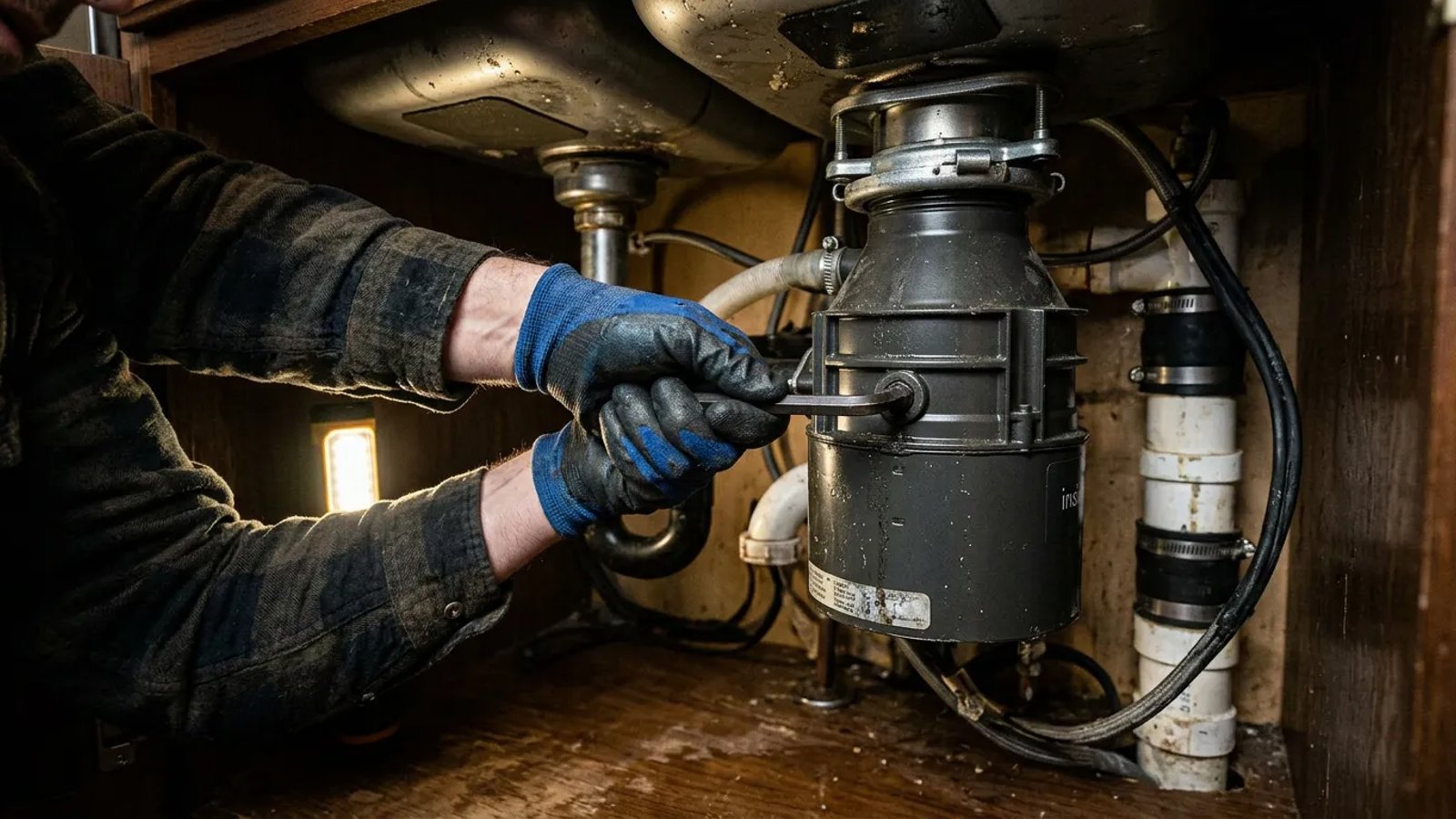
When your garbage disposal hums and the bottom Allen wrench refuses to budge, you have a severe jam. Learn how to safely break it loose from the top down.
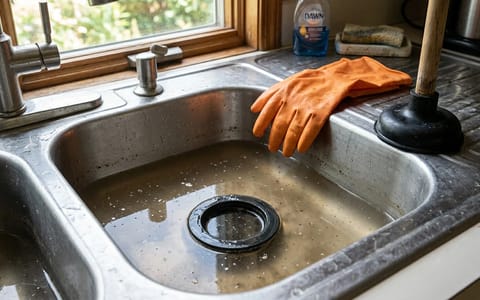
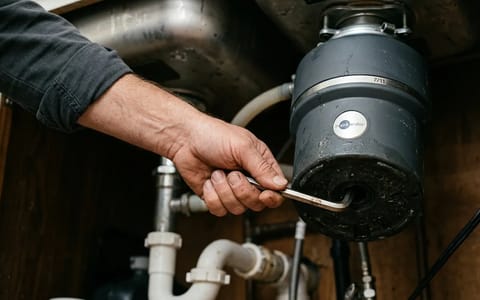
Full guide Plumbing Learn how your home plumbing works and how to stop leaks before they ruin your house.You flipped the wall switch, heard a loud, angry hum, and immediately turned it off. You grabbed a 1/4-inch hex key, crawled under the sink, and inserted it into the center hole on the bottom of the unit. But when you push on it, the garbage disposal allen wrench won't turn. It feels like it is welded in place.
A jammed garbage disposal is one of the most common kitchen appliance headaches, often leaving homeowners puzzled about how to clear it without calling a plumber. While the situation can feel daunting, most jams can be resolved with a few simple tools and a bit of know-how.
This is a frustrating spot. You are worried that if you push any harder, you will snap the tool off inside the motor shaft or break the plumbing connections above. Here is how to safely break that severe jam loose without causing permanent damage to your sink.
Common Causes of a Garbage Disposal Jam
A garbage disposal motor spins a heavy metal plate (the shredder plate) equipped with small metal impellers, typically spinning at over 1,700 RPM. When this plate gets jammed so tightly that the bottom manual override slot won't budge, you are usually dealing with one of two problems.
The first is a severe hard obstruction. In my experience fixing these around the neighborhood, a wrench that refuses to move usually means a piece of gravel, a fruit pit, or a rogue popcorn kernel is wedged perfectly between the spinning plate and the outer shredder ring. The motor torqued it into that gap with immense force before stalling.
The second cause is internal rust. If you recently returned from a long vacation and the disposal hasn't been run in weeks, moisture inside the grinding chamber can cause the metal plate to rust solid against the housing. This seized state feels exactly like a hard jam.
How much force is safe on the bottom wrench?
Your first instinct is probably to grab a pipe or a larger wrench to add leverage to the little hex key. Do not do this. The hex slot on the bottom of the motor shaft is made of relatively soft metal. If you apply too much torque with a cheater bar, you will strip the slot. Once that slot is rounded out, you can never use it again.
Instead of steady, heavy pressure, you need shock force to dislodge the jam.
- Unplug the disposal. Pull the plug from the wall outlet under the sink, or flip the breaker at your main electrical panel.
- Insert the wrench fully. Make sure the 1/4-inch Allen wrench is seated as deeply as possible into the bottom slot.
- Tap the wrench. Use a rubber mallet or the wooden handle of a hammer to sharply tap the end of the Allen wrench. Hit it counter-clockwise first, then clockwise.
Short, sharp impacts are much better at breaking a wedged object loose than slow, heavy pushing. If three or four solid taps don't free the plate, stop. It is time to attack the problem from above.
What is the broom handle method?
When the bottom wrench fails, top-down leverage is your best option. You need a tool that is strong enough to force the shredder plate to turn, but soft enough that it won't damage the metal components inside the disposal.
Never use a metal pry bar or screwdriver inside the disposal hopper, or you will permanently warp the shredder plate.
Grab a standard wooden broom handle or a thick wooden spoon. Shine a flashlight down through the sink drain so you can see the flat metal plate and the raised metal impellers (the "blades").
Insert the wooden handle down into the drain. Wedge the tip of the handle against one of those raised metal impellers. Using the side of the sink drain as a fulcrum, push the top of the broom handle firmly to force the plate to rotate counter-clockwise. The wood provides massive leverage. If the jam is stubborn, you might hear a loud pop as the wedged bone or glass finally breaks free. Because you are using wood, the broom handle will dent or splinter before the metal disposal parts bend.
What if the humming suddenly stops?
While you were trying to fix the jam, you might have left the wall switch on for too long. Suddenly, the humming stopped, and now the disposal is completely dead. You haven't broken the motor; you have just tripped the thermal overload protector.
According to safety standards outlined by the Electrical Safety Foundation International, large appliances have built-in breakers to prevent overheating and electrical fires. When the motor is jammed but receiving power, it heats up rapidly. The internal breaker cuts the power to save the motor.
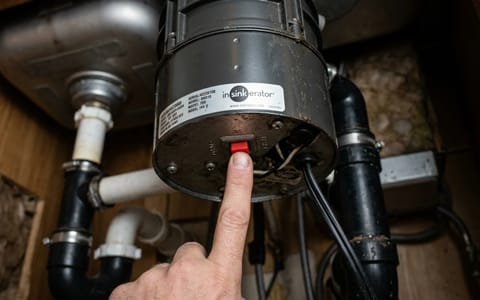
You must wait 10 to 15 minutes for the copper windings inside the motor to cool down. Once it is cool, reach under the disposal and press the small red square button located on the bottom of the casing. You should feel it click inward. If it won't stay in, the motor is still too hot. Wait another 10 minutes and try again.
Preventing Future Garbage Disposal Jams
Once you've successfully cleared a jam, you'll want to take steps to prevent it from happening again. Proper usage and regular maintenance are key to a long-lasting, jam-free garbage disposal.
What NOT to Put Down Your Disposal
Many jams are caused by putting the wrong items into the disposal. Avoid these common culprits:
- Fibrous Foods: Celery, asparagus, artichokes, corn husks, onion skins, and potato peels can wrap around the impellers and cause jams.
- Grease and Oils: Hot grease might seem liquid, but it solidifies as it cools in your pipes and disposal, leading to clogs and jams.
- Large Bones or Pits: While small bones are often fine, larger bones from chicken, steak, or fruit pits (like avocado or peach) are too hard and can wedge the grinding plate.
- Coffee Grounds: They don't grind down; instead, they accumulate and create sludge that can clog pipes and the disposal unit itself.
- Pasta and Rice: These expand with water and can create a sticky, bulky mass that jams the mechanism.
- Non-Food Items: This might seem obvious, but spoons, twist ties, plastic bags, and even sponges accidentally fall into disposals more often than you'd think. Always check before turning it on!
Best Practices for a Healthy Disposal
Beyond avoiding problem foods, these habits will keep your disposal running smoothly:
- Use Cold Water: Always run cold water before, during, and for about 30 seconds after grinding. Cold water helps solidify grease and oils so they can be chopped up and flushed away, rather than coating the pipes.
- Grind Small Batches: Don't overload the disposal. Feed food waste gradually, allowing the motor to work efficiently.
- Grind Hard Items Occasionally: Believe it or not, grinding small, hard items like ice cubes or small fruit pits (like from cherries or olives – not large ones) can help clean the grinding chamber and dislodge minor buildup.
- Clean Regularly: To combat odors and minor buildup, grind a few pieces of citrus peel (lemon, lime, orange) with cold water. You can also use a specialized disposal cleaner or a mixture of baking soda and vinegar followed by hot water.
- Run It Regularly: Even if you don't have food waste, run your disposal with cold water for a minute or so every few days to keep the components moving and prevent rust or corrosion from seizing the parts.
By following these simple guidelines, you can significantly reduce the chances of encountering another frustrating garbage disposal jam. A little proactive care goes a long way in keeping your kitchen running smoothly!
Should you replace the unit?
If you have hammered the bottom wrench, levered a broom handle from the top, and the inner plate still refuses to spin even a fraction of an inch, the bearings inside the motor are likely seized from water intrusion and rust.
Garbage disposals are generally not worth rebuilding. Once the internal seals fail and water reaches the motor bearings, the unit is dead. The good news is that swapping a garbage disposal is one of the most straightforward plumbing tasks a homeowner can tackle.
If you decide to do it yourself, look for a replacement unit from the same brand you currently have. In most cases, the new disposal will twist right onto the existing sink flange mount, saving you from having to mess with plumber's putty and the sink drain assembly.
Resolving a garbage disposal jam, or even replacing the unit, is a rewarding DIY task that can save you money and keep your kitchen running smoothly. With these tips, you'll be well-equipped to tackle most disposal dilemmas.
- Never force the Allen wrench with metal pipe extensions; you risk snapping the tool inside the motor shaft.
- A wooden broom handle provides safe, top-down leverage against the impeller blades without warping the metal.
- If the disposal stops humming entirely, the internal thermal breaker has tripped and needs 10 minutes to cool before resetting.