Got Ladybugs in House? How to Stop the Asian Beetle Swarm
Finding dozens of ladybugs inside your house this fall? They are likely invasive Asian lady beetles. Learn how to safely remove the swarm and seal them out for good.
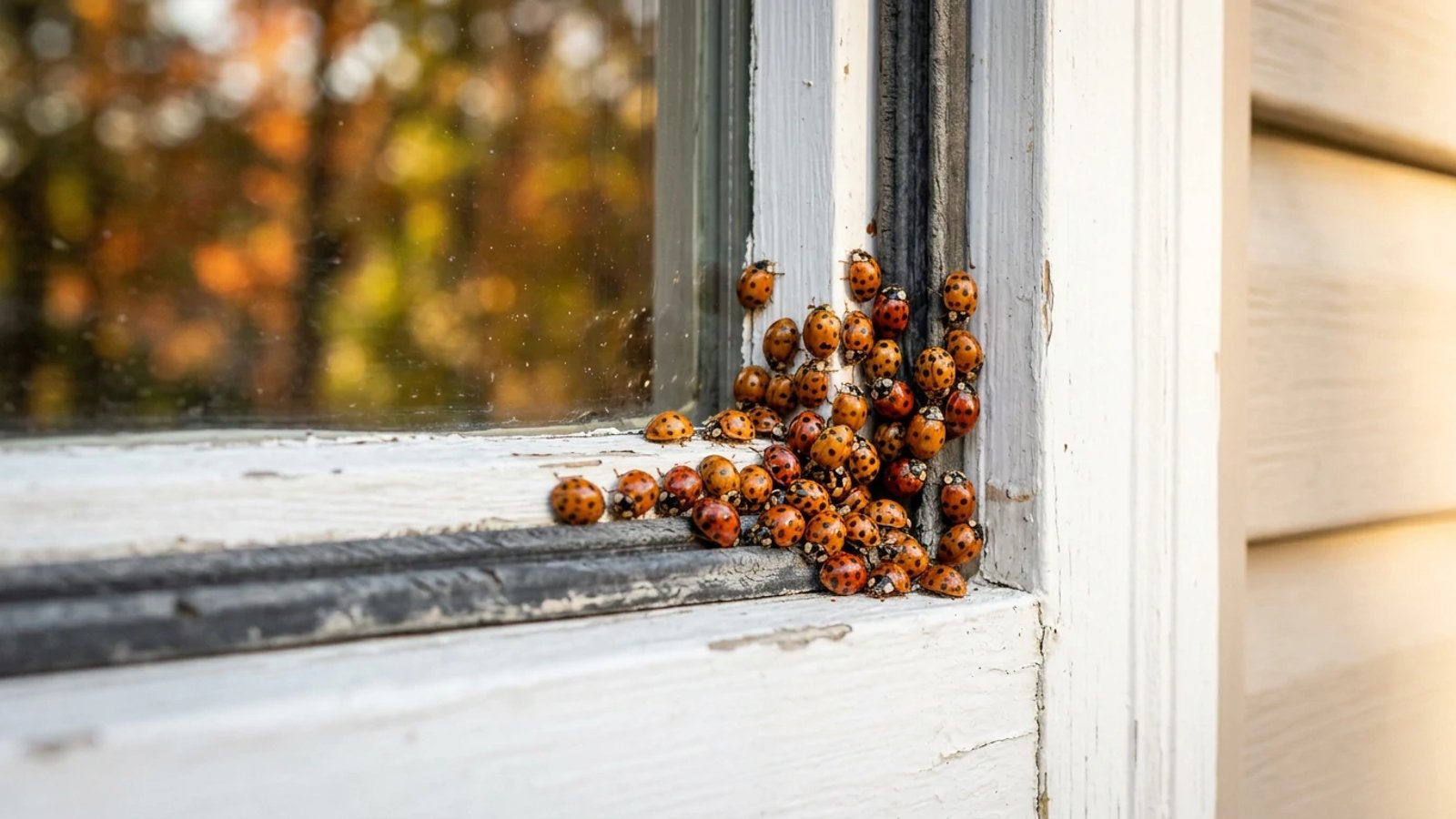
Full guide Pest Control Learn how to stop ants, mice, termites, and wasps from invading your home and know when to hire a pro.It is mid-fall, the afternoon sun is hitting the side of your home, and suddenly you notice dozens—maybe hundreds—of little spotted insects clustering on the glass. If you just searched "ladybugs in house" in a mild panic, you aren't alone. We bought our current house in late October, and on moving day, I noticed a few orange beetles on the living room sill. By the next afternoon, the entire south-facing bay window was a crawling, buzzing mess.
The immediate problem isn't just the sheer volume of bugs taking over your sunny rooms. It is the nasty yellow stains they leave behind on your window sills and curtains, and the foul, acrid odor they emit when disturbed. Most homeowners assume these are the helpful garden insects they remember from childhood, but the reality is much more annoying. You are likely dealing with an invasive pest looking for a warm place to spend the winter.
Are Those Really Ladybugs in Your House?
Before you start feeling guilty about evicting them, you need to know exactly what you are looking at. Native ladybugs (Coccinellidae) are highly beneficial garden predators. They are bright red, have a predictable number of black spots, and generally mind their own business outdoors. When winter comes, native ladybugs hibernate under fallen leaves, rocks, and tree bark. They have no interest in your living room.
The swarms currently coating your windows are almost certainly Multicolored Asian lady beetles (Harmonia axyridis). According to research from the Penn State Extension, these insects were introduced to North America to help control aphids on crops, but their population exploded. They look very similar to native ladybugs but have a few distinct, frustrating differences.
First, their color varies wildly. They can be pale mustard yellow, bright orange, or dark red. Second, their spots are inconsistent; some have many heavy black spots, while others have faint spots or none at all. They are typically about 7 mm long, with an oval, dome-shaped body. The most reliable way to identify an Asian lady beetle is to look at the white area just behind its head (the pronotum). You will see a distinct black marking shaped like an "M" or a "W," depending on which way you are looking at the bug.
Their overwintering behavior is what brings them into your home. In their native habitat, they hibernate in the crevices of tall, sunlit cliffs. In a modern suburban neighborhood, a two-story house with light-colored siding baking in the afternoon sun is the perfect substitute. They gather by the thousands on south- and southwest-facing walls. As the sun sets and the air chills, they crawl into the nearest gaps to stay warm, eventually finding their way through your wall voids and into your living space.
The Safe Way to Remove an Asian Lady Beetle Swarm
When you see a cluster of a hundred beetles on your ceiling, your first instinct might be to grab a rolled-up magazine or a paper towel and start crushing them. Stop immediately. Asian lady beetles possess a defense mechanism called "reflex bleeding." When threatened or crushed, they bleed a yellow fluid (hemolymph) from their leg joints.
This fluid smells terrible—like rotting leaves and stale peanut butter—and it stains permanently. If you crush them against white drywall, curtains, or carpet, you will be left with stubborn yellow spots that often require a stain-blocking primer and a fresh coat of paint to cover up.
The only safe, stain-free way to remove an active swarm is to vacuum them up. However, if you simply suck them into a standard bagless vacuum, they will get crushed in the internal mechanisms, and your vacuum will smell like beetle defensive fluid every time you turn it on for the next year. Instead, use the nylon stocking trick.
- Find a knee-high nylon stocking. A standard inexpensive sheer nylon works perfectly because it allows air to pass through but catches the bugs.
- Insert the toe into the vacuum hose. Push the toe of the stocking down into the wand or hose attachment, leaving the elastic band hanging out the top.
- Secure the top edge. Fold the elastic top of the stocking over the hard plastic rim of the vacuum hose. Wrap a tight rubber band around it to hold it securely in place.
- Vacuum up the swarm. Turn the vacuum on. The suction will pull the beetles into the stocking, trapping them in a neat little pouch without letting them reach the motor or the dust canister.
- Tie it off and toss it. Once you have collected the bugs, keep the vacuum running while you carefully pull the rubber band off. The suction will keep the bugs trapped while you knot the top of the stocking. Turn off the vacuum and throw the sealed pouch in an outdoor trash can.
How Are Asian Lady Beetles Getting Inside Your House?
Vacuuming solves the immediate visual problem, but if you don't address how they are getting in, you will be vacuuming every afternoon until December. Asian lady beetles are incredibly flat. They can squeeze through gaps as small as 1/8 of an inch.
They usually enter the home through exterior cracks and travel through the wall voids. You will often find them emerging from around window pulleys, loose baseboards, gaps around ceiling light fixtures, and unsealed electrical outlets. If your home has vinyl siding, the beetles often crawl up behind the siding panels, enter the soffits, and drop down into the wall cavities. Once inside the walls, the ambient heat of your home tricks them into thinking it is spring, prompting them to crawl out into your rooms.
Step-by-Step: Sealing Your Home Before Winter
The only permanent solution to an Asian lady beetle infestation is mechanical exclusion. You have to seal the house. Because these swarms happen in mid-fall, this is the perfect time to tackle your exterior draft-prevention tasks anyway. Stopping the bugs will also stop winter drafts and lower your heating bill.
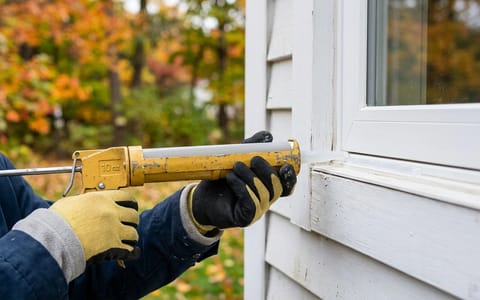
Grab a caulk gun, a few tubes of high-quality exterior caulk, and some replacement weatherstripping. Focus your efforts on the south and west sides of the house first, as this is where the afternoon sun draws the swarms.
- Inspect and replace weatherstripping. Open your exterior doors and check the foam or rubber seals. If the weatherstripping is compressed, torn, or missing, peel it off and apply fresh adhesive-backed foam or V-strip weatherstripping. A 10-foot roll costs about $10 at the hardware store and takes five minutes to install.
- Check your door sweeps. Close your exterior doors and look at the bottom threshold during daylight. If you can see sunlight peeking through, bugs can get in. Install a new heavy-duty rubber door sweep.
- Caulk exterior window trims. Walk around the outside of your house. Look for any hairline cracks where the window trim meets the siding or brick. Clean the area with a wire brush, wipe it with a rag, and apply a smooth 1/4-inch bead of 100% exterior silicone caulk. Silicone remains flexible in freezing winter temperatures.
- Seal utility penetrations. Check where your air conditioning lines, gas pipes, and dryer vents pass through the exterior walls. Fill any gaps larger than 1/2 inch with expanding polyurethane foam. For smaller gaps, use exterior caulk.
- Repair damaged window screens. Even though your windows might be closed for the season, torn screens allow beetles to congregate directly against the glass and frame, increasing the chance they find a micro-crack. Buy a small roll of fiberglass screen mesh and a $5 spline roller to fix any tears.
Natural Deterrents That Actually Work
Once your home is physically sealed, you can use natural scent deterrents to discourage the beetles from landing on your siding in the first place. Asian lady beetles rely heavily on scent to communicate. When a few beetles find a warm, suitable overwintering spot, they release aggregation pheromones that signal the rest of the swarm to join them. You need to mask those pheromones.
Citrus is highly offensive to these beetles. You can make a simple, inexpensive barrier spray using sweet orange or lemon essential oil. Mix 15 to 20 drops of citrus essential oil with two cups of water and a single drop of dish soap in a spray bottle. Shake it well and spray the mixture generously around your exterior window frames, door trims, and the foundation line. The scent dissipates outdoors, so you will need to reapply it every few days during the peak fall swarming season.
Whole cloves also work well for the interior. The strong scent of eugenol in cloves repels many insects. Buy a bag of whole cloves from the baking aisle and place small handfuls in muslin bags or shallow dishes. Set these on the window sills where you frequently see the beetles gathering. It makes the room smell like fall baking while keeping the bugs at bay.
Dealing with a sudden swarm of Asian lady beetles is frustrating, but it is a highly solvable problem. By understanding that these aren't the helpful garden bugs you thought they were, you can confidently remove them using the vacuum trick without ruining your paint. Take a Saturday afternoon this fall to caulk your exterior trim and replace your weatherstripping. Not only will you stop the bugs from turning your living room into a winter resort, but you will also keep your home warmer and draft-free all season long.
- Asian lady beetles seek warm, south-facing walls in the fall before crawling into cracks to overwinter.
- A simple knee-high nylon stocking secured over your vacuum hose prevents beetles from being crushed in the vacuum motor.
- Replacing worn weatherstripping and caulking 1/4-inch exterior gaps are your best long-term defenses against fall swarms.
- Natural scents like sweet orange essential oil and whole cloves can help deter beetles from congregating near entry points.