How Long Does Siding Last on a House? True Lifespans
Wondering if it's time to replace your aging exterior? Learn the true lifespan of vinyl, wood, and fiber cement siding, plus the warning signs of failure versus simple cosmetic wear.
Full guide Exterior: Siding, Garage & Decks Learn how to maintain your siding, garage doors, and decks to protect your home from the weather.You walk outside, look at your house, and notice the exterior isn't looking as sharp as it used to. The color is slightly faded, there is a chalky residue on the surface, and a few panels look a bit wavy. Replacing an entire exterior is a massive, five-figure project, which leads to an immediate, stressful question: how long does siding last on a house?
Determining whether your exterior is simply showing its age or actively failing is the difference between a weekend cleaning project and a major renovation bill. Most homes in North America are clad in vinyl, but wood and fiber cement are also incredibly common. Each material has a distinct expiration date, and the way you maintain them dictates whether you hit the upper or lower end of that timeline.
How Long Does Siding Last on a House? (The Real Numbers)
If you are searching for the true lifespan of your exterior, the answer depends entirely on the material, the climate, and the quality of the original installation. Let's start with vinyl, since it covers nearly a third of all new homes built.
Vinyl siding typically lasts between 20 and 40 years. That is a wide gap, but it comes down to weather and ultraviolet (UV) exposure. Darker colors absorb more heat and tend to fade and degrade faster than lighter colors. Extreme temperature swings—from freezing winters to blistering summers—cause the plastic to expand and contract repeatedly, which eventually makes it brittle.
When we replaced the original vinyl siding on my 1990s colonial last year, the north side of the house still looked surprisingly decent. However, the south-facing panels, which had baked in the afternoon sun for three decades, were brittle enough to snap between my fingers. Sun exposure is the ultimate clock for plastic materials.
Quick Comparisons: Wood vs. Fiber Cement
If your home isn't wrapped in vinyl, you are likely dealing with wood (like cedar or pine) or a composite material like fiber cement.
Wood Siding: Cedar clapboards or pine shingles can easily last 40 to 50 years, and sometimes much longer on historic homes. The catch? Wood is high-maintenance. It requires scraping, priming, and repainting or re-staining every 5 to 7 years. If you neglect the paint, moisture will penetrate the wood, leading to rot and insect damage. Once rot sets in, the lifespan drops to zero.
Fiber Cement: Often known by the brand name James Hardie, fiber cement is a mix of wood pulp, cement, sand, and water. It is incredibly durable, fire-resistant, and immune to termites. Fiber cement siding routinely lasts 30 to 50 years. The factory-applied finish usually holds up for 10 to 15 years before it needs a fresh coat of paint. Because it is so heavy, the primary point of failure is usually poor installation rather than the material itself degrading.
What Are the Signs Your Siding Is Actually Failing?
Fading color and a little bit of surface dirt do not mean you need to spend $15,000 on a new exterior. However, certain physical changes indicate that the material is no longer protecting the wooden framing of your house from the elements. Here are the four signs that your exterior cladding is failing.
1. Warping and Buckling
Vinyl is designed to hang loosely on the nails so it can expand and contract. If it was nailed too tightly, or if it has simply absorbed too much thermal punishment over 30 years, it will begin to warp. Once the panels buckle, they create gaps where wind-driven rain can easily get behind the protective layer.
2. Cracking and Brittleness
Take a close look at the lower panels near your driveway or lawn. Do you see small holes from rocks thrown by the lawnmower? Are there cracks radiating from the edges? If you press firmly on a panel and it feels stiff and fragile rather than slightly flexible, the plasticizers in the vinyl have dried out. Brittle siding will shatter during the next hailstorm.
3. Severe Chalking
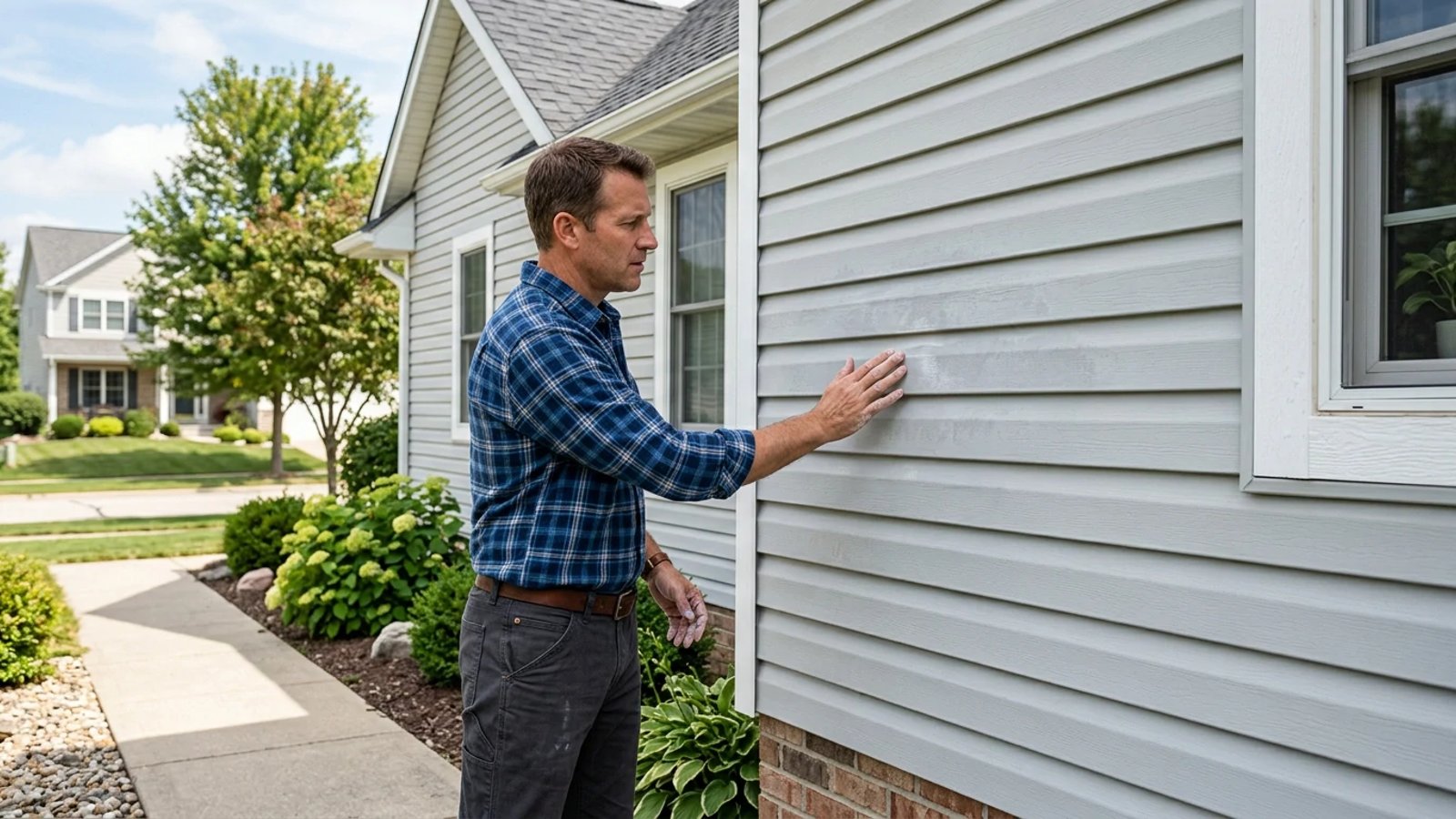
Run your bare hand firmly across a dry panel. If your hand comes away covered in a heavy, chalky powder, the material is breaking down. A light dusting is normal oxidation, but heavy chalking means the protective topcoat is gone, leaving the base material exposed to rapid UV degradation.
4. Hidden Moisture and Interior Damage
The most dangerous failures are the ones you can't see from the curb. If you notice peeling paint or soft, crumbling drywall on the inside of your exterior walls, water is getting past your siding. You might also see mold growth on the interior walls. According to the EPA, controlling moisture is the only way to control indoor mold, which means you must stop the exterior leak immediately.
How to Maintain Your Siding and Delay Replacement
You cannot stop the sun from beating down on your house, but you can control the other factors that destroy siding prematurely. A few hours of preventative maintenance each year will easily add five to ten years to the life of your exterior.
- Wash it gently once a year. Use a soft-bristle brush on an extension pole and a bucket of warm, soapy water to remove dirt, bird droppings, and mildew.
- Keep the pressure low. If you use a pressure washer, keep it under 1,500 PSI and use a wide 40-degree tip.
- Inspect and replace window caulking. Check the seams where the siding meets your windows and doors; if the caulk is cracked, scrape it out and apply fresh exterior-grade polyurethane caulk (usually $10-$15 a tube).
- Trim back the landscaping. Keep all bushes, tree branches, and shrubs at least 18 inches away from the exterior walls to prevent scratches and allow airflow to dry out moisture.
- Keep the grill away from the house. Pull your barbecue grill at least 10 feet away from the wall before cooking; vinyl melts rapidly at high temperatures.
Should You Repair or Replace?
If you only have one or two cracked panels (say, less than 5) from a rogue baseball or a minor lawnmower accident, you do not need a full replacement. A contractor (or a handy homeowner with a $10 zip tool) can easily unlock the damaged vinyl panel and snap a new one into place. The hardest part of a localized repair is usually finding a color match for material that has been fading in the sun for a decade.
Fading is a cosmetic annoyance, but warping, cracking, and brittleness are structural threats.
However, if the panels are universally brittle, chalking heavily, and buckling across multiple sides of the house, patch repairs are a waste of money. At that point, the material has reached the end of its chemical lifespan. Slapping a new panel into a wall of brittle plastic will just highlight how badly the rest of the wall needs to be replaced.
Understanding exactly what is on the side of your house and how old it is gives you a massive advantage in home ownership. By keeping the surface clean, managing moisture around the foundation, and inspecting the panels before winter sets in, you can push that expensive replacement project years down the road. Keep an eye on those high-sun exposure areas, keep the bushes trimmed back, and start a dedicated savings bucket long before the plastic starts to crack.
- Inspect your siding annually for structural failures like buckling, deep cracks, or soft spots underneath the panels.
- Never use a high-pressure washer nozzle on vinyl siding; it can force water behind the panels and cause hidden rot.
- Budget for replacement if your vinyl siding is approaching 30 years old and feels brittle to the touch.
- Seal gaps around windows and trim with exterior-grade polyurethane caulk to prevent water infiltration.