How to Get Rid of Boxelder Bugs (And Stop the Swarm)
Tired of black and red bugs swarming your sunny siding? Learn how to safely remove boxelder bugs without staining your walls and stop them from coming inside this fall.
Full guide Pest Control Learn how to stop ants, mice, termites, and wasps from invading your home and know when to hire a pro.It happens every early fall. The overnight temperatures start to dip, the afternoon sun comes out, and suddenly the south-facing side of your house is covered in hundreds of black and red insects. If you are dealing with this exact scenario, you are likely wondering how to get rid of boxelder bugs before they find their way into your living room.
Boxelder bugs are a classic nuisance pest. While they do not bite, carry disease, or chew through your home's structural wood, they are incredibly annoying. Worse, if you panic and squash them on your interior walls, they leave behind a bright red, foul-smelling stain that is nearly impossible to wash out of drywall or fabric.
Getting rid of these swarms requires a two-pronged approach: safely eliminating the bugs currently congregating on your property, and sealing up your home so they cannot overwinter inside your walls.
What Are Boxelder Bugs (And Why Are They Swarming My House?)
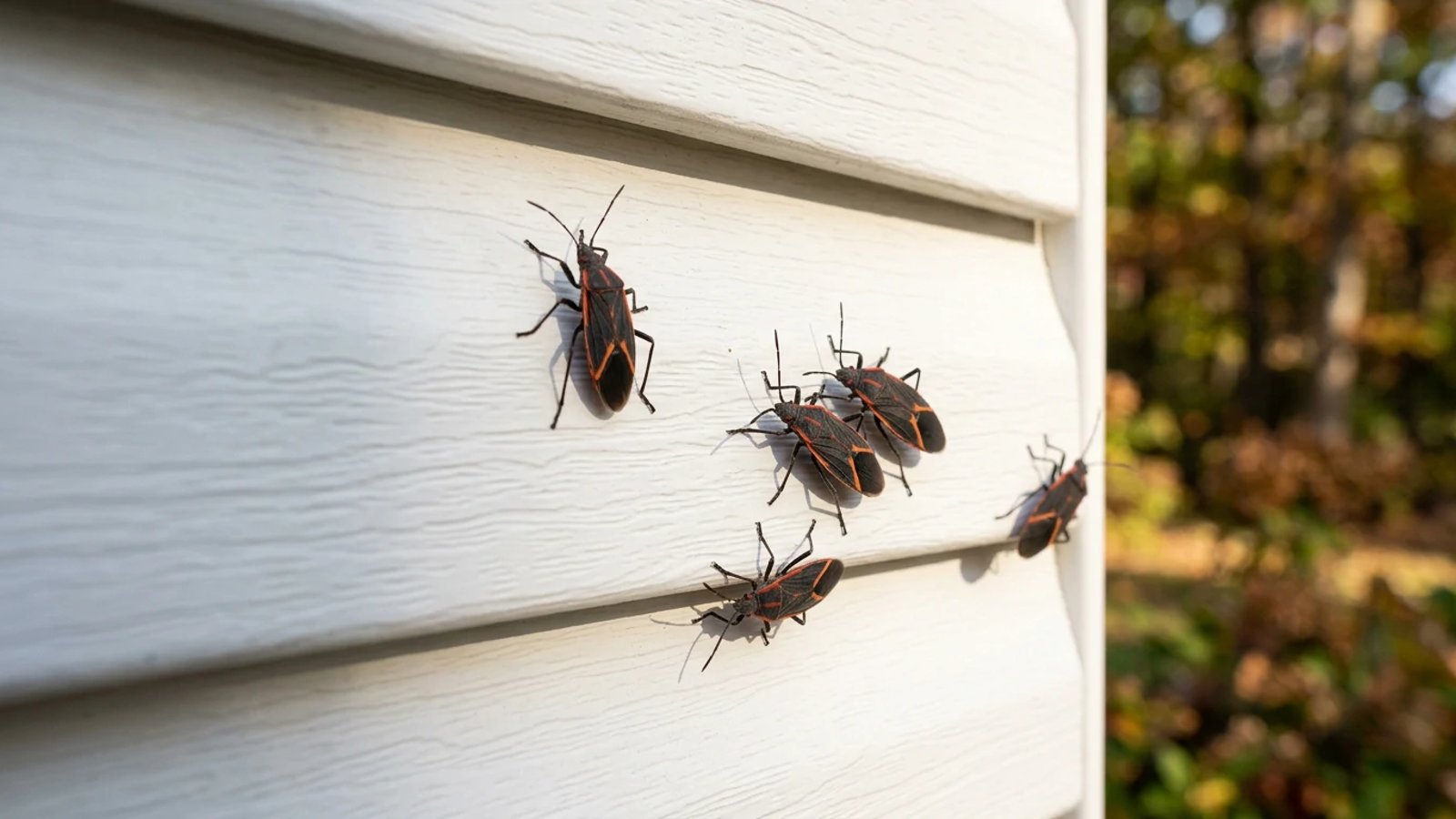
Boxelder bugs are about half an inch long, oval-shaped, and mostly dark gray or black with three distinct red stripes right behind their head. They get their name from their primary food source: the seeds of female boxelder trees, though they also feed on maple and ash trees.
During the spring and summer, these bugs live quietly in the trees. But when early fall arrives, their survival instincts kick in. They need a warm place to hibernate through the winter. Your house, particularly the sun-drenched south and west exterior walls, acts like a giant radiator.
They gather on your warm siding by the hundreds. As the sun sets and the air cools, they start crawling upward and inward, looking for gaps as small as 1/16 of an inch under siding, cracks in the foundation, or torn window screens to slip inside. If they make it into your wall voids, you will likely see them sluggishly crawling around your windowsills all winter long.
How to Get Rid of Boxelder Bugs on Your Exterior
When you see a massive swarm on your siding, your first instinct might be to reach for a harsh chemical insecticide. Fortunately, you do not need toxic chemicals to handle this problem. The most effective direct-contact killer for boxelder bugs is a simple DIY soapy water solution.
Boxelder bugs breathe through pores on their exoskeleton. Soap breaks down the surface tension of water and coats the bugs, effectively suffocating them while also degrading their protective outer shell. Last October, I tested this exact soapy water method on the south-facing vinyl siding of my own home. The swarm dropped off almost instantly, saving me from buying expensive and harsh chemical treatments.
Here is how to mix and apply your own exterior spray:
- Grab a clean spray bottle. A standard 32-ounce plastic spray bottle works perfectly for targeted swarms, or use a pump sprayer for large exterior walls.
- Add liquid dish soap. Squeeze roughly 2 to 3 tablespoons of a grease-cutting dish soap (like Dawn) into the bottle.
- Fill with warm water. Top off the bottle with warm tap water, leaving a little room at the top.
- Swirl gently to mix. Do not shake it vigorously, or you will end up with a bottle full of foam instead of liquid.
- Spray the bugs directly. Coat the swarming bugs thoroughly. The solution must make direct contact with the insects to work.
How Do I Safely Remove Boxelder Bugs Indoors?
If you missed the window to stop them outside, you will eventually find boxelder bugs crawling on your interior walls, curtains, and windowsills. This requires a completely different approach.
Because you cannot squash them, and you probably do not want to spray soapy water all over your living room drywall, your best tool is a vacuum. However, using a standard upright vacuum can still crush them inside the spinning brush roll or the dustbin, causing your vacuum to smell terrible.
The safest method is the pantyhose shop-vac trick.
Take a wet/dry shop vacuum and remove any wide floor attachments so you just have the bare hose. Take a cheap nylon stocking or pantyhose, push the toe end a few inches down into the vacuum hose, and fold the open end back over the outside lip of the nozzle. Secure it tightly with a rubber band.
When you turn the vacuum on, the suction will pull the bugs into the hose, but the pantyhose acts as a gentle net, trapping them alive before they reach the dirty canister. Once you have vacuumed up the intruders, take the hose outside, remove the rubber band, and dump the live bugs into a bucket of soapy water to dispose of them.
The secret to indoor pest control isn't a better bug spray; it's a better vacuum attachment.
How to Stop Boxelder Bugs from Coming Inside
Killing the bugs you see is only half the battle. If you want to stop the swarm permanently, you have to cut off their entry points. The EPA guidelines for safe pest control heavily emphasize physical exclusion—which is just a fancy term for sealing up your house.
Since these bugs can flatten their bodies to squeeze through gaps as small as 1/16 of an inch, you need to be thorough with your exterior inspection.
Inspect and Repair Screens
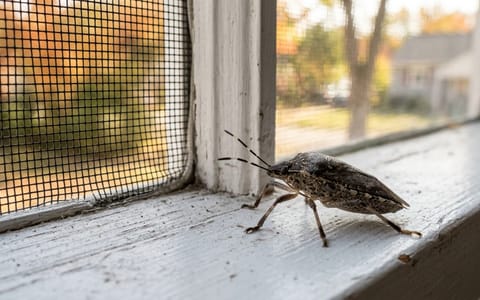
Start with your windows and vents. Check every window screen for tears or holes. A simple patch kit from the hardware store costs less than $5 and takes two minutes to apply. Next, check the vents going into your attic and crawl space. Ensure the wire mesh behind the louvers is intact. If it has rusted out or torn, replace it with 1/8-inch hardware cloth.
Seal Siding and Foundation Gaps
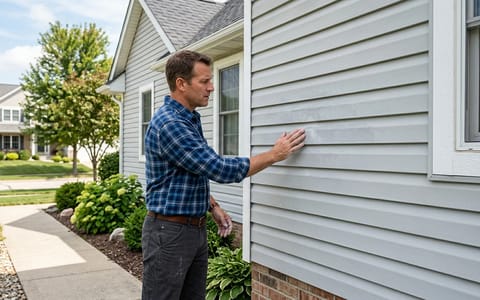
Walk the perimeter of your home with a tube of 100% silicone exterior caulk. Pay special attention to where different building materials meet. Look for gaps where the siding meets the foundation, where pipes or electrical conduits enter the house, and around the exterior trim of windows and doors. Fill any visible cracks. If you find a gap wider than a quarter inch, stuff a foam backer rod into the hole first before applying the caulk.
Upgrade Your Weatherstripping
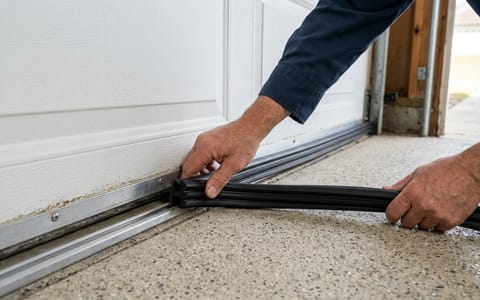
Doors are a primary entry point for overwintering insects. Close your exterior doors during the day and look at the edges from the inside. If you can see daylight shining through the perimeter, bugs can get in. Replace worn-out adhesive weatherstripping around the door frame, and install a heavy-duty door sweep on the bottom edge to create a tight seal against the threshold.
When Is It Time to Call a Professional?
For most homeowners, a massive boxelder bug presence is a temporary autumn annoyance. By keeping a bottle of soapy water handy for the sunny days and spending an hour tightening up your home's exterior envelope, you can keep the swarm outside where it belongs. Grab a tube of caulk and check your weatherstripping this weekend—your winter self will thank you.
- Never crush boxelder bugs indoors, as their bodily fluids will leave permanent red stains on walls and fabrics.
- A simple mixture of liquid dish soap and water breaks down the bugs' outer shell and is the safest way to tackle exterior swarms.
- Early fall is the critical window for prevention—seal your home's exterior envelope before temperatures drop and bugs seek winter shelter.