Hardwired Smoke Detector Chirping? How to Find the Culprit
Stop chasing phantom beeps in the middle of the night. Learn how to locate the specific chirping unit in an interconnected hardwired smoke detector system and silence it for good.
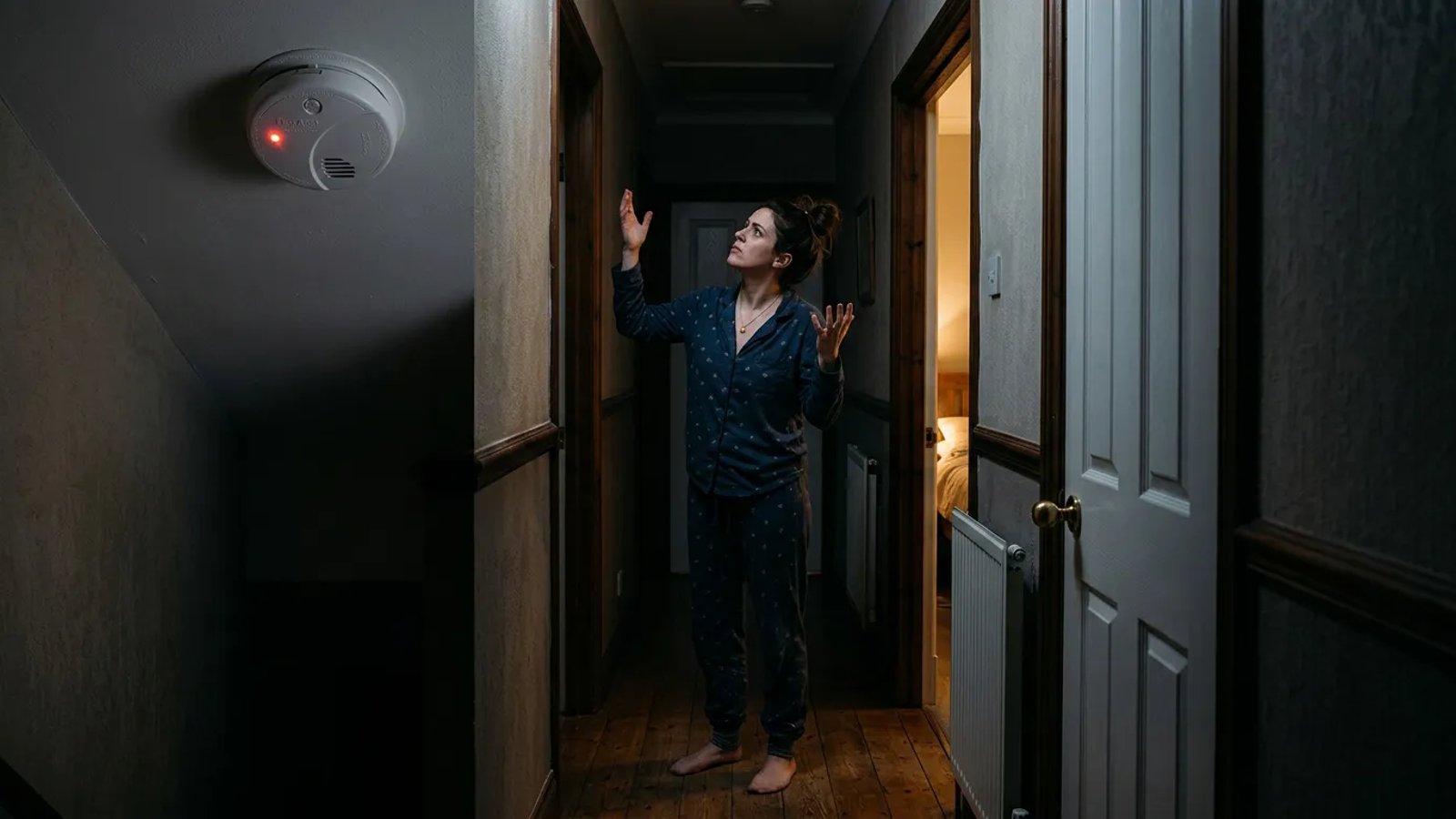
It always happens at 2 AM. You are fast asleep when a single, high-pitched chirp echoes through the house. You wait in the dark, wondering if you imagined it. Then, exactly 60 seconds later, it happens again. You get out of bed, stand in the hallway, and wait for the next beep. But when it sounds, the noise seems to come from the kitchen, the upstairs landing, and the guest bedroom all at once. You are officially dealing with a hardwired smoke detector chirping, and locating the culprit feels like an impossible acoustic puzzle.
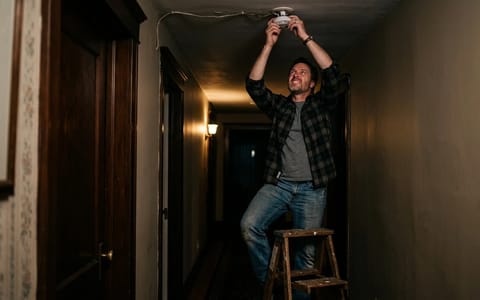
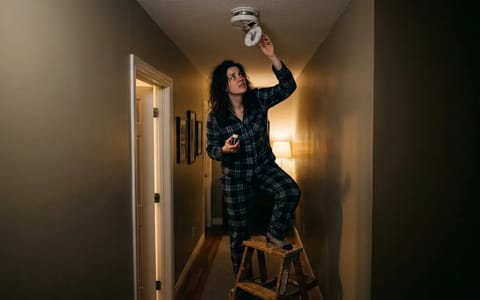
A few years ago, I chased a phantom chirp for three nights in a row in my own hallway before realizing I needed to look at the lights, not listen to the sound. High-frequency noises bounce off hard surfaces like drywall and hardwood floors, completely tricking human directional hearing. When your alarms are hardwired together, that trickery is amplified.
We are going to walk through the exact steps to identify the complaining unit, clear the error, and get your house quiet again so you can go back to sleep safely.
Why Is My Hardwired Smoke Detector Chirping?
To fix the problem, you first need to understand how your system communicates. Modern homes are equipped with interconnected smoke alarms. These units are wired directly into your home's electrical system, typically running on a 120-volt circuit, but they also contain a 9-volt or AA backup battery to ensure operation during power outages. They share a communication wire—usually a red traveler wire—that links them all together.
When one alarm detects smoke, it sends a voltage signal down that red wire, telling every other alarm in the house to sound off simultaneously. This is a brilliant safety feature that ensures a basement fire wakes up someone sleeping on the second floor. However, this interconnected nature is exactly what makes a low-battery chirp so frustrating.
While a full alarm (three loud beeps, a pause, and three loud beeps) will trigger every unit, a low-battery or error chirp usually only sounds from the specific unit experiencing the problem. But because the units look identical and are spaced evenly throughout the house, the single, sharp chirp bounces down the hallway, making it sound like every detector is complaining.
The most common reasons for that single, recurring chirp include a dying backup battery, a buildup of dust inside the sensor chamber, a power surge that confused the internal microprocessor, or a unit that has simply reached the end of its lifespan.
How to Find the Culprit in an Interconnected System
Since you cannot trust your ears to find the chirping unit, you have to trust your eyes. Every hardwired smoke detector has an LED indicator light. In my experience, this visual cue is the most reliable way to pinpoint the issue. Depending on the brand (usually Kidde or First Alert), this light will flash specific colors and patterns to communicate its status.
Under normal conditions, a hardwired alarm will show a solid green light indicating it has AC power, and a briefly flashing red light (usually once every few minutes) to show it is functioning properly. When a unit is experiencing an error or a low battery, that red light will flash much more frequently, often syncing up exactly with the chirp.
- Turn off the lights. Wait until it is dark, or turn off the hallway lights so the LED indicators are highly visible.
- Stand in a central location. Position yourself where you can see multiple detectors at once.
- Watch for the flash. Wait for the chirp to sound and immediately look at the detectors. The culprit will usually flash red right as the chirp happens.
- Check the green light. If the green light is out on one specific unit but on for the others, that unit has lost AC power and is running solely on battery, which is now draining.
Once you have identified the specific unit with the rapid flashing red light or the missing green light, you can focus your troubleshooting efforts there instead of tearing down every alarm in the house.
The Hard Reset: Clearing Phantom Chirps
Often, homeowners will identify the chirping unit, replace the 9-volt or AA backup battery, and twist the detector back onto the ceiling—only to hear it chirp again 60 seconds later. This is incredibly frustrating, but there is a simple scientific reason for it: residual charge.
Smoke detectors have an internal capacitor that stores a small amount of electricity. If the alarm experienced a power surge, or if it registered a low-battery error, that error state can get "stuck" in the microprocessor because the capacitor is keeping it alive. You have to drain that residual power to clear the error.
- Turn off the breaker. Locate your electrical panel and flip the breaker that powers your smoke alarms.
- Remove the alarm. Twist the chirping smoke detector counterclockwise to detach it from the ceiling bracket.
- Unplug the harness. Squeeze the plastic tabs on the wiring harness and pull it out of the back of the detector.
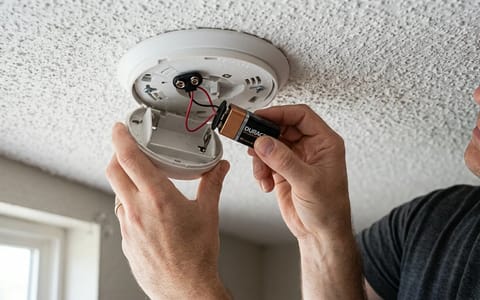
- Remove the battery. Take the backup battery out of the compartment completely.
- Hold the test button. Press and hold the "Test/Silence" button on the front of the detector for 15 to 20 seconds. You might hear a faint, dying chirp as the capacitor drains.
- Reassemble. Insert a fresh battery, plug the wiring harness back in, twist the unit onto the ceiling, and turn the breaker back on.
This hard reset process solves the vast majority of phantom chirping issues in hardwired systems. If the unit remains quiet after this, you have successfully fixed the problem.
Environmental Factors: Dust, Spiders, and Humidity
If you have performed a hard reset and replaced the battery, but the hardwired smoke detector chirping continues, you might be dealing with environmental interference. Smoke detectors use either ionization or photoelectric sensors (or a combination of both) to detect particles in the air.
These sensors are highly sensitive. A buildup of household dust, pet dander, or even a tiny spider crawling inside the sensor chamber can block the light beam or disrupt the electrical current, tricking the alarm into thinking there is an error or a fire.
Furthermore, high humidity can cause condensation inside the unit. This is especially common for smoke detectors installed just outside of full bathrooms or near poorly ventilated attic spaces. The moisture mimics smoke particles, leading to erratic chirping.
A vacuum cleaner is just as important as a fresh battery for maintaining a quiet, reliable smoke alarm system.
To fix environmental issues, take the detector down and use the soft brush attachment on your vacuum cleaner to gently clean the side vents. Alternatively, you can use a can of compressed air to blow out the sensor chamber. Make this a standard part of your home maintenance routine twice a year.
When Is It Time to Replace the Entire Unit?
Smoke detectors do not last forever. The sensors inside them degrade over time, losing their sensitivity and becoming prone to false alarms and constant chirping. According to the National Fire Protection Association (NFPA), all smoke alarms must be replaced 10 years from the date of manufacture.
Notice that the rule is based on the date of manufacture, not the date of installation or the date you bought the house. You can find this date printed on a sticker on the back of the unit. If your alarm says it was manufactured in 2014, it is expired and must go in the trash.
When replacing hardwired units, it is highly recommended to stick with the same brand and wiring harness type. If you have Kidde alarms, buy new Kidde alarms. If you have First Alert, stick with First Alert. Mixing brands on the same red traveler wire can lead to communication failures, meaning an alarm in the basement might not trigger the alarm in the bedroom during a real fire.
Should You Upgrade to Sealed 10-Year Batteries?
If you are facing a full house replacement because your units are expired, you have a choice to make regarding the backup batteries. You can buy traditional units that require a new 9-volt or AA battery every year, or you can upgrade to units with a sealed, 10-year lithium backup battery.
Sealed units cost slightly more upfront, usually around $35 to $50 per detector compared to $15 to $25 for traditional models. However, they completely eliminate the 2 AM low-battery chirp. Because the battery is designed to last the entire 10-year lifespan of the sensor, you never have to climb a ladder to swap a 9-volt again. When a sealed unit starts chirping for a low battery, it means the entire unit has reached its 10-year limit and it is time to throw it away.
Dealing with a hardwired smoke detector chirping is a test of patience, especially when you are tired. By ignoring your ears and focusing on the visual LED cues, you can quickly isolate the problem child. Remember to always drain that residual charge with a hard reset, keep the sensors clean of dust, and respect the 10-year expiration rule. A little bit of methodical troubleshooting will ensure your home stays quiet, peaceful, and fully protected against fire hazards.
- Stop relying on your hearing; use visual LED cues to isolate the chirping alarm.
- Always hold the test button for 15 seconds with the battery out to clear the capacitor's residual charge.
- If one hardwired detector hits the 10-year mark, replace the entire interconnected system to ensure compatibility and safety.
- Vacuum your smoke detectors twice a year to prevent dust and spiders from triggering false chirps.