Smoke Detector Beeping After New Battery? Try This Reset
If your smoke detector keeps chirping after you install a fresh battery, residual electrical charge is likely the culprit. Here is a simple 60-second reset to clear the error and stop the noise.
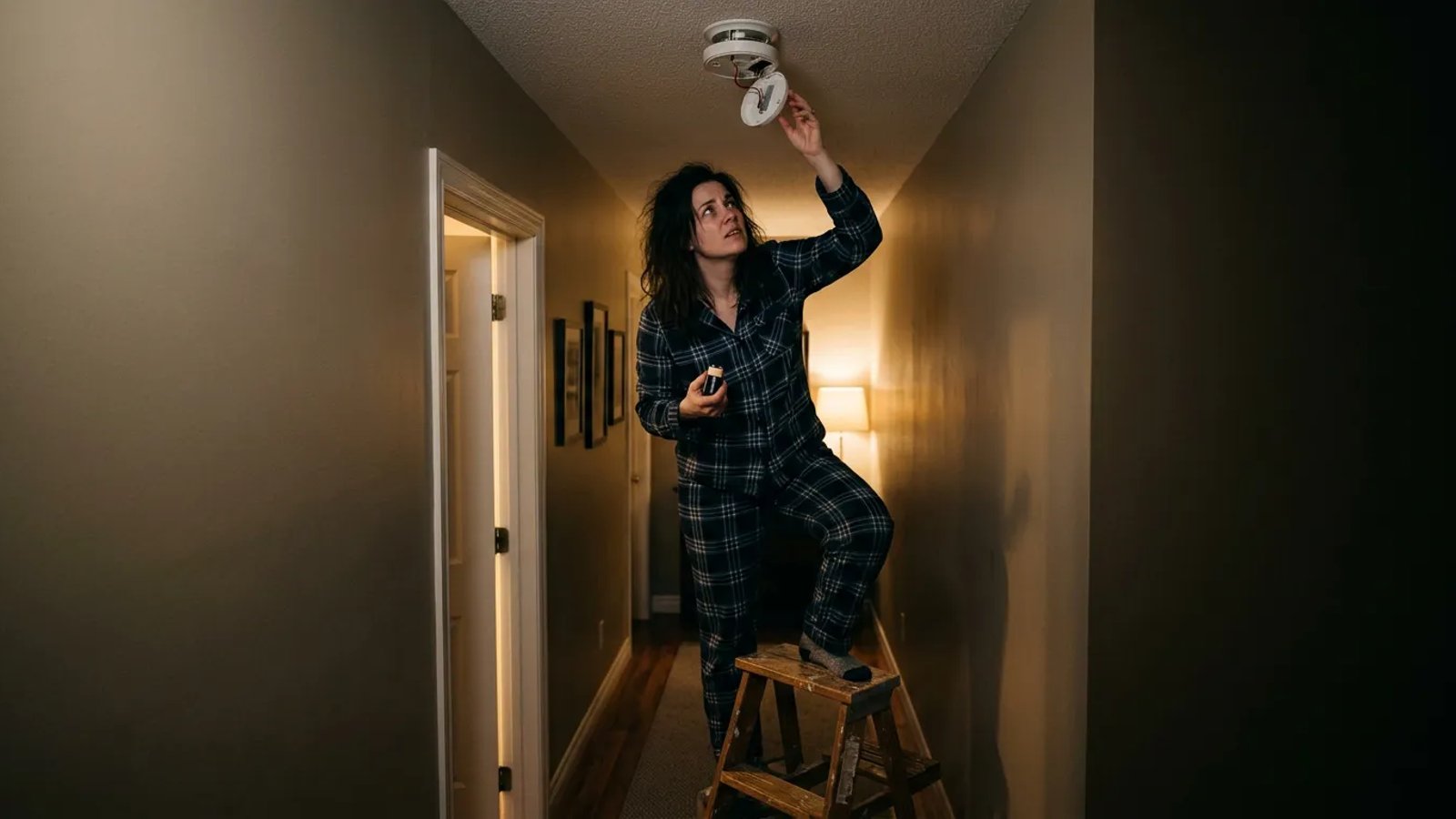
It is 2 AM, and that familiar, piercing chirp echoes down the hallway. You drag a step stool from the kitchen, pop in a fresh 9-volt battery, and climb back into bed, fully expecting silence. Then, five minutes later, it chirps again. Dealing with a smoke detector beeping new battery installed is one of the most frustrating experiences a homeowner can face. Before you rip the unit off the ceiling and leave your house unprotected out of sheer sleep deprivation, you should know the alarm is probably not broken.
Smoke detectors are designed to be stubbornly persistent when they detect low voltage. They are engineered to annoy you into action. But sometimes, the internal computer gets stuck in an error loop. The device registers the old, dead battery and fails to recognize the new one you just inserted. This happens because of a tiny amount of electricity still trapped inside the unit's capacitors.
Fixing this issue does not require buying a new detector or calling an electrician. It usually just takes about 60 seconds and a specific sequence of button presses to clear the internal memory. Let's walk through exactly why this happens and how to silence that chirp for good.
Why Your Smoke Detector Keeps Beeping After a New Battery is Installed
Modern smoke detectors are essentially small computers. When a battery drops below a certain voltage threshold, the detector logs an error state and begins to chirp once every 30 to 60 seconds. When you remove the old battery, the circuit is broken, but the internal capacitors still hold a tiny electrical charge.
If you swap the battery too quickly, that residual charge keeps the low-battery error active in the detector's memory. The microprocessor wakes up, sees the error code is still active, and continues to chirp, completely ignoring the 9 volts of fresh power you just provided. This residual charge can persist for several minutes if not actively drained.
When I tested this exact fix on a stubborn hallway detector in my own house last winter, holding the button for a full 20 seconds finally cleared the persistent error state. I had previously swapped the battery three times, assuming I had bought a bad pack of batteries. It turned out the batteries were fine; the detector just needed its memory wiped.
According to guidelines from the National Fire Protection Association, regular maintenance and proper battery replacement procedures are critical to keeping these life-saving devices functional. Properly draining the charge is a standard part of that process.
How Do I Reset My Smoke Detector?
To clear the memory and stop the false low-battery warning, you need to starve the detector of all power and force it to try and sound the alarm. This drains the capacitors instantly. Follow these specific steps to perform a hard reset.
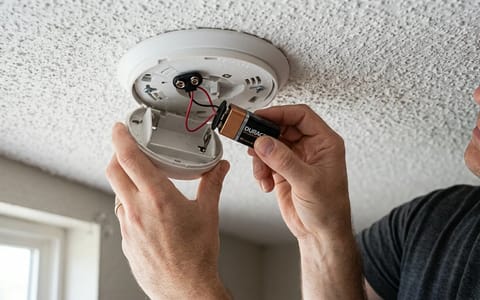
- Remove the unit from the ceiling. Twist the detector counter-clockwise to detach it from the mounting bracket. If it is hardwired, unclip the wiring harness from the back.
- Take out the new battery. Leave the battery compartment completely empty.
- Press and hold the test button. Keep your thumb pressed firmly on the main test button for 15 to 20 seconds. You might hear a faint, dying chirp as the last bit of power drains.
- Reinstall the fresh battery. Make sure the positive and negative terminals are aligned correctly. The unit should beep once loudly as it powers up.
- Reattach the unit to the ceiling. Plug the wiring harness back in (if applicable) and twist the detector clockwise into the bracket until it clicks.
Once you complete this process, wait about five minutes. If the unit remains silent, you have successfully cleared the error loop. If it starts chirping again, you need to investigate a few other common culprits.
Could the Battery Type Be Causing the Chirp?
Not all batteries are created equal, and smoke detectors are incredibly picky about the power they receive. If you grabbed a cheap pack of batteries from a dollar store, they might be heavy-duty carbon-zinc batteries rather than alkaline.
Carbon-zinc batteries have a steep voltage drop-off. A smoke detector requires a very steady, high voltage to keep the low-battery sensor from triggering. Even if a carbon-zinc battery is brand new out of the package, its starting voltage might be just low enough to trigger the detector's warning threshold.
Temperature also plays a major role in battery performance. If your smoke detector is located in an unheated garage, an unfinished basement, or near a drafty exterior door, cold air can cause the battery's voltage to drop temporarily. This is why smoke detectors notoriously start chirping in the middle of the night—the house cools down, the battery voltage dips, and the alarm sounds.
What If I Have Hardwired Interconnected Alarms?
If your home was built or heavily remodeled in the last two decades, your smoke detectors are likely hardwired and interconnected. This means they share a communication wire. If one detector senses smoke or has a low battery, it can send a signal to make every other detector in the house chirp.
This makes finding the actual problem unit maddening. You might be replacing the battery in the bedroom detector, but the low-battery signal is actually coming from the basement.
To find the culprit, look at the small LED lights on the face of the detectors. On most interconnected systems, the initiator unit (the one with the low battery) will flash red once every minute alongside the chirp. The other units will sound the chirp but will not flash red. Find the flashing unit, replace its battery, and perform the 60-second reset.
A smoke detector does not last forever; its internal sensors degrade and become unreliable exactly 120 months after the factory stamps it.
Are Dust and Humidity Triggering False Warnings?
If you have performed the reset and used a premium alkaline battery, the chirp might not be a battery warning at all. Many homeowners confuse the low-battery chirp with a sensor malfunction chirp.
There are two main types of smoke detectors: ionization and photoelectric. Photoelectric detectors use a small beam of light inside a sensing chamber. When smoke enters the chamber, it scatters the light, hitting a sensor and triggering the alarm. Unfortunately, dust, spider webs, and high humidity can also scatter that light.
If you live in a dusty area, recently completed drywall repairs, or have the detector installed just outside a steamy bathroom, the sensor chamber might be dirty. The detector interprets this partial blockage as a malfunction and chirps to warn you.
Take the detector down and use the soft brush attachment of your vacuum to clean the side vents. You can also spray short bursts of compressed air through the vents to clear out any stubborn debris. Do not open the plastic casing, as this can permanently damage the unit.
When Should I Check the Manufacturing Date?
Smoke detectors expire. The sensors inside them degrade over time, losing their sensitivity and reliability. To prevent you from relying on a dead unit, manufacturers program the internal chip to trigger an end-of-life warning.
This end-of-life warning sounds almost identical to a low-battery chirp, usually consisting of one or two short beeps every minute. No amount of fresh batteries or resets will stop an end-of-life chirp. The unit is permanently retiring itself.
Every smoke detector has a lifespan of exactly 10 years from the date of manufacture. To check the age of your unit, twist it off the ceiling and look at the back. You will find a printed sticker or a stamped date in the plastic showing the exact day it was built. If that date was more than 10 years ago, throw the unit away and buy a replacement.
Dealing with a chirping alarm is annoying, but it is the system working exactly as intended to keep your family safe. Start with the 60-second reset to clear any residual charge. If that fails, check the date on the back and give the vents a quick vacuum. Within a few minutes, you can silence the noise, restore your home's fire protection, and finally get back to sleep.
- Always hold the test button for 15 to 20 seconds while the battery is removed to clear the error loop.
- Use name-brand alkaline or lithium batteries, as cheap carbon-zinc batteries drop voltage too fast.
- Vacuum the detector's vents twice a year to prevent dust-related false alarms.
- Replace the entire smoke detector unit every 10 years, regardless of battery life.