What is auxiliary heat?
If you have a heat pump, you also have a backup heating system. Heating professionals call this backup system auxiliary heat. The word auxiliary comes from the Latin word auxilium which means help or support. This extra heat kicks in automatically when your main heat pump needs help keeping your house warm.
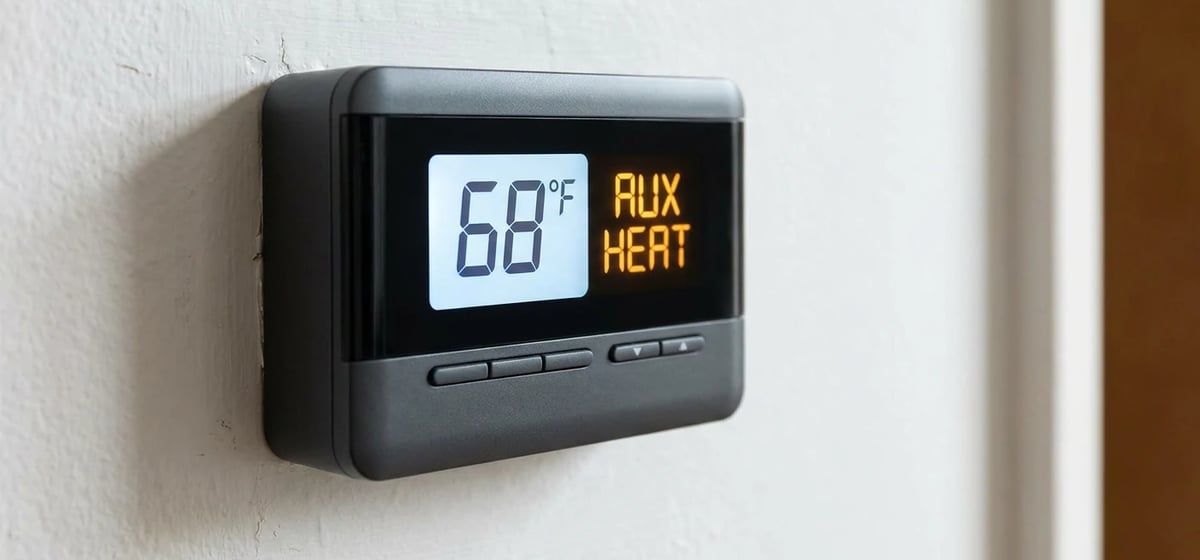
Heat pumps pull warmth from the outside air to heat your home. They do a great job most of the time. But when the temperature drops below freezing, there is not enough heat in the air for the pump to grab. That's when the system calls for backup. You'll usually see the word AUX light up on your thermostat when this happens.
Most homes use one of two types of backup heat. The most common type is electric heat strips built right into your indoor air handler. These work just like the glowing coils inside a toaster, getting very hot very fast. The other type is a gas or oil furnace. A setup with a heat pump and a gas furnace is called a dual fuel system. You can learn more about these setups in our guide to HVAC & Climate Control.
Why it turns on
Your thermostat controls when the backup heat turns on. It usually happens without you doing a thing. Here are the three most common reasons your system switches to AUX mode.
- Very cold weather: When the outside temperature drops below 35 to 40 degrees, your heat pump struggles to find enough warmth in the air. The backup heat turns on to make up the difference and keep your rooms comfortable.
- Defrost cycles: Ice can build up on your outdoor unit in the winter. The heat pump will briefly switch to air conditioning mode to melt this ice. It turns on the backup heat at the exact same time so it doesn't blow freezing cold air into your house while it thaws.
- Big thermostat jumps: If you turn your thermostat up by three degrees or more all at once, the heat pump can't reach that new temperature fast enough. The backup heat turns on to help close the temperature gap quickly.
Cost and efficiency
Heat pumps are very cheap to run. Auxiliary heat is not. If your backup heat uses electric strips, it uses up to three times more electricity than the heat pump alone. Running electric backup heat for long periods will cause a huge spike in your winter power bill. This is a common surprise during Your First Year as a Homeowner.
Gas furnace backup heat costs less to run than electric strips. But it still costs more than the heat pump itself. This is why you want your heat pump doing most of the heavy lifting. If you need to fix or replace your backup heat strips, parts and labor usually cost 150 to 400 dollars. A full replacement of a dual fuel furnace costs much more, usually 3,000 to 6,000 dollars. Keep in mind that ranges vary based on where you live and the exact brand you buy.
When to worry
Seeing the AUX light on your thermostat is completely normal on a freezing winter morning. It's also normal for a few minutes while the outdoor unit defrosts. But sometimes that little light means you have a bigger problem.
You should call an HVAC professional if the AUX heat stays on all day when the weather is mild. If it's 50 degrees outside and your backup heat is running, your main heat pump is likely broken. The system is relying entirely on the expensive backup heat to keep you warm. You might also notice your home feels cooler than normal or your electric bill suddenly doubles. These are clear signs that your heat pump needs a repair.
To avoid surprise breakdowns, you should change your air filters every one to three months. A dirty filter restricts airflow and forces the backup heat to run much more often than it should. A simple filter change is one of the easiest ways to keep your heating bills low all winter.