What Is Bridging?
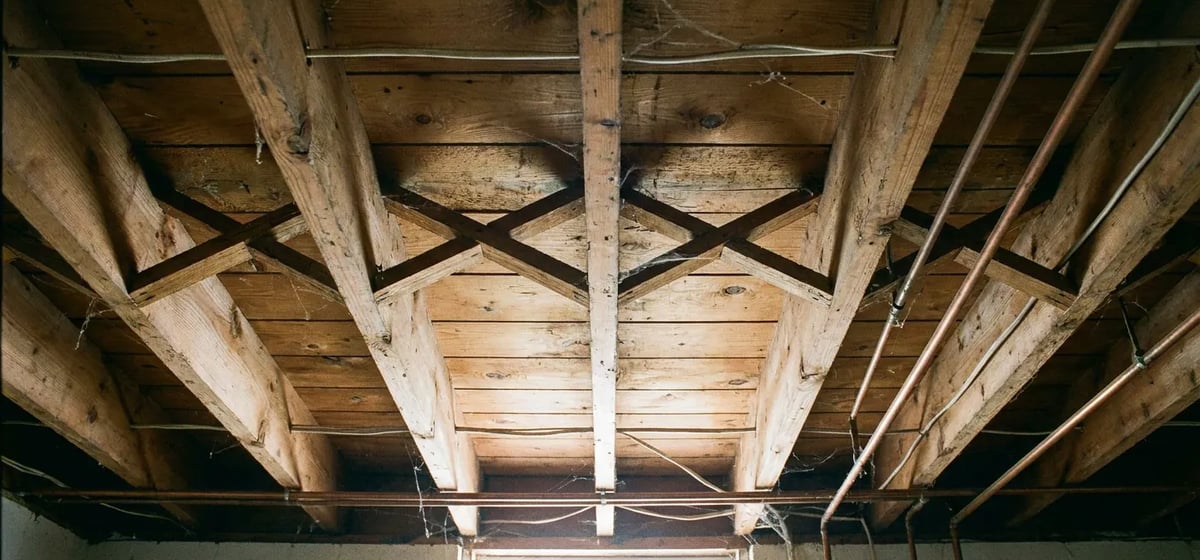
If you look up at the ceiling of an unfinished basement, you will see thick wooden beams running side by side. These beams are called floor joists. Bridging consists of the small pieces of wood or metal placed diagonally between those joists. Builders install them in a crisscross pattern, or sometimes as solid blocks of wood. These small pieces do a massive job for your home. They lock the joists together so the floor framing acts as one strong unit.
Wood bridging usually looks like an X made from small wooden boards. Metal bridging looks like thin steel straps stamped into a V shape. Solid blocking uses pieces of wood that are the exact same size as the joists themselves. No matter the material, the goal is the same. Bridging stops the tall floor joists from twisting, bowing, or falling over sideways.
Why It Matters to You
Bridging directly impacts how your home feels when you walk through it. When you step on the floor, your weight pushes down on just one or two joists. Without bridging, those few joists take all the stress. They might bend, which makes the floor dip or bounce. Over time, that movement causes nails to loosen. Loose nails rubbing against wood create annoying squeaks.
Bridging solves this problem. It takes the weight from the joist you step on and shares it with the joists next to it. By spreading the load, the whole floor becomes much stiffer. You will not feel a bouncing effect when you walk across the living room. It also protects your Flooring from cracking. Ceramic tiles and grout lines easily crack if the wood subfloor bends underneath them.
Where You Run Into It
You will mostly see bridging in unfinished spaces. If your home has a basement or a crawl space with an exposed ceiling, you can look up and spot it easily. You might also hear about it when you read a home inspection report. Inspectors check the Foundation & Structure of your house. If they see missing, broken, or loose bridging, they will note it in their report.
You also run into bridging during remodeling projects. If a plumber or electrician cuts through your floor joists to run pipes or wires, they might remove a piece of bridging to make room. If they forget to replace it, you might suddenly notice a new squeak in that spot a few months later.
Repairing and Adding Bridging
Older homes sometimes lack bridging altogether. If your floors bounce or sag, a contractor might suggest adding it. The job itself is straightforward. A carpenter measures the gap between the joists, cuts the wood or metal to size, and nails or screws the pieces into place.
The cost to add or fix bridging is usually low, but ranges vary depending on your location and how easy it is to reach the joists. If you have an open basement ceiling, a handyman might charge 150 to 400 dollars to add bridging under a bouncy room. If your basement ceiling is covered in drywall, the project gets much more expensive. The contractor has to tear down the drywall, install the bridging, and then put up new drywall. In that case, you might spend 1,000 to 2,500 dollars. You can read more about pricing out home repairs in our guide to Hiring Contractors & What Things Cost.